Why Wet Roads Change the Physics of Driving
Rain doesn't just make roads slippery - it changes the fundamental relationship between your tires and the surface beneath them. On dry pavement, tire rubber grips the road through direct mechanical contact. Add water, and that contact is partially replaced by a film that reduces friction. The result is less grip for everything: turning, braking, and accelerating.
The coefficient of friction on wet pavement is typically 30-40% lower than on dry pavement, depending on road surface, water depth, and tire condition. That reduction isn't abstract - it translates directly into longer stopping distances and less steering response. As the stopping distance problem explains, speed and stopping distances have an exponential relationship, and wet conditions push that problem further in the wrong direction.
30-40%
Reduction in braking grip on wet pavement
Generally cited across tire and road safety research comparing wet versus dry surface friction coefficients.
35 mph
Speed at which hydroplaning can begin
Hydroplaning onset speed reported in road safety literature, particularly with worn or underinflated tires.
4/32"
Tread depth threshold for wet-weather risk
Below this depth, wet-weather braking performance degrades significantly, per tire industry testing standards.
How Hydroplaning Actually Works
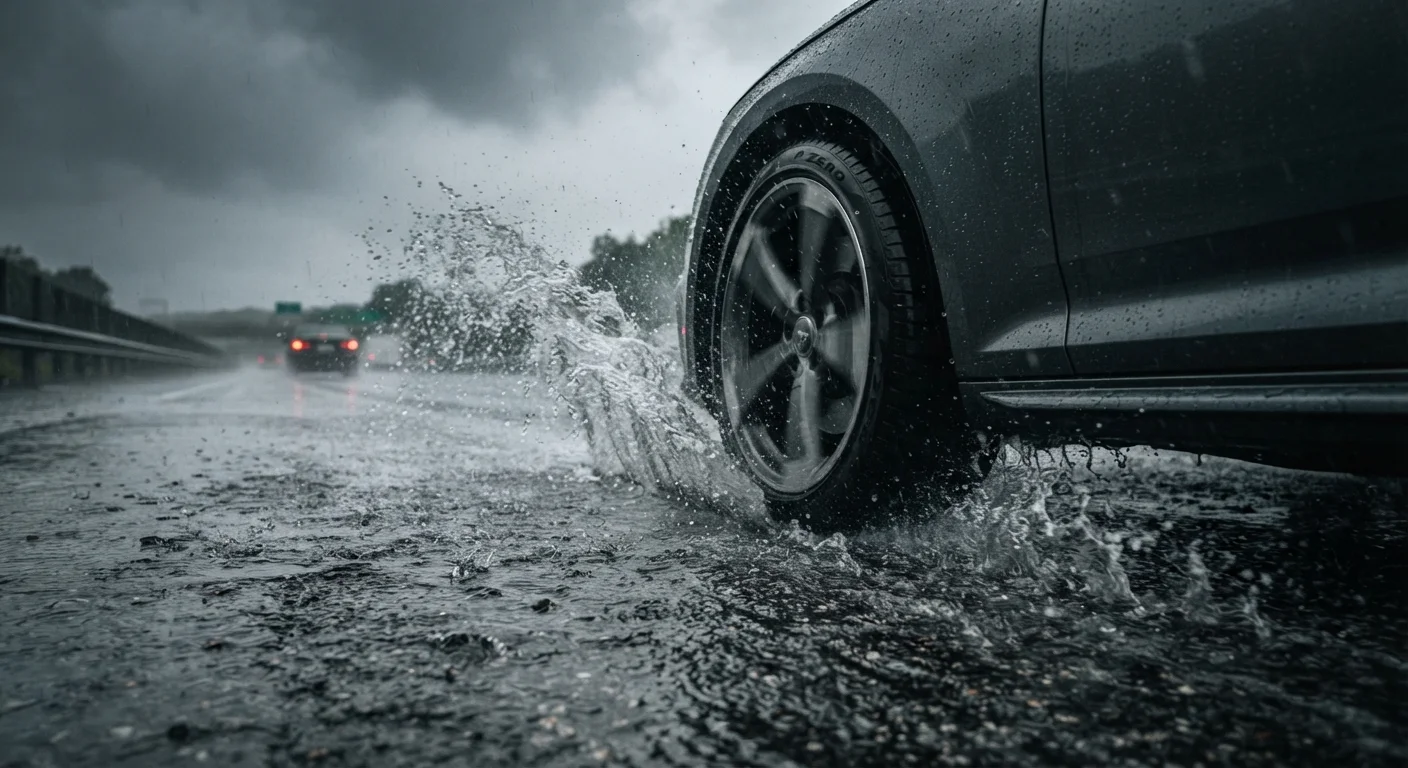
Your tire tread exists for one primary reason: to channel water away from the contact patch so rubber can touch road. At low speeds and light rain, tread manages this well. As speed increases or water depth grows, the tire must displace more water per second. At some point, it can't keep up - water pressure under the tire lifts the tread off the surface entirely. That's hydroplaning.
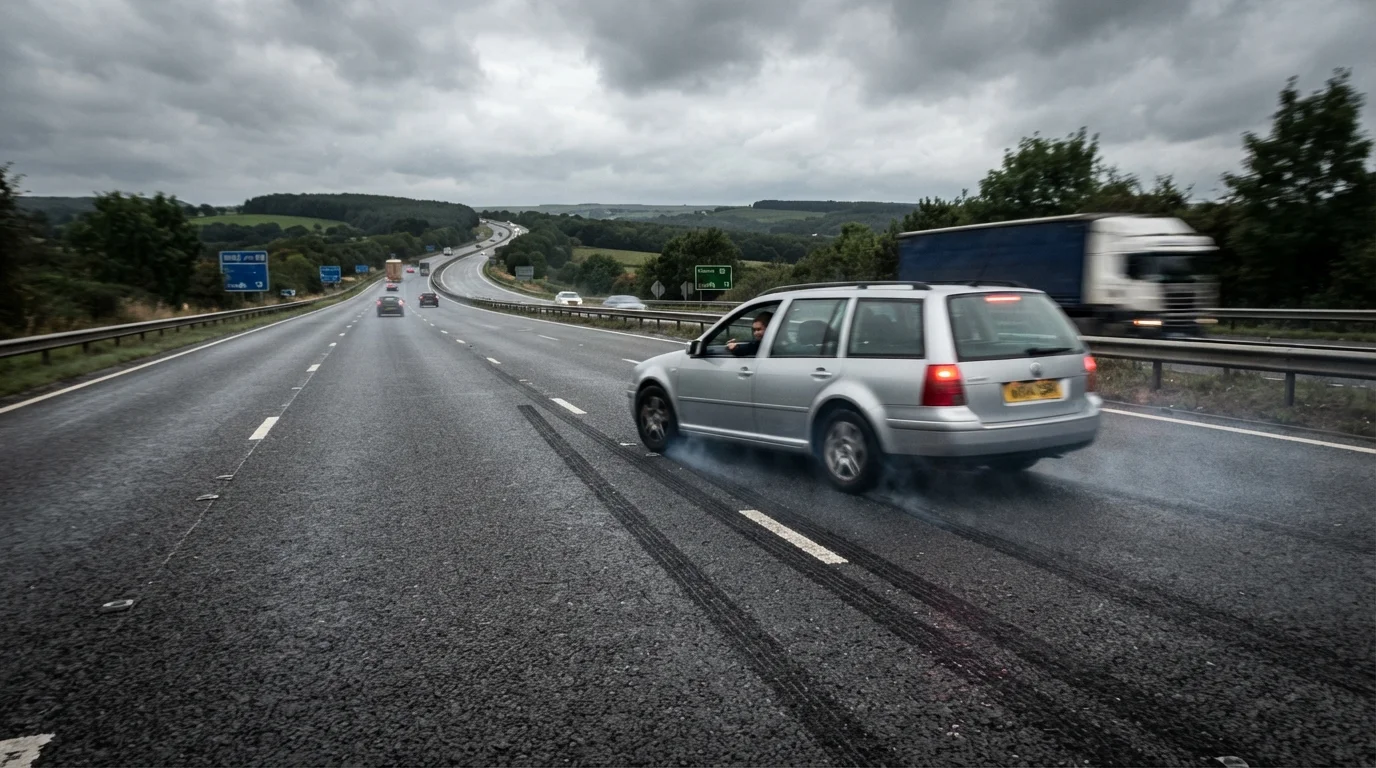
What makes it particularly dangerous is the loss of all driver input. Steering does almost nothing. Braking locks the tires on the water layer instead of slowing the car. The vehicle continues in whatever direction it was heading when traction was lost. Recovery depends entirely on slowing down enough for the tires to re-engage the road surface.
Quick Tread Check Before Rain Season
Insert a quarter into your tire's tread groove with Washington's head pointing down. If you can see the top of his head, your tread is at or below 4/32 inch - the point where wet-weather performance drops sharply. Do this check on multiple grooves across the tire width, since tread can wear unevenly.
Tread depth is the biggest variable under a driver's control. A tire worn to 2/32 inch - the legal minimum in most states - performs dramatically worse in rain than a tire at 6/32 inch or better. Independent testing consistently shows that worn tires reach hydroplaning conditions at significantly lower speeds.
Braking and Steering: What Changes and Why
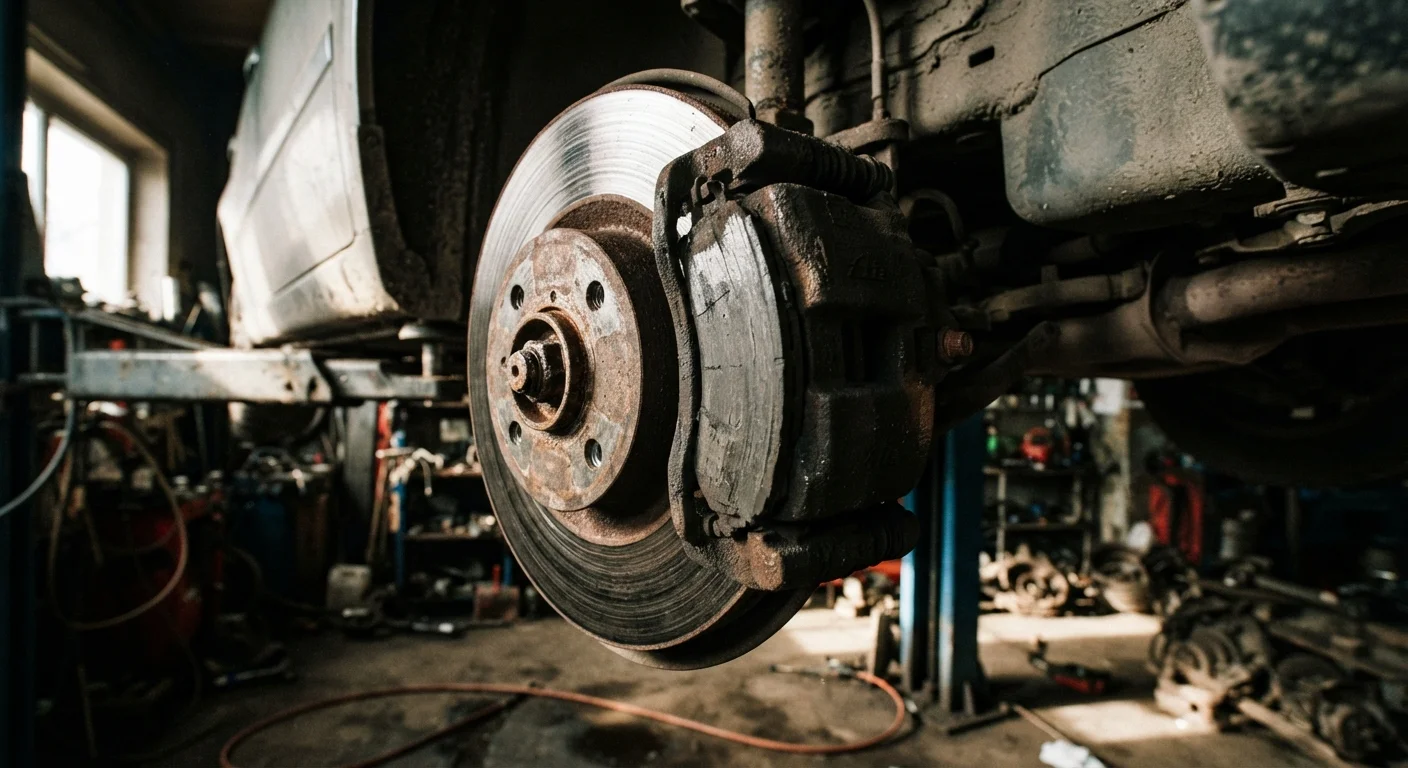
Grip loss on wet roads affects every control input you make. Under braking, reduced friction means your tires take longer to scrub off speed. Even with ABS (anti-lock braking system) functioning correctly - which prevents wheel lockup - your stopping distance is longer because the physics of available friction have changed, not because your brakes failed.
Steering response also degrades. A turn you'd make comfortably at 45 mph on dry pavement may push the front tires beyond their grip limit on wet pavement at the same speed, causing understeer - where the car pushes wide instead of turning. Rear-wheel-drive vehicles can experience oversteer, where the rear slides outward during aggressive cornering or acceleration.
The practical fix is straightforward: slow down earlier, brake more gently, and steer smoothly. Abrupt inputs - the kind that work fine on dry roads - can exceed available grip almost instantly in wet conditions. See also: braking habits that accelerate wear, since the same aggressive inputs that cause wet-road skids also shorten brake and tire life.
What Drivers Can Actually Do About It
Wet-road handling isn't purely a tire or vehicle engineering problem - driver behavior closes a significant part of the safety gap. The most effective adjustments are also the simplest.
- Increase following distance. The standard three-second gap on dry roads should grow to five or six seconds in rain. This accounts for your own longer stopping distance and the vehicle ahead's potential for sudden braking.
- Reduce speed before curves, not during. Braking mid-corner on wet pavement is one of the fastest ways to lose control. Slow to a safe speed before entering the turn, then maintain or gently accelerate through it.
- Watch for standing water. Puddles in wheel ruts or low spots on the road represent the highest hydroplaning risk. If you can't tell how deep water is, treat it as deep.
- Check tire condition regularly. Tread depth and tire pressure are the two most controllable factors in wet-road grip. Underinflated tires reduce the contact patch and worsen water channeling. A seasonal maintenance check is a reliable moment to catch both.
None of these require special equipment - just awareness of how conditions have changed the margin for error you're working with.
Rain Isn't the Only Wet-Road Hazard
The first 10-15 minutes of rainfall are often the most dangerous. Light rain mixes with accumulated oil and road grime to create a slick film on the surface before enough water volume washes it away. This early-rain period can produce lower grip than steady, heavier rain that clears the surface. Slow down as soon as precipitation starts, not just when it intensifies.