Why Home Fitness Myths Are So Persistent
Home fitness has grown significantly as an accessible alternative to gym memberships, but a set of stubborn misconceptions continues to discourage people before they even start. Some of these myths stem from outdated fitness culture; others are amplified by marketing for expensive equipment. Either way, they disproportionately affect budget-conscious exercisers who already face real barriers to staying active.
Understanding what the evidence actually says - and what it doesn't - can free you from unnecessary spending and self-doubt. This article examines the most common home fitness myths and replaces them with grounded, practical facts. For a broader overview of what home training can realistically offer, see our honest breakdown of home versus gym training.
Myth
You need weights or gym machines to build muscle. Bodyweight alone won't cut it.
Fact
Bodyweight training can stimulate meaningful muscle growth when exercises are progressively challenging enough to create overload.
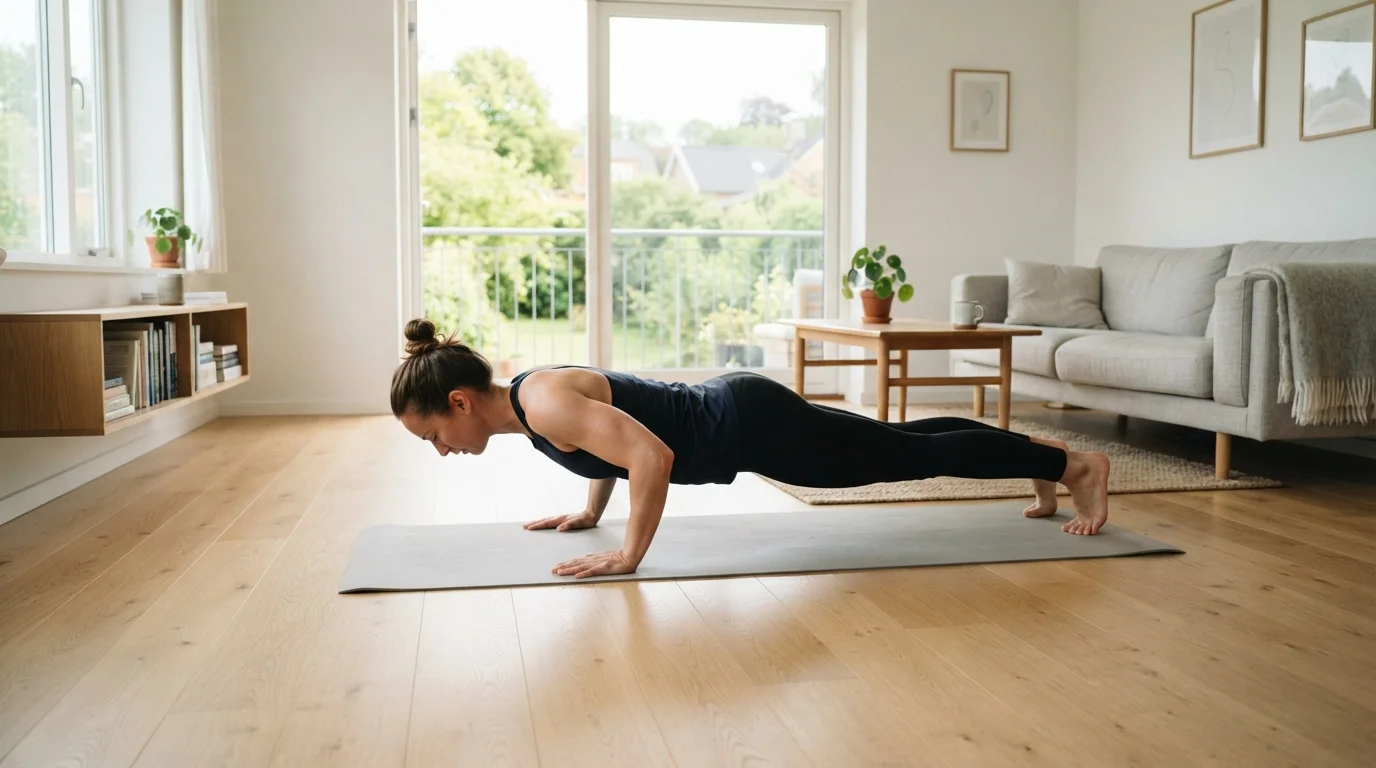
Muscle development is driven by mechanical tension and progressive overload - not by the type of resistance used. Research in exercise physiology consistently shows that bodyweight movements like push-ups, squats, lunges, and dips can recruit the same major muscle groups as their weighted counterparts. The key is progression: increasing reps, slowing tempo, reducing rest, or moving to harder variations (such as single-leg squats or archer push-ups) as you get stronger. Bodyweight training explained covers the underlying science in more detail.
Myth
Short workouts don't count. You need at least an hour to see any real benefit.
Fact
Even 10-20 minute sessions contribute meaningfully to fitness when performed with appropriate effort and regularity.
Public health guidelines from organizations such as the U.S. Department of Health and Human Services acknowledge that moderate-to-vigorous physical activity can be accumulated in shorter bouts throughout the day. High-intensity interval training (HIIT) research has demonstrated that brief, focused sessions can improve cardiovascular fitness and muscular endurance. The belief that shorter workouts are worthless often leads people to skip activity entirely on busy days - which is the real barrier to progress. A consistent 15-minute session beats an occasional 90-minute one.
Myth
If you're not sweating a lot, you're not working hard enough.
Fact
Sweat is your body's cooling mechanism - it reflects temperature regulation, not workout quality or calorie burn.
Sweat rate is influenced by genetics, ambient temperature, humidity, hydration status, and fitness level. A conditioned athlete may sweat more efficiently at lower intensities than a beginner. Strength-focused home workouts - such as slow, controlled bodyweight movements - can be highly effective without producing heavy sweat. Using sweat as a proxy for effort leads some people to favor hot environments or high-volume cardio while avoiding strength work that may actually be more appropriate for their goals. Heart rate, perceived exertion, and progressive performance are more useful indicators.
Myth
You need a dedicated workout room or a lot of space to exercise at home.
Fact
Most effective bodyweight routines require only the space of a yoga mat - roughly 6 by 2 feet.
The exercises that form the foundation of home fitness - push-up variations, squats, lunges, planks, glute bridges, and core work - can be performed in a small, cleared area of any room. A dedicated space is psychologically helpful for building routine (see habit-building strategies for home workouts), but it is not a physical requirement. Overcrowded apartments, shared living situations, and limited square footage are not legitimate barriers to starting.
Myth
Home workouts are fine for beginners, but serious exercisers need a gym to keep progressing.
Fact
Home training can be scaled to challenge even experienced exercisers through progressive overload, tempo manipulation, and advanced movement variations.
The assumption that home workouts have a ceiling is largely a marketing artifact. Advanced calisthenics movements - including pistol squats, handstand push-ups, and plyometric variations - demand substantial strength, coordination, and body control. Adapting workouts as your fitness level changes walks through how to scale difficulty at every stage. The real challenge isn't equipment - it's programming: knowing how to increase demand systematically over time.
Putting the Evidence to Work at Home
Separating fact from myth is only the first step. The next is building a routine you can actually stick with. Progress in home fitness depends far less on having the right gear and far more on consistency, gradual progression, and understanding your own goals.
150 min
Weekly moderate activity recommended for adults
U.S. Department of Health and Human Services physical activity guidelines for Americans recommend at least 150 minutes of moderate-intensity activity per week, achievable in short daily sessions.
~$0
Equipment cost for effective bodyweight training
Core bodyweight movements - push-ups, squats, lunges, planks - require no purchased equipment, making home fitness genuinely accessible at any budget level.
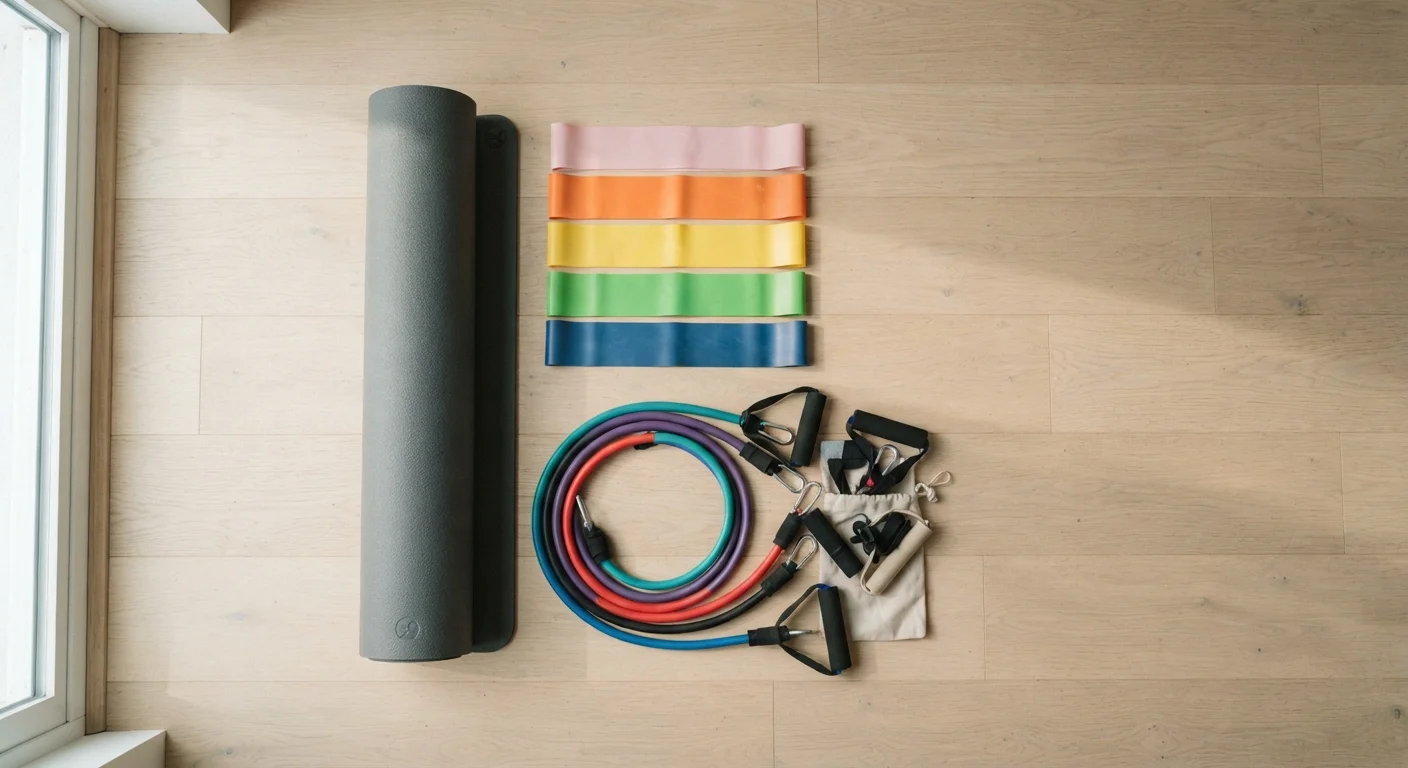
If you're starting from scratch, building a structured home routine doesn't require prior experience or equipment. For those wondering whether to add low-cost tools, comparing resistance bands to pure bodyweight training can help you decide what's worth the investment. And if your progress has stalled, understanding why home workouts plateau offers practical adjustments grounded in exercise science.
Progression Without Pain: Know the Difference
Muscle fatigue and mild soreness after a new workout are normal. Sharp, sudden, or joint-specific pain is not - and should not be pushed through. If you experience pain during exercise, stop the activity and consult a qualified healthcare professional before resuming. Progressing too quickly is one of the most common causes of home training injuries.
This article is for general informational purposes only and does not constitute medical or professional fitness advice. Consult a qualified healthcare provider before beginning any new exercise program, especially if you have existing health conditions or injuries.