Why Home Workouts Work
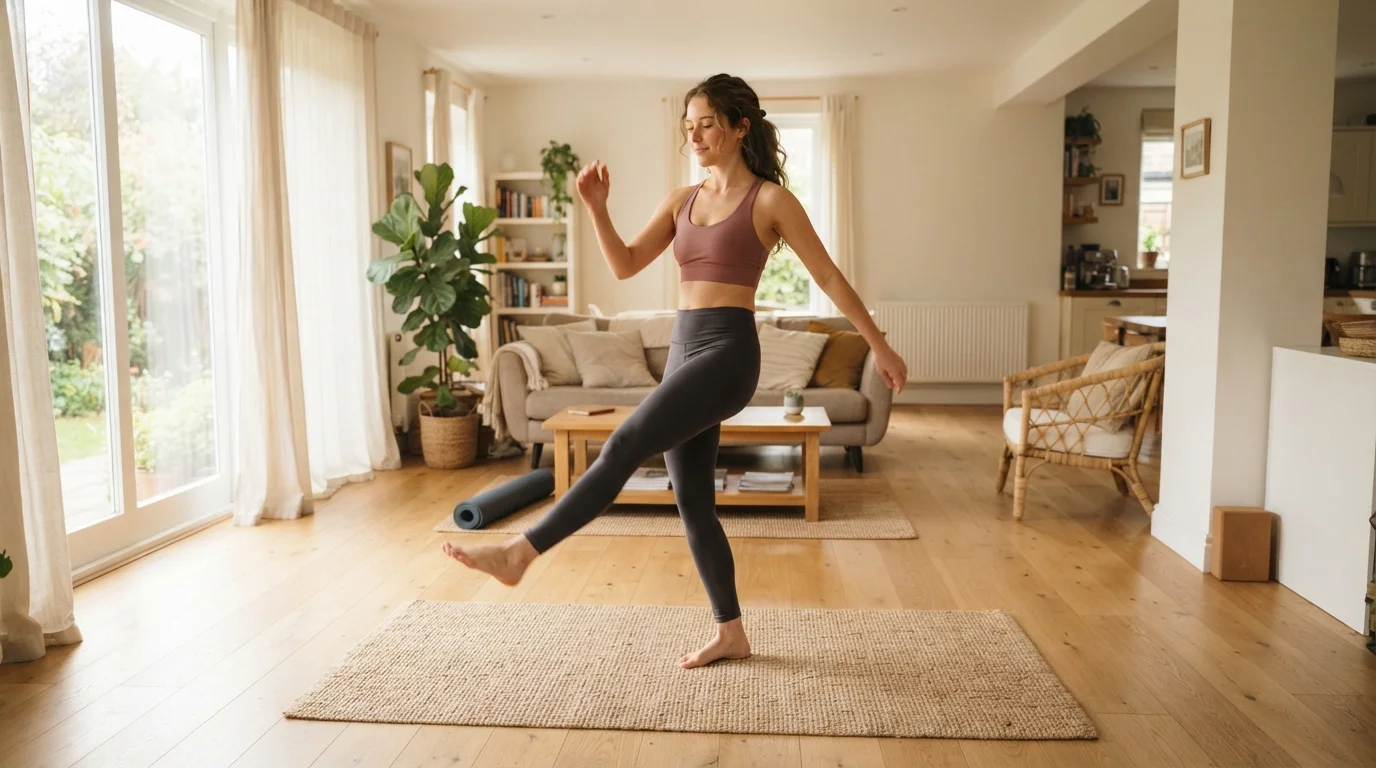
The most common barrier to regular exercise isn't laziness - it's logistics. Commute time, membership costs, gym anxiety, and packed schedules conspire to keep people from moving consistently. Home workouts remove most of those barriers entirely.
Research consistently shows that frequency and consistency are stronger predictors of fitness outcomes than the specific location or equipment used. A three-day-per-week bodyweight routine done reliably at home will outperform an expensive gym membership used sporadically. For a candid look at what you gain and give up by skipping the gym, see the honest trade-offs of home versus gym training.
The financial case is equally clear. A gym membership often costs between $30 and $80 per month. Home workouts using only your bodyweight cost nothing beyond the floor space you already have.
Bodyweight training
Exercise that uses your own body as resistance, requiring no weights or machines. Squats, push-ups, and planks are classic examples.
Progressive overload
Gradually increasing the difficulty of exercise over time - through more reps, sets, or harder variations - so your body continues to adapt and improve.
Recovery
The rest period between workouts that allows your muscles to repair and grow stronger. Skipping rest days can increase injury risk and slow progress.
Active recovery
Low-intensity movement on rest days - like walking or gentle stretching - that promotes circulation and reduces muscle soreness without adding training stress.
Circuit training
A workout format where you perform several exercises back-to-back with minimal rest, then repeat the sequence. It trains both strength and cardiovascular endurance.
Setting Up Your Space and Mindset
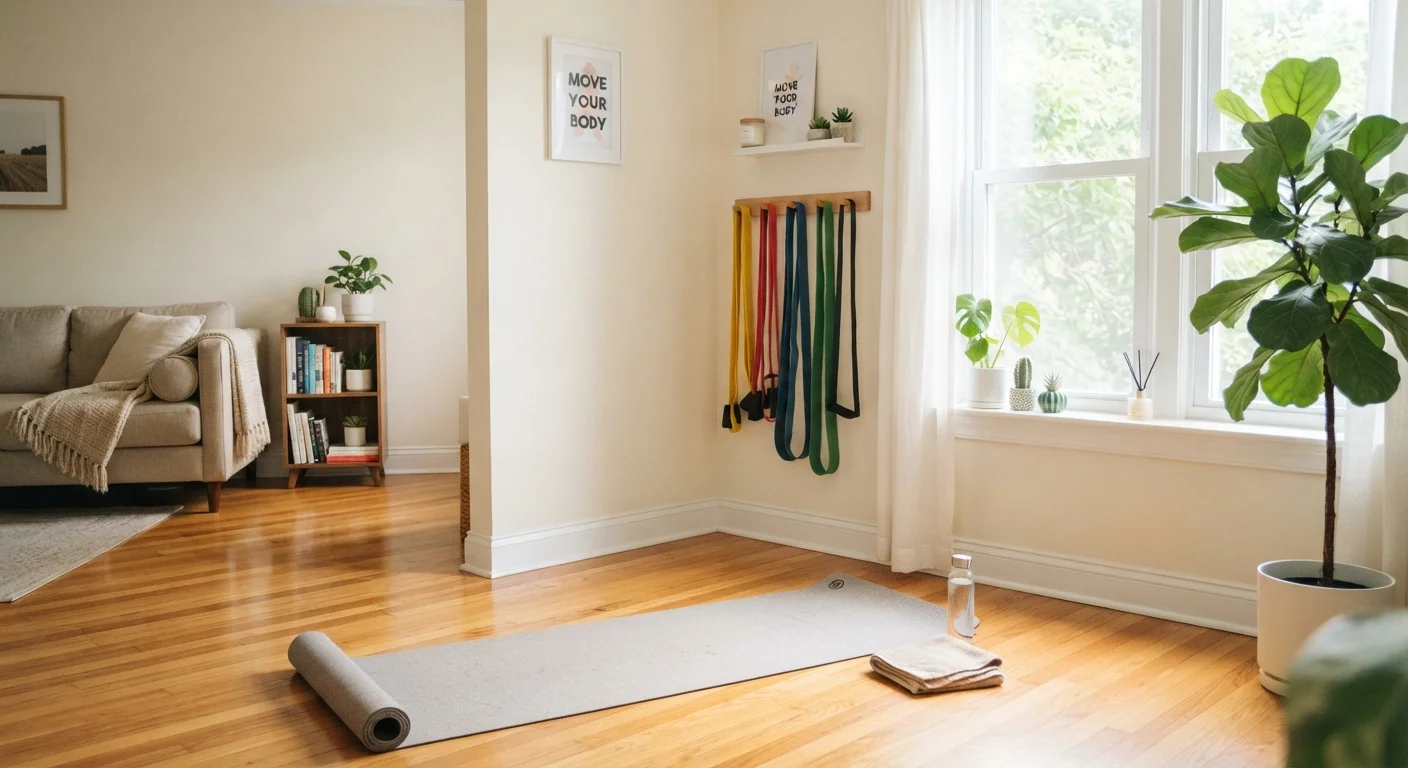
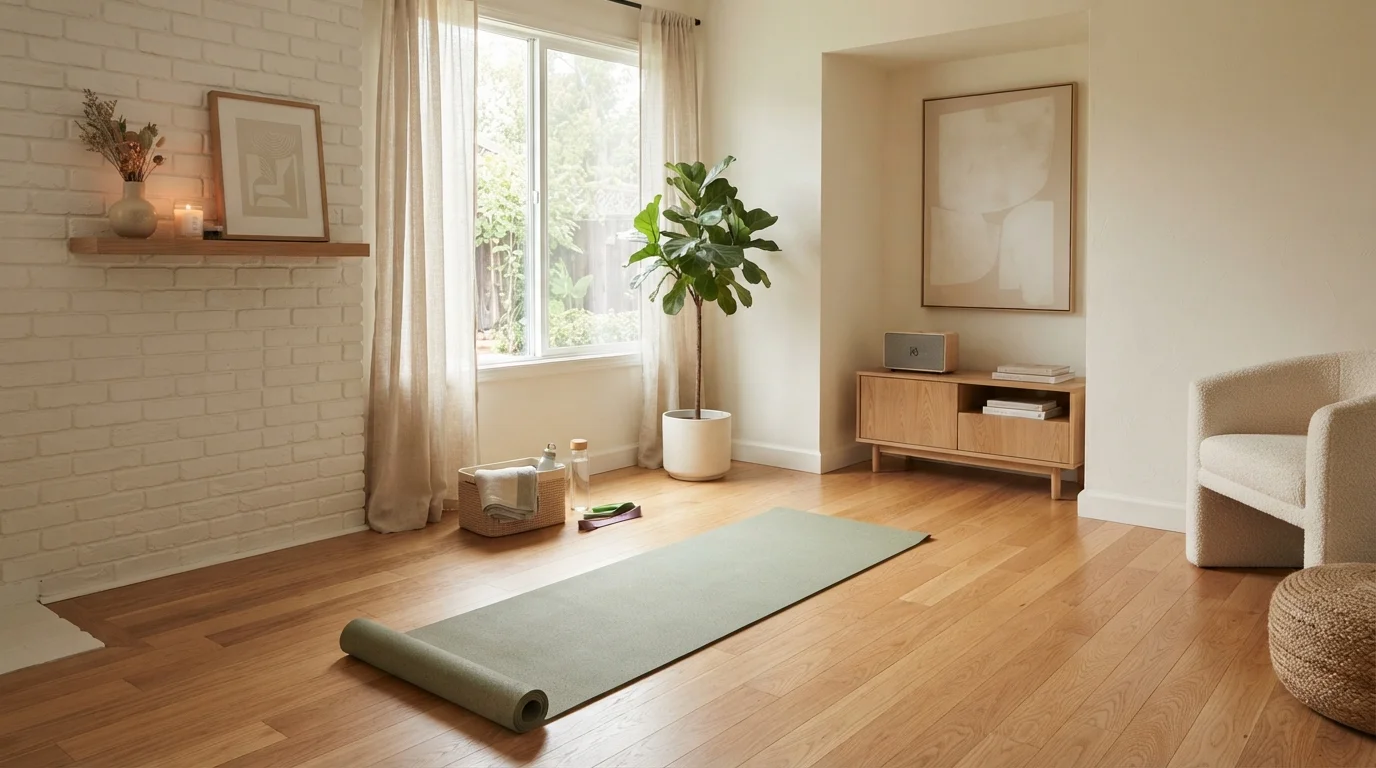
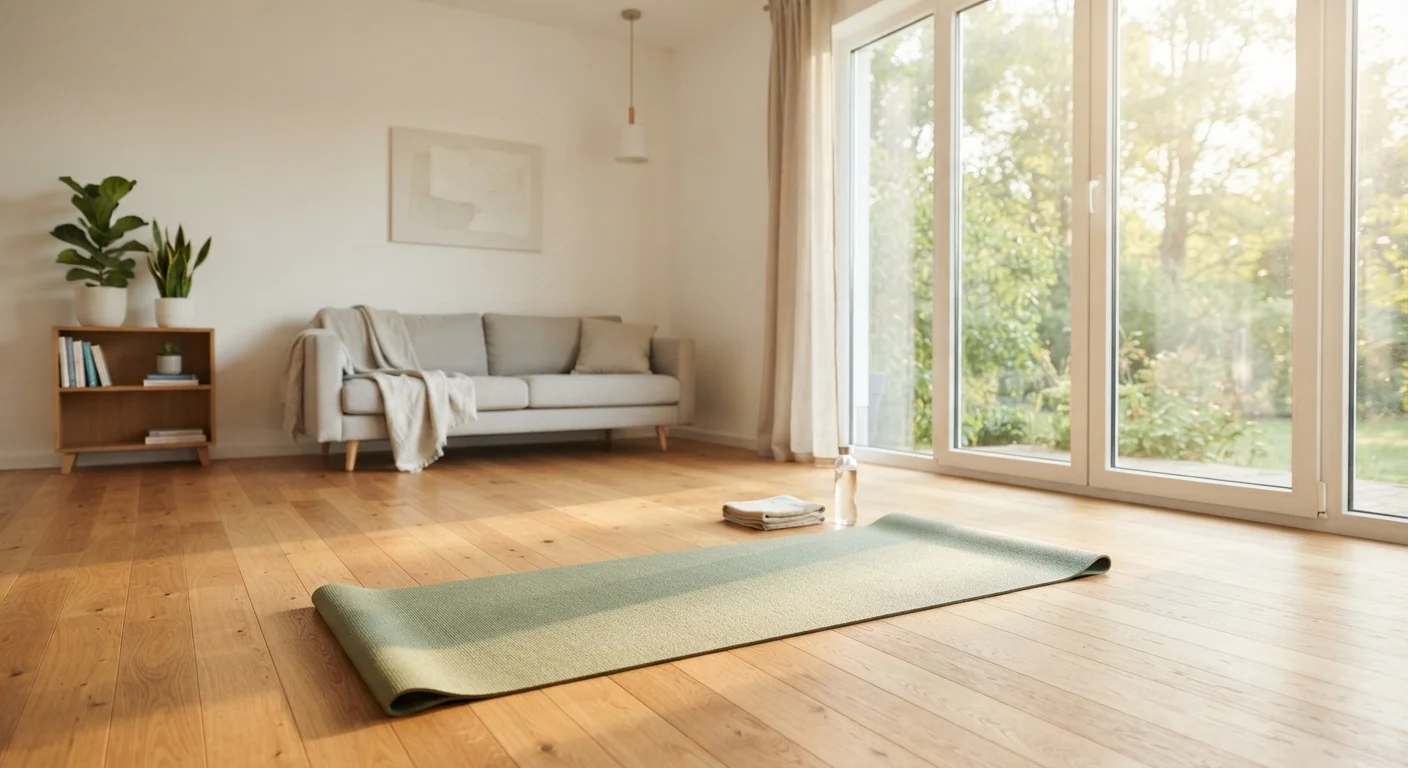
You don't need a dedicated home gym. A cleared patch of floor - roughly the footprint of a yoga mat - is genuinely sufficient for most bodyweight exercises. Push furniture aside, make sure the floor isn't slippery, and you're ready. Our guide on creating a functional workout space without spending much covers safe flooring choices and layout tips in more detail.
Mindset matters as much as space. Beginners often expect rapid results and quit when progress feels slow. Setting realistic expectations from day one - improved energy, better sleep, gradual strength gains over weeks, not days - keeps you from abandoning the habit too early.
Lower the Bar to Build the Habit
When starting out, aim for workouts short enough that skipping feels almost sillier than doing them - even ten minutes counts. Research on habit formation suggests that reducing the entry effort is more effective than relying on motivation. Once the habit is established, extending duration becomes much easier.
Structuring Your Weekly Routine
A sustainable beginner routine balances work, recovery, and variety. A straightforward starting template looks like this:
- Day 1: Full-body strength circuit (squats, push-ups, lunges, plank)
- Day 2: Rest or gentle walking
- Day 3: Full-body circuit, slightly more sets or reps than Day 1
- Day 4: Rest
- Day 5: Active recovery - stretching, yoga, or a short walk
Every session should begin with a five-minute warm-up and end with a brief cool-down. Most home exercisers skip these steps - and that's where injuries and stiffness sneak in. Each phase serves a distinct purpose and takes very little time.
For a ready-to-use plan built around this structure, a full-body home workout plan offers clear progressions for every fitness level.
Don't Skip Rest Days
Rest days are not optional - they're when adaptation actually happens. Training every day without recovery, especially as a beginner, increases the risk of overuse injuries and burnout. If you feel unusually fatigued or sore, scaling back is the smarter choice. If you experience pain (not general muscle soreness) during or after exercise, stop and consult a healthcare professional.
The Movements That Matter Most
A handful of fundamental movement patterns cover the vast majority of your body's muscular needs. You don't need dozens of exercises - you need a few done well.
- Squat pattern
- Targets quads, glutes, and hamstrings. Bodyweight squats, wall sits, and step-ups all qualify.
- Push pattern
- Targets chest, shoulders, and triceps. Push-ups in various hand positions serve most beginners for months.
- Hinge pattern
- Targets hamstrings and lower back. Glute bridges and single-leg deadlifts (bodyweight) are accessible starting points.
- Core stability
- Targets deep abdominal and back muscles. Planks, dead bugs, and bird-dogs build functional core strength without straining the spine.
As your baseline fitness improves, the same movements can be made progressively harder - slower tempo, fewer rest seconds, more reps, or harder variations. Adapting workouts as your fitness changes explains how to scale intelligently rather than plateau.
If you want to explore adding light equipment later, resistance bands versus bodyweight-only training offers a practical comparison of what actually changes.
Staying Consistent Over Time
Motivation is unreliable - habit is what keeps a routine alive. Scheduling workouts at a fixed time, treating them like non-negotiable appointments, and reducing friction (clothes laid out, space pre-cleared) all reduce the daily mental negotiation that leads to skipping sessions.
Tracking progress - even in a simple notebook - provides objective evidence of improvement when you can't feel it subjectively. Noting how many push-ups you completed or how a squat felt is more useful than weighing yourself daily.
For a deeper look at the habit-building and scheduling strategies behind long-term home fitness, exercise consistency at home covers accountability methods that work without relying on willpower alone.
Remember that nutrition supports your training. Nutrition basics offers straightforward guidance on eating in a way that complements your activity level without overspending on food.
Full-Body Home Workout Plan
A structured, no-equipment workout plan covering all major muscle groups with progressions for beginners. Useful for turning the principles in this article into a ready-made session.
Home Workout Space Setup Guide
Practical advice on carving out a safe, functional exercise area in almost any home - including small apartments - without significant spending.
This article is for general informational and educational purposes only and does not constitute medical advice. Consult a qualified healthcare professional before beginning any new exercise program, particularly if you have an existing health condition, injury, or concern.