Why the Home vs. Gym Question Actually Matters
For most Americans, the decision to join a gym - or skip it - has real financial and lifestyle consequences. Monthly memberships, initiation fees, and the time cost of commuting add up quickly. At the same time, the gym offers things a living room simply cannot replicate. Understanding both sides clearly helps you make a choice that fits your life, not someone else's fitness ideal.
This article is general health information. Always consult a qualified healthcare professional before beginning a new exercise program, especially if you have existing health conditions.
This Content Is General Information
The information in this article is intended as general health education, not personalized medical or fitness advice. Individual fitness needs vary based on health history, physical condition, and personal goals. Before starting any new exercise routine, consult a qualified healthcare professional - especially if you have a chronic condition, recent injury, or other health concern.
The Real Advantages of Home Workouts
Home fitness has earned its credibility - and not just during periods when gyms are unavailable. The advantages go beyond simple convenience.
No membership fees or commuting costs
Gym memberships in the U.S. commonly run $30-$80 per month, plus initiation fees. Home workouts eliminate that recurring expense entirely, freeing budget for other health priorities.
Workout on your own schedule
Home training removes dependency on gym hours, class schedules, or equipment availability. A 20-minute session before work or during a lunch break becomes genuinely feasible.
Privacy reduces self-consciousness
Many beginners feel uncomfortable exercising in front of others. Training at home removes that social pressure, which research suggests can be a meaningful barrier to starting exercise.
Effective bodyweight exercises require no equipment
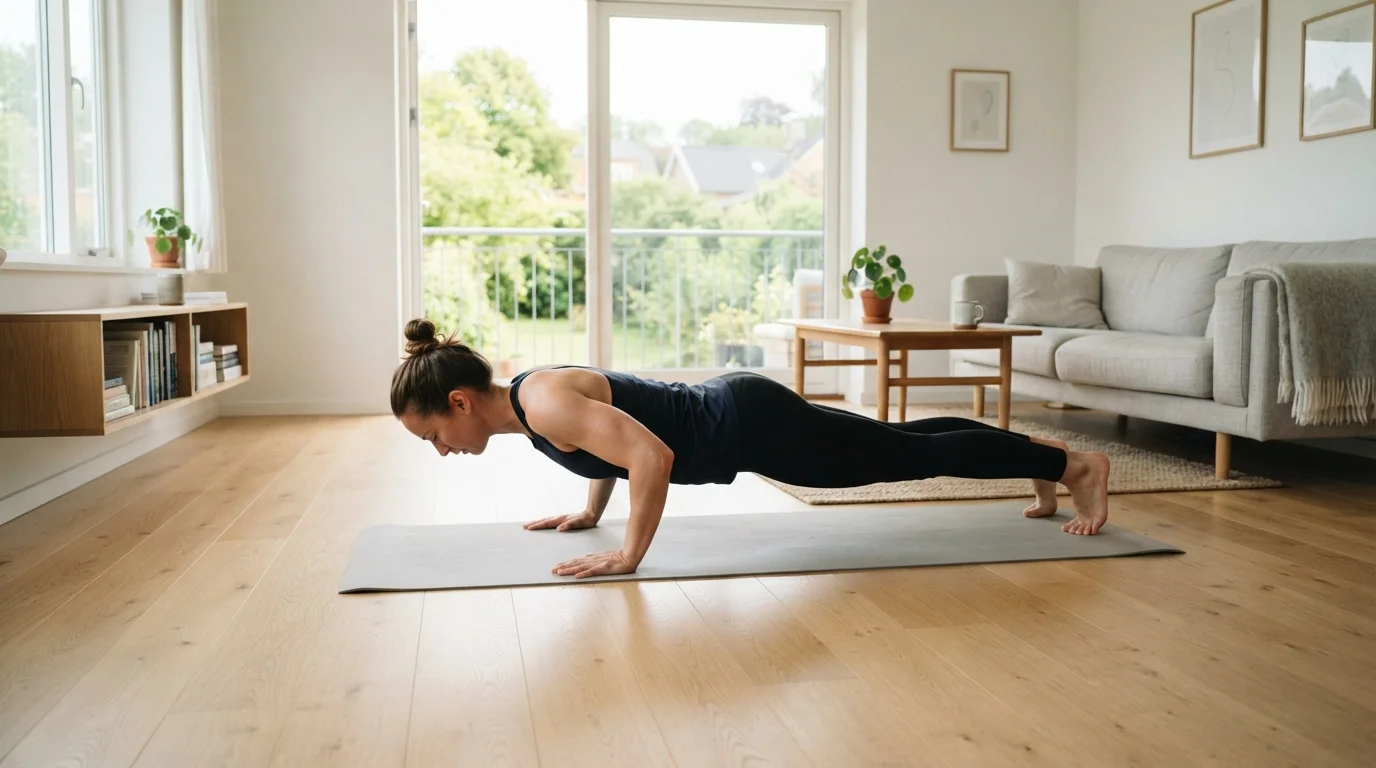
Push-ups, squats, lunges, planks, and burpees engage major muscle groups and elevate heart rate without any gear. Bodyweight training is a well-established method for building endurance and functional strength.
Time savings from eliminating commute
A round-trip gym commute of 30-40 minutes can be redirected into the workout itself, making home training a genuinely time-efficient option for busy schedules.
One frequently underestimated benefit is the removal of psychological friction. Research in behavioral science consistently shows that reducing the steps between intention and action increases follow-through. When your workout space is steps away rather than a 20-minute drive, the likelihood of actually doing it goes up. See habit-building strategies for home exercisers for practical ways to turn that convenience into consistency.
It's also worth challenging the assumption that equipment equals results. Common home fitness myths - like the idea that you need weights to build muscle - often discourage people before they even begin.
~$800
Average annual U.S. gym membership cost
Industry estimates consistently place average American gym membership costs between $40-$70 per month, totaling hundreds of dollars annually before accounting for initiation fees.
150 min
Weekly moderate exercise recommended by health authorities
The U.S. Department of Health and Human Services Physical Activity Guidelines recommend at least 150 minutes of moderate-intensity aerobic activity per week for adults - fully achievable at home.
The Genuine Trade-Offs You Should Know
Honesty matters here. Home workouts are not the right fit for everyone in every circumstance, and glossing over the limitations does readers a disservice.
Limited equipment restricts progressive overload
Continuously increasing the challenge to muscles is essential for long-term strength gains. Without a variety of weights or resistance machines, applying progressive overload requires more creativity and planning.
Fewer structured classes and social motivation
Group fitness classes and training partners provide accountability and social energy that many people rely on to stay consistent. Home training requires replacing that external motivation with internal discipline.
Home distractions can derail focus
Household chores, family members, devices, and domestic noise compete for attention during a home workout in ways that a gym environment typically minimizes.
No professional supervision on-site
Gyms often have trainers available to correct form, suggest progressions, or respond to injury concerns. At home, exercising with poor form goes uncorrected unless you actively seek guidance elsewhere.
Space limitations constrain some exercise types
Certain movements - sprints, heavy barbell lifts, rowing machines - require space or equipment that most homes simply cannot accommodate, narrowing the range of available training options.
Progressive overload - gradually increasing the challenge placed on muscles over time - is a foundational principle of strength development. Without access to a range of weights or resistance machines, it becomes harder (though not impossible) to apply this principle systematically. If building significant muscle mass is your primary goal, a gym's equipment variety offers a real structural advantage.
Social accountability is another factor worth taking seriously. Many people report that group classes, training partners, or even the ambient energy of a gym environment helps them push harder and show up more regularly. If that describes you, the isolation of home training is a genuine obstacle - not a character flaw.
Making Home Fitness Work for Your Goals
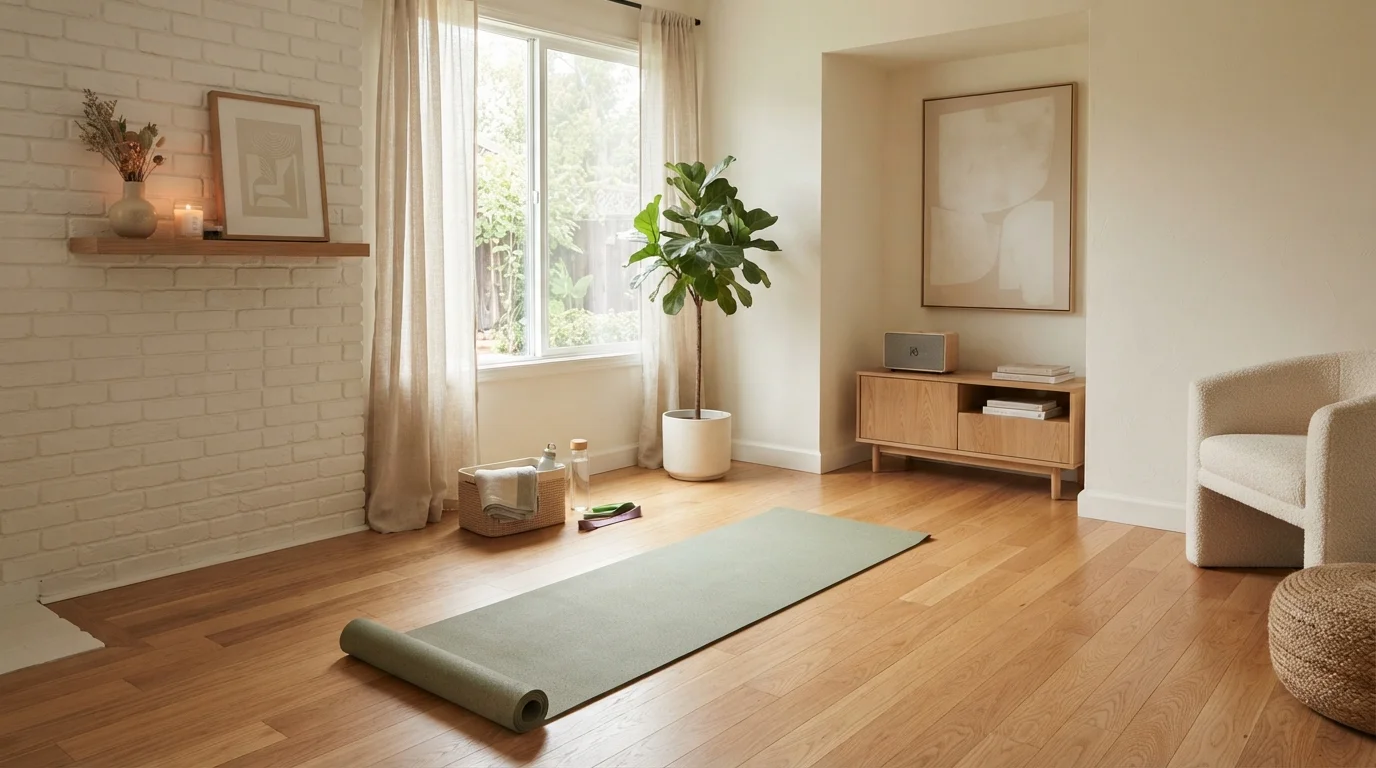
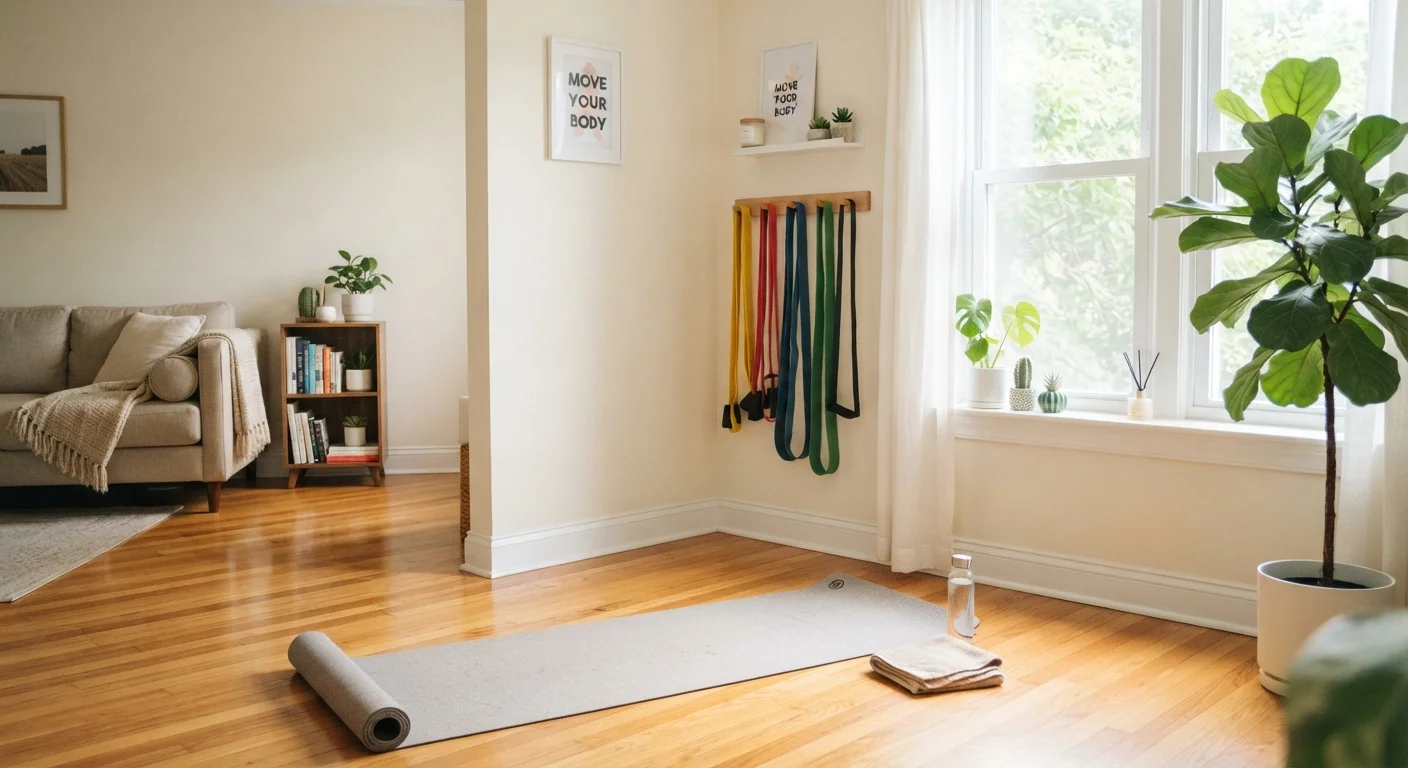
The good news is that most of the disadvantages of home training are manageable with the right approach. Space constraints, for instance, are rarely as limiting as they seem. Setting up a functional home workout space doesn't require a dedicated room or expensive flooring - a cleared corner and a mat are often sufficient.
Choosing the right type of exercise also matters. Balancing strength and cardio at home depends on your individual goals, and both are achievable without a gym. If joint issues or injury recovery are considerations, low-impact home workouts offer effective, gentler alternatives. For those ready to build a full routine from the ground up, building a home workout routine from scratch is a practical next step.
This article is for general informational purposes only and does not constitute medical or fitness advice. Consult a qualified healthcare professional before starting any new exercise program.