Why Space Matters More Than Equipment
The fitness industry has a financial interest in convincing you that effective exercise requires specialized machines, dedicated rooms, and premium gear. In practice, the research on bodyweight training consistently shows that exercises like squats, push-ups, and planks build strength and cardiovascular fitness without any equipment at all. What actually determines whether you exercise is not what you own - it's whether your environment makes starting easy.
A cluttered, inconvenient, or unsafe space becomes a passive barrier. A cleared, safe, visible space becomes a quiet invitation. That's the real goal of this setup process. See our honest breakdown of home versus gym training for context on what you genuinely gain and give up by skipping a membership.
What you will need
Once your space is ready, you'll have everything you need to follow a full-body workout plan that needs nothing more than floor space.
Setting Up Your Space: Step-by-Step
Exercise mat
Provides cushioning for floor work and grip during standing exercises on smooth surfaces.
Resistance bands
Lightweight and inexpensive, bands add progressive resistance without weights or bulky equipment.
Jump rope
Delivers effective cardiovascular training in a very small footprint for minimal cost.
Foam roller
Supports muscle recovery and mobility work after training sessions.
Choose and clear your space
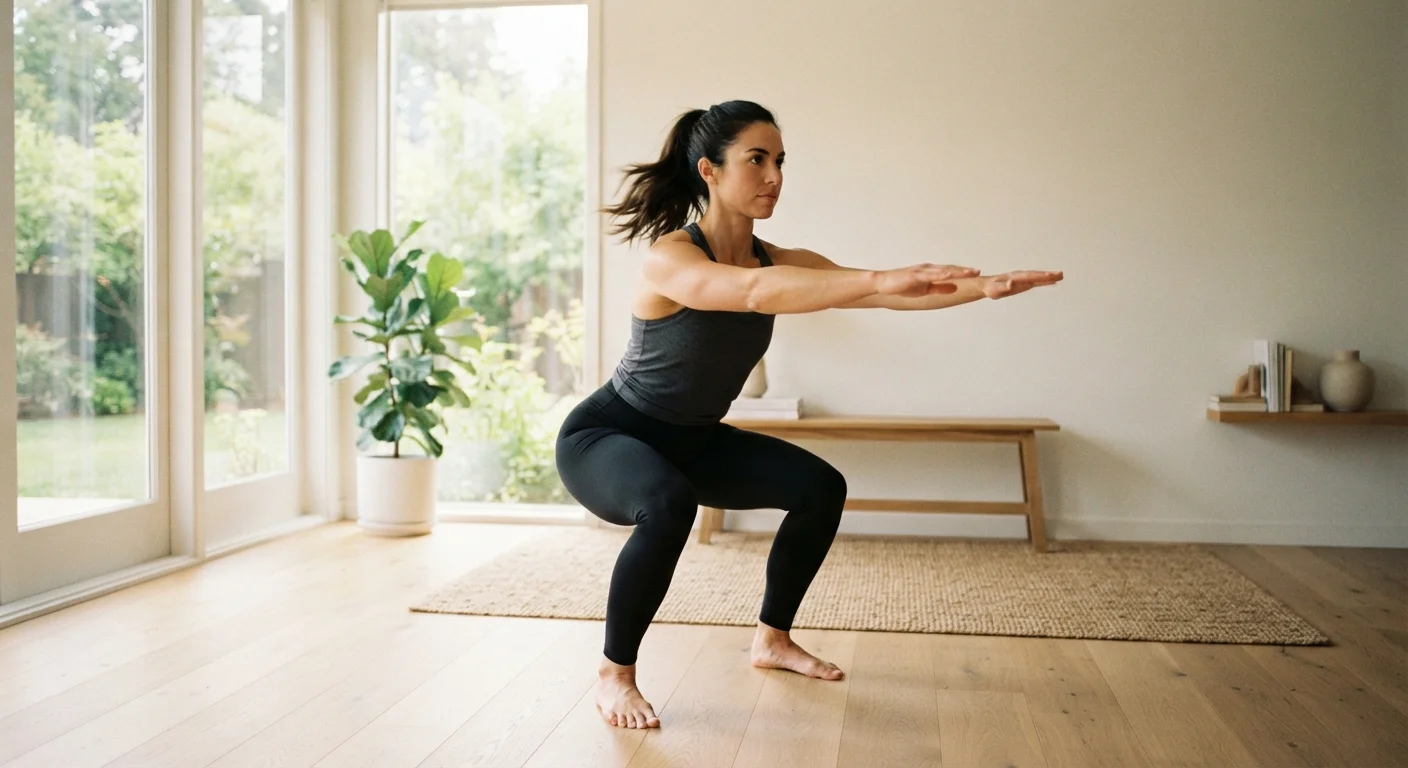
Identify an area in your home where you can stand with both arms extended without touching anything. A bedroom corner, a section of the living room, or a cleared garage bay all work. Remove furniture, cords, rugs that bunch or slide, and any objects that could fall. Even a narrow hallway can accommodate yoga or stretching routines.
Assess and fix the floor surface
Check whether your floor surface is safe for exercise. Carpet provides natural grip but can stress ankles during lateral movements. Hardwood and tile are easier to clean but require a non-slip mat. Place your mat flat, press down the corners, and test for slide before loading any movement onto it.
Ensure adequate ceiling clearance
Stand in your chosen spot and reach both hands fully overhead. If your fingertips graze the ceiling, jumping movements - including jumping jacks, skipping, or jump squats - are unsafe in that spot. Either shift to a lower-impact format or move to a higher-clearance area for those exercises.
Address ventilation and temperature
Exercise raises body temperature quickly. Poor airflow makes workouts harder and increases heat-related discomfort. Open a window, position a fan to circulate air, or train during cooler parts of the day if your space gets warm. Comfortable temperatures support better form and longer sessions.
Gather only the essentials
A quality exercise mat is the one item worth prioritizing. Beyond that, resist the urge to buy gear before knowing what your routine actually needs. Bodyweight exercises - push-ups, squats, lunges, planks - require nothing but floor space. If you later decide to add resistance, a set of bands is among the most affordable options available.
Make the space visible and inviting
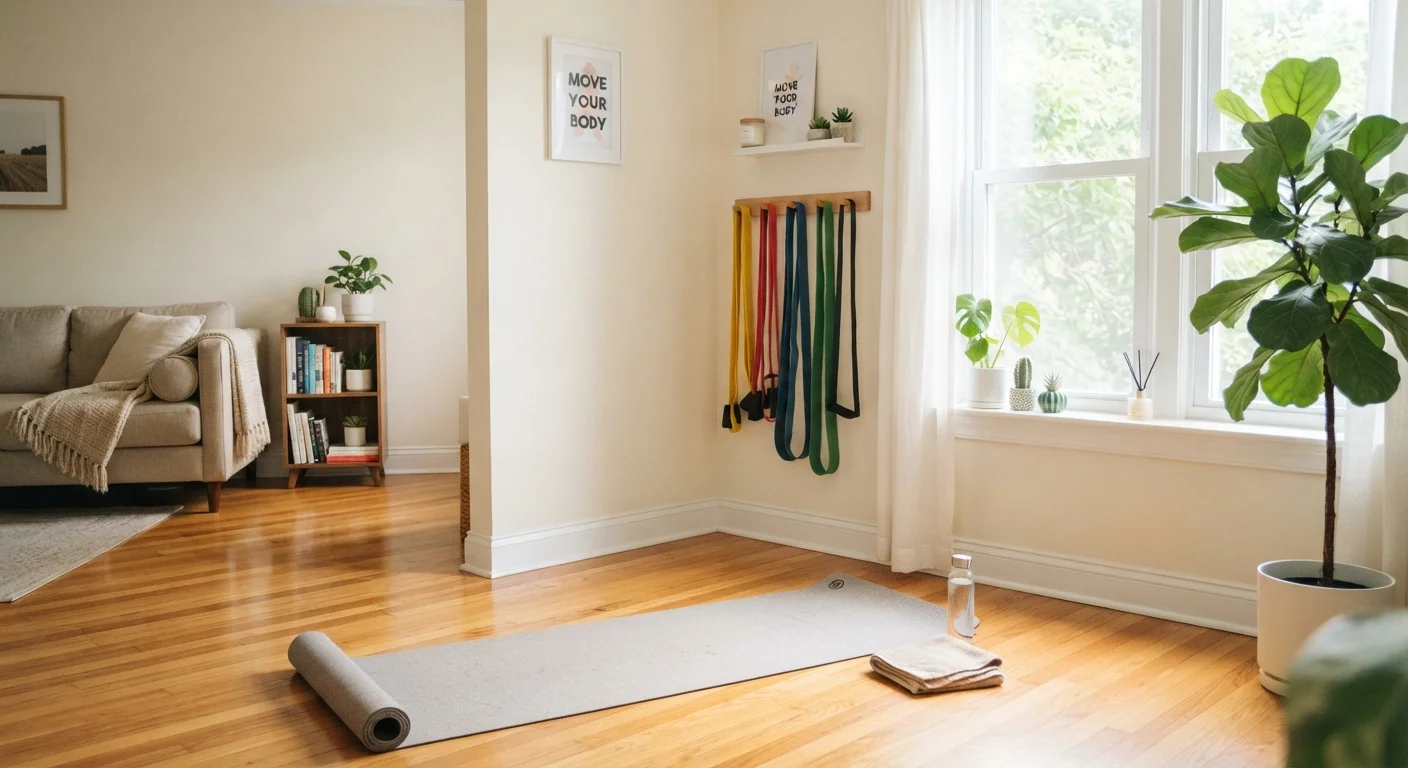
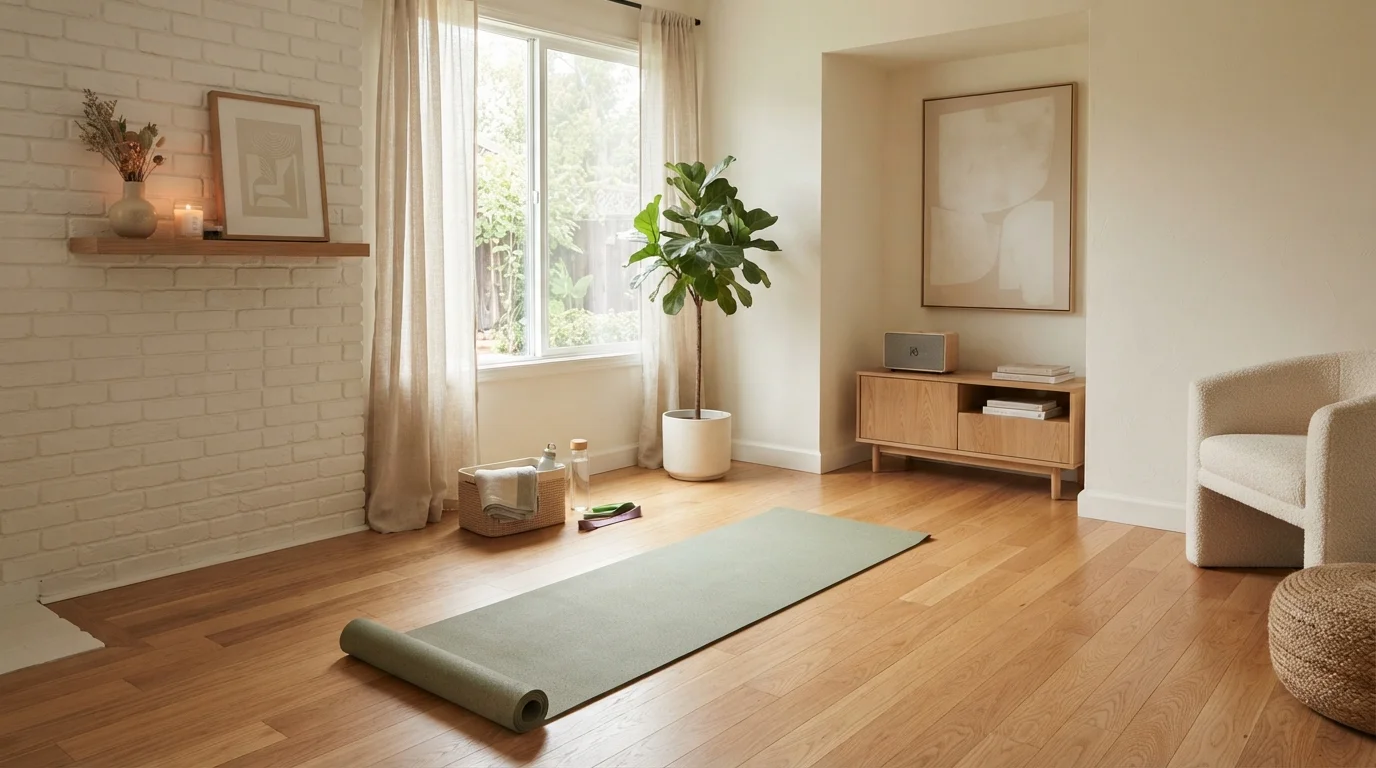
Leave your mat unrolled between sessions, or position it where you'll see it naturally during the day. Visual cues are powerful habit triggers. A space that requires unpacking and clearing every time competes with inertia - a space that's already set up lowers the activation energy needed to start.
Use What You Already Own
A rolled towel substitutes for a foam roller. A sturdy chair serves as a step or dip station. Filled water bottles can stand in for light dumbbells for some movements. Before purchasing anything, audit your home for objects that can double as equipment.
Slippery Surfaces Are a Serious Risk
Tile, polished hardwood, and laminate floors can become dangerously slippery during exercise - especially during dynamic movements. Always use a non-slip mat or grip socks, and check that your mat lies flat without sliding before you begin.
Keeping Costs in Check
The single most budget-protective decision you can make is delaying equipment purchases until you've established a regular routine. Many people spend on gear before habits form, then abandon both. Commit to two or three weeks of bodyweight training first. If you find yourself wanting more variety or resistance after that, you'll be buying from a position of genuine need rather than motivation-fueled optimism.
When you do spend, prioritize durability over novelty. A mat that lasts five years costs less per session than one replaced annually. Resistance bands offer a wide range of exercises in a compact, lightweight package that stores easily in any home. For practical guidance on stretching your dollars further, the Budgeting Basics hub has straightforward strategies worth reviewing.
Consult a Professional Before Starting
This article provides general fitness environment guidance, not medical advice. If you have an existing health condition, injury, or haven't exercised in a long time, speak with a qualified healthcare provider before beginning any new physical activity routine.
Once your space is functional and safe, the next challenge is showing up consistently. Our guide on building exercise consistency at home covers the habit and scheduling strategies that make home fitness sustainable over the long term. And if you're starting from scratch with your routine itself, building a home routine from the ground up is a practical next step.
This article is for general informational purposes only and does not constitute medical or fitness advice. Consult a qualified healthcare professional before beginning any new exercise program, particularly if you have health conditions or injuries.