What Each Approach Actually Offers
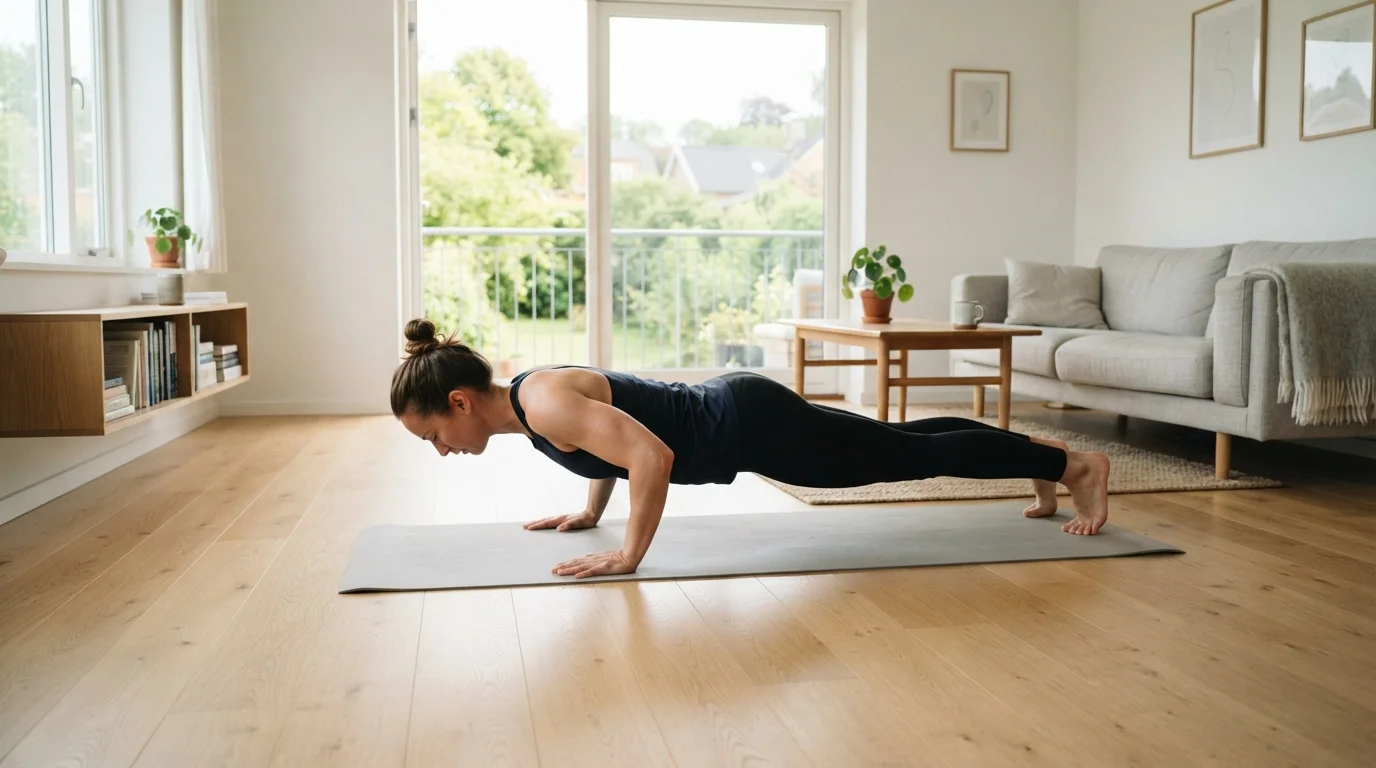
Bodyweight training uses your own body mass as resistance. Push-ups, squats, lunges, planks, and dips are foundational examples. The key variables you can manipulate are leverage (e.g., elevating your feet), tempo (slow negatives), and volume (more sets and reps). For a practical framework on structuring these sessions, see building a consistent home workout routine.
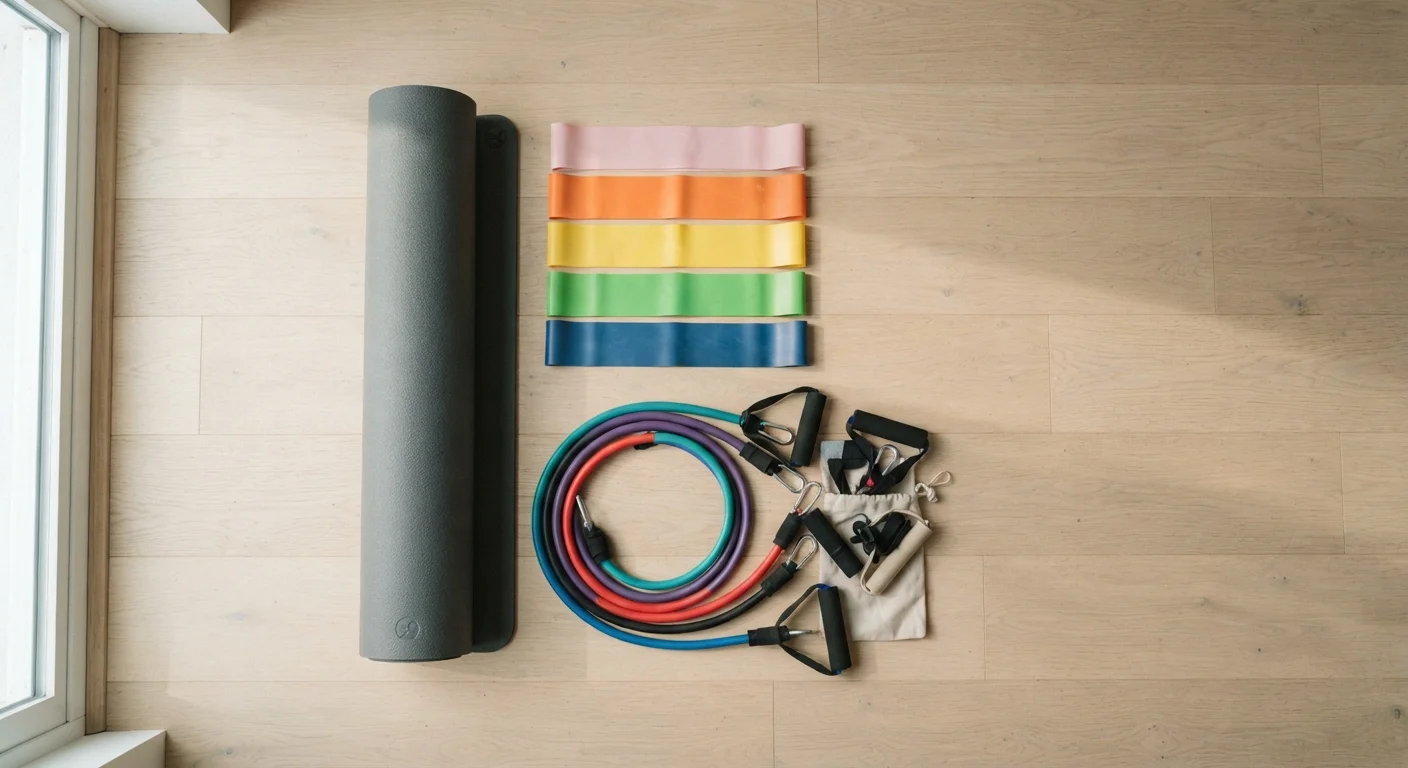
Resistance bands are elastic tools - typically made from latex or fabric - that create tension throughout a movement's range of motion. Unlike free weights, band resistance increases as the band stretches, which means the hardest point of a rep is at peak contraction rather than the bottom. This is called variable resistance and it's a distinct mechanical stimulus.
Critically, bands don't replace bodyweight exercises - they layer on top of them. A banded squat is still a squat. The band simply changes the force curve.
Where They Genuinely Differ
| Criterion | Resistance Bands | Bodyweight-Only |
|---|---|---|
| Cost | Under $30 for a full set | Free |
| Portability | Fits in a small bag | No equipment to carry |
| Pulling movements | Rows, pull-aparts, lat pull-downs | Very limited options |
| Resistance type | Variable (increases with stretch) | Fixed (gravity-based) |
| Assisted progressions | Yes (e.g., band-assisted pull-ups) | No direct equivalent |
| Body control development | Moderate | High |
| Setup required | Minimal (anchor point helps) | None |
| Durability | Bands wear over time | N/A - no equipment |
The most practically significant difference is in pulling movements. Bodyweight pulling - rows using a table edge, or inverted rows under a sturdy surface - is awkward to set up and limited in range. Bands anchored to a door, post, or fence allow standing rows, pull-aparts, and lat pull-downs that are far more accessible. This matters because most people's back and rear-shoulder muscles are undertrained relative to their pushing muscles.
Bands also make assisted progressions easier. If you're working toward a full pull-up, a looped band around a bar reduces your effective bodyweight during the movement - something you simply can't replicate without equipment.
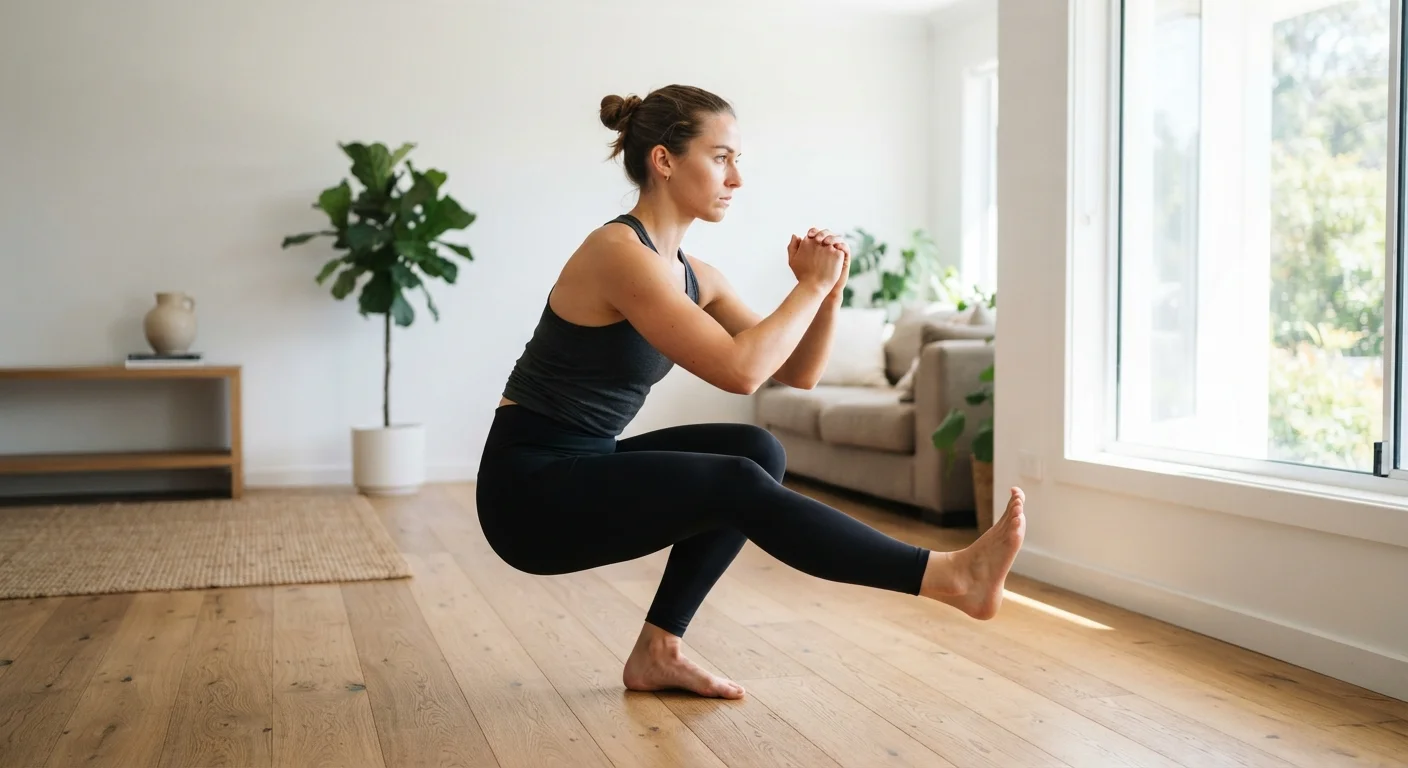
On the other hand, pure bodyweight training develops body control and proprioception that band-assisted work doesn't automatically provide. Single-leg deadlifts, pistol squat progressions, and pike push-ups build balance and coordination alongside strength.
What Stays the Same: The Principles That Drive Results
Here's the honest truth: the underlying physiology doesn't care whether resistance comes from gravity or elastic tension. Muscle fibers adapt to mechanical tension, metabolic stress, and muscle damage - regardless of the tool producing it.
Progressive overload is the non-negotiable driver of improvement in both approaches. With bodyweight, you progress through harder variations and slower tempos. With bands, you progress by using a heavier resistance band or increasing reps. The principle of progressive overload without weights applies equally to both methods.
Consistency, recovery, and adequate protein intake matter just as much as which tool you choose. A rigorous bodyweight program followed consistently will outperform a band-based program done sporadically - and vice versa. This reality is one of several home fitness myths worth re-examining.
~$20-30
Typical cost of a resistance band set
A complete set of loop or tube bands with varying resistance levels is widely available at this price range, according to general retail data.
0
Equipment needed for bodyweight training
Push-ups, squats, lunges, and planks require no tools, making bodyweight the most accessible fitness method available.
Practical Considerations: Cost, Accessibility, and Long-Term Fit
A full set of resistance bands - typically ranging from light to heavy tension - can be purchased for under $30, making them among the most cost-effective fitness tools available. Compare that with a single adjustable dumbbell, which can cost ten times as much, and the value proposition is clear for budget-conscious households.
Bodyweight training costs nothing. That's not a small advantage. The ability to train in a hotel room, a park, or a living room with zero setup is a meaningful lifestyle benefit, particularly for people whose schedules are unpredictable.
Both approaches scale across fitness levels. Whether you're just starting out or have years of training experience, both methods can be adapted - a point explored in depth for readers wondering about adapting home workouts at every fitness stage.
Bands and Bodyweight Work Well Together
Most fitness professionals don't view these as an either/or choice. Many effective home training programs use bodyweight movements as the foundation and incorporate bands selectively for pulling exercises, warm-up activation work, or to add load to specific movements. You don't have to choose one exclusively - the two complement each other naturally.
This article is for general informational purposes only and does not constitute medical or personal fitness advice. If you have an injury, chronic condition, or other health concern, consult a qualified healthcare professional before beginning any new exercise program.