What Actually Separates These Two Formats
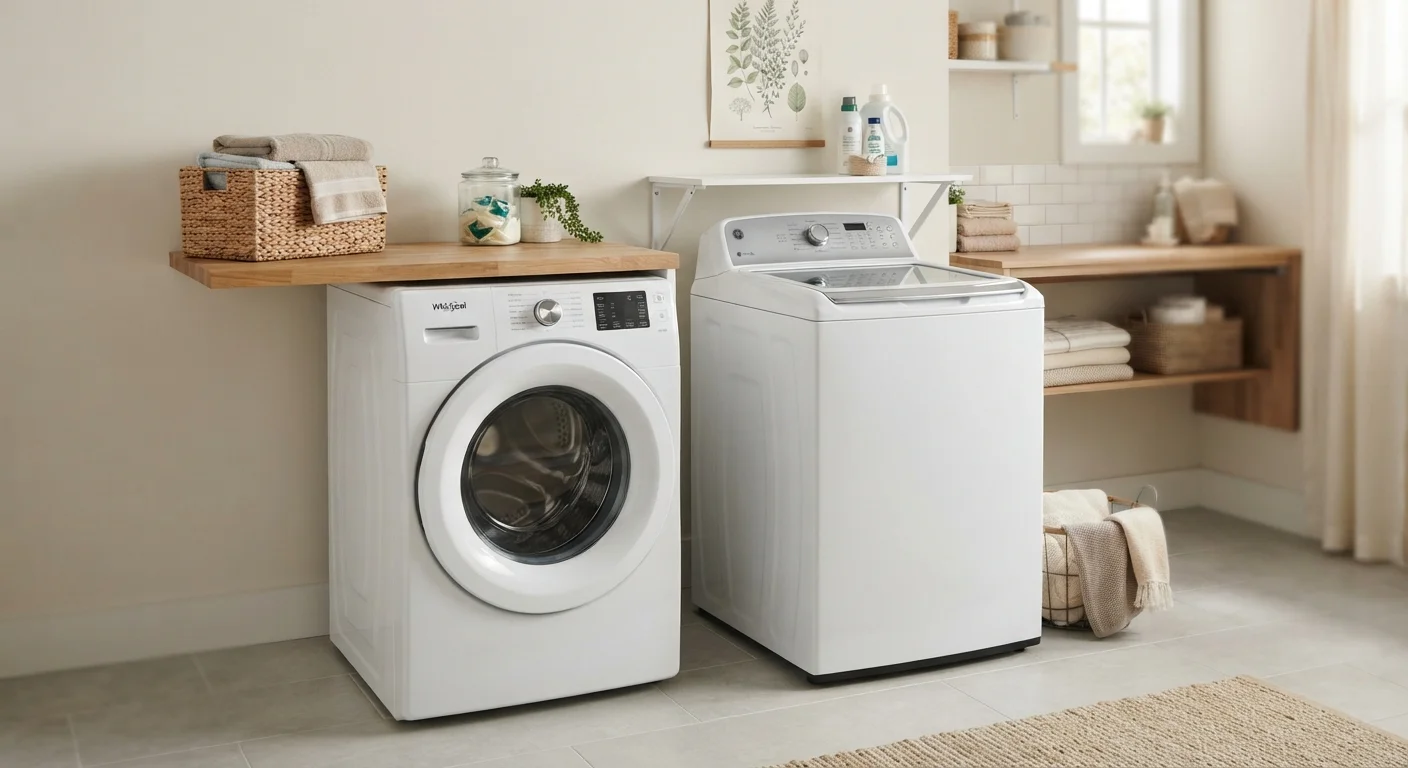
The front-load vs. top-load debate gets oversimplified quickly - usually reduced to price. But the real differences run deeper, affecting water consumption, fabric care, cycle length, and how much attention the machine needs over its lifespan. Before defining what matters for your household, it helps to understand the mechanical differences driving these trade-offs.
Front-loaders tumble clothes through a small pool of water at the drum's base. This action is gentler on fabric and requires far less water - typically 13-20 gallons per cycle compared to 28-45 gallons for a standard agitator top-loader. High-efficiency (HE) top-loaders without agitators close the gap somewhat, but front-loaders still hold an efficiency edge in most head-to-head tests.
Top-loaders with central agitators move clothes through water more vigorously. That produces faster cycles and generally effective cleaning on everyday loads, but can be harder on delicate fabrics over time. Agitator-free HE top-loaders use impellers instead, which are gentler but still don't match the tumble action of a front-loader for heavily soiled items.
| Criterion | Front-Load Washer | Top-Load Washer |
|---|---|---|
| Water use per cycle | ~13-20 gallons | ~28-45 gallons (agitator) |
| Spin speed (typical) | 1,000-1,600 RPM | 700-900 RPM |
| Average cycle time | 60-90 minutes | 35-50 minutes |
| Fabric gentleness | High (tumble action) | Moderate (agitator) to high (impeller) |
| Stackable with dryer | Yes | No |
| Mid-cycle loading | Generally not possible | Yes |
| Mold/odor risk | Higher; gasket maintenance needed | Lower; naturally ventilated |
| Energy efficiency | Generally higher rated | Moderate (HE models improve this) |
Spin Speed, Drying Time, and Cycle Length
One underappreciated advantage of front-loaders is spin speed. Most front-load machines spin at 1,000-1,600 RPM, compared to 700-900 RPM on typical top-loaders. Higher spin speeds extract more moisture before the load moves to the dryer, which translates to shorter drying cycles and lower dryer energy use - a compounding efficiency benefit.
Cycle time tells a different story. Front-loaders are slower; a standard wash can take 60-90 minutes versus 35-50 minutes on many top-loaders. For households doing multiple loads in a single session, that gap matters. Upfront cost comparisons rarely account for this kind of time trade-off, but it's a legitimate factor in daily usability.
40-50%
Less water used per cycle by front-loaders
Estimates based on general appliance industry data comparing standard agitator top-loaders to front-load machines under typical load conditions.
1,600 RPM
Top spin speed on many front-load models
Higher RPM extracts more moisture before drying, reducing dryer run time compared to lower-speed top-load machines.
10-14 years
Typical lifespan for both washer formats
Appliance industry estimates indicate both formats have comparable expected service life under normal household use conditions.
Maintenance: Where Front-Loaders Demand More Attention
Front-loaders have a well-documented vulnerability: the rubber door gasket creates a sealed, damp environment that can develop mold and musty odors if not actively managed. Manufacturers typically recommend leaving the door ajar after each cycle, wiping down the gasket regularly, and running a drum-cleaning cycle monthly. This isn't a dealbreaker, but it's a real ongoing responsibility.
Top-loaders are inherently more ventilated - the open-top design lets moisture escape naturally. They're also easier to clean internally, with no tight gasket seals to contend with. That said, some home appliance maintenance tasks are simpler than they appear - front-loader upkeep, once it becomes habit, adds only a few minutes per week.
Repair complexity is broadly similar between formats, though front-loader drum bearings and door seals are common service points. Both formats have comparable average lifespans of around 10-14 years with normal use.
HE Detergent Is Required for Both Formats
Front-loaders require HE (high-efficiency) detergent to prevent excess sudsing that can interfere with the wash cycle and damage components. Many modern HE top-loaders carry the same requirement. Using standard detergent in either type can shorten the machine's lifespan and void the manufacturer warranty. Check your model's documentation before buying detergent in bulk.
Making the Call: Format vs. Household Fit
Neither format is universally superior. Front-loaders reward households with moderate-to-high laundry volume, a preference for gentler fabric care, and the discipline to keep up with gasket maintenance. Top-loaders suit households that value quick turnaround, low-fuss upkeep, and flexible loading - including the ability to add a stray sock after the cycle starts.
Space is also a genuine constraint. Front-loaders can stack; top-loaders cannot. In apartments or compact laundry closets, that alone can settle the decision. Similarly, if ergonomics are a concern, a top-loader avoids the repeated bending that front-loaders require - though optional pedestal risers are available for front-loaders at added cost.
For a broader look at how appliance layout choices ripple through daily use, the countertop vs. full-size dishwasher comparison covers similar format-versus-fit thinking. The same logic applies here: match the machine to how your household actually operates, not to what a spec sheet suggests is objectively better.