Why Condition Labels Matter More Than the Discount
Seeing a 20-40% markdown on an item labeled "refurbished" or "open-box" is appealing - but the label itself does most of the work. Two products carrying the same discounted price can represent very different levels of testing, cosmetic wear, and warranty protection depending on which seller applied the label and by what standard.
This reference breaks down the most common condition designations you'll encounter and what each one actually obligates the seller to provide. If you're comparing products across multiple listings, understanding these distinctions is as important as comparing specifications. For smartphone purchases specifically, see our detailed checklist for refurbished and used phones for grading standards and IMEI verification steps.
| Highest-reliability tier | Manufacturer-certified refurbished |
| Typical warranty - manufacturer certified | 90 days to 1 year |
| Typical warranty - seller refurbished | 30 days or none |
| Open-box: original packaging intact? | No - opened by definition; accessories may be missing |
| "Used" implies testing or repair? | No - sold as-is unless explicitly stated |
| Seller refurbished: universal standard? | None - standards set by individual seller |
Decoding the Most Common Condition Labels
Retailers and manufacturers use several distinct designations. Here's what each typically means - and where standards can vary.
Certified Refurbished (Manufacturer)
The manufacturer or an authorized partner disassembles the unit, replaces failed or worn parts, runs diagnostic tests, and repackages the item - often including a limited warranty. This is generally the most reliable tier of refurbished product because accountability stays with the original maker. Look for language like "manufacturer certified" or "factory refurbished" to confirm the source.
Certified Refurbished (Retailer-Authorized)
Some large retailers run their own refurbishment programs to a defined internal standard. These programs vary in rigor and warranty terms. Check the specific program documentation rather than assuming equivalence with a manufacturer program.
Seller Refurbished
An independent third-party seller repaired or inspected the item. There is no universal standard governing this label. Quality depends entirely on the individual seller's practices. Review seller ratings, stated return windows, and what the listing says was actually tested or replaced before committing. Always cross-reference return policy terms - our return policy guide covers restocking fees and condition requirements that often apply to these purchases.
Open-Box
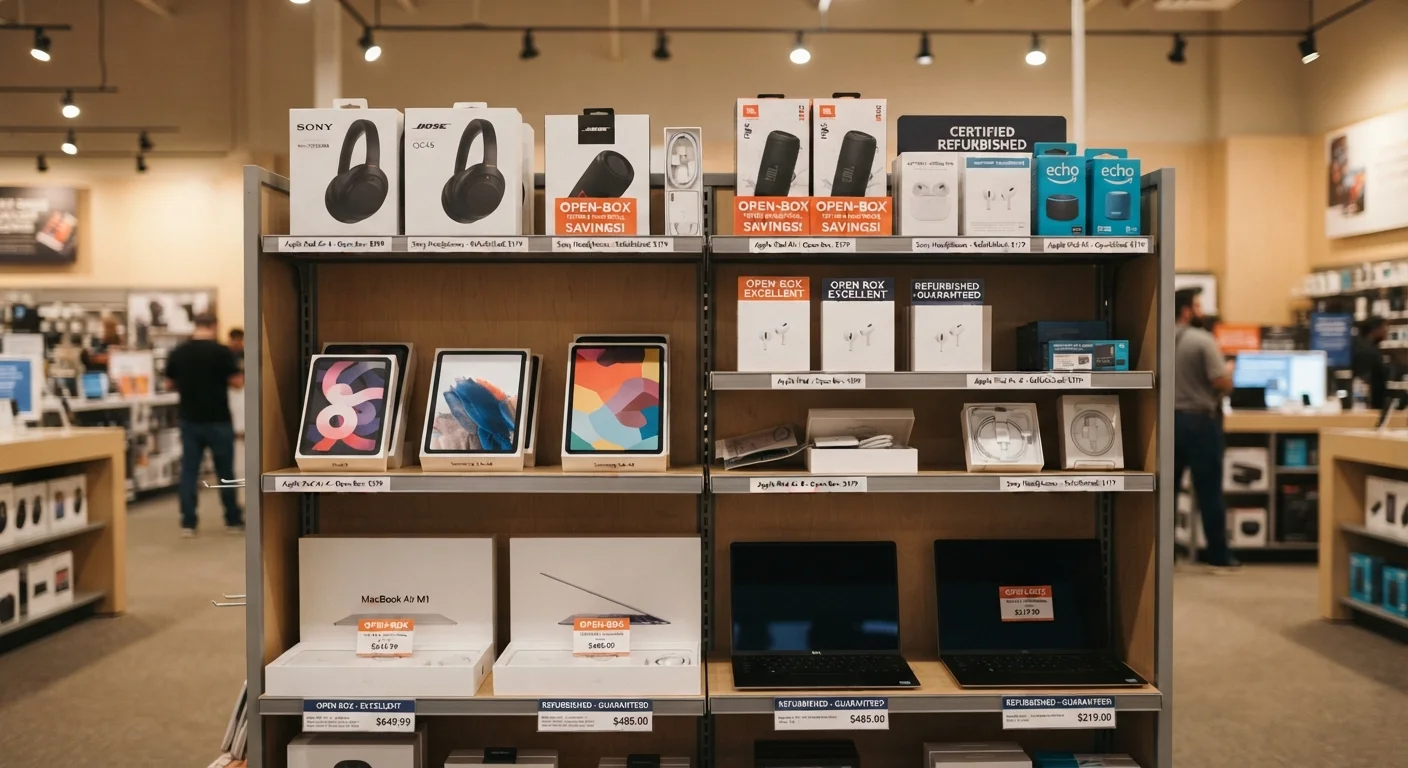
The item was sold, then returned - often unused or barely used. The original packaging has been opened, and the unit may show minor cosmetic handling marks. Functionality is typically intact, but original packaging contents (manuals, accessories) may be incomplete. Some retailers grade open-box items on a sub-scale (e.g., Excellent, Good, Acceptable) that indicates cosmetic condition more precisely.
Used / Pre-Owned
No standardized testing or restoration is implied. The item sold as-is in its current condition. Warranties, if any, are seller-specific and often very short.
Certified Refurbished
A product restored and tested by the manufacturer or an authorized partner, typically accompanied by a limited warranty. Standards and scope vary by program, so always confirm who issued the certification.
Seller Refurbished
A product repaired or inspected by an independent third-party seller without manufacturer involvement. No universal quality standard applies; quality depends on the seller's own practices.
Open-Box
A returned product whose original packaging has been opened. The item is usually functional but may have cosmetic handling marks and could be missing accessories or documentation.
As-Is
The item is sold in its current condition with no implied warranty, testing, or repair. The buyer accepts the product exactly as listed, including any defects.
Cosmetic Grade
A sub-rating (e.g., Excellent, Good, Fair) used by some retailers to describe visible surface wear - scratches, dents, scuffs - independent of functional condition.
Restocking Fee
A charge, typically a percentage of the purchase price, deducted from a refund when a customer returns an item. Common on open-box and refurbished purchases.
What to Verify Before You Buy
Regardless of the label, four questions matter most:
- What was actually tested or replaced? A credible listing states this explicitly - battery, display, internal components. Vague language like "fully functional" without specifics is a red flag.
- What warranty is included? Manufacturer-certified programs typically offer 90 days to one year. Seller-refurbished items may offer 30 days or nothing. Confirm the warranty is from an entity you can actually reach.
- Are accessories included? Open-box units frequently ship without original cables, chargers, or manuals. Factor in replacement costs if these are missing.
- What is the return window? Shorter windows and restocking fees are common with secondary-condition merchandise. Read these terms before purchase, not after delivery.
For appliances and electronics, condition terminology appears alongside technical specifications that can themselves be confusing. Our home appliance terms glossary and laptop buyer's glossary can help you evaluate whether the underlying product meets your needs - independent of its condition grade.
Condition Labels Are Not Regulated
There is no federal regulatory body in the U.S. that standardizes terms like 'refurbished,' 'renewed,' or 'open-box' across all sellers. Individual manufacturers and large retailers may define and enforce their own program standards, but marketplace listings from third-party sellers are not required to meet any external benchmark. Always read the full item listing, not just the label.