What the Shelf Label Is Actually Telling You
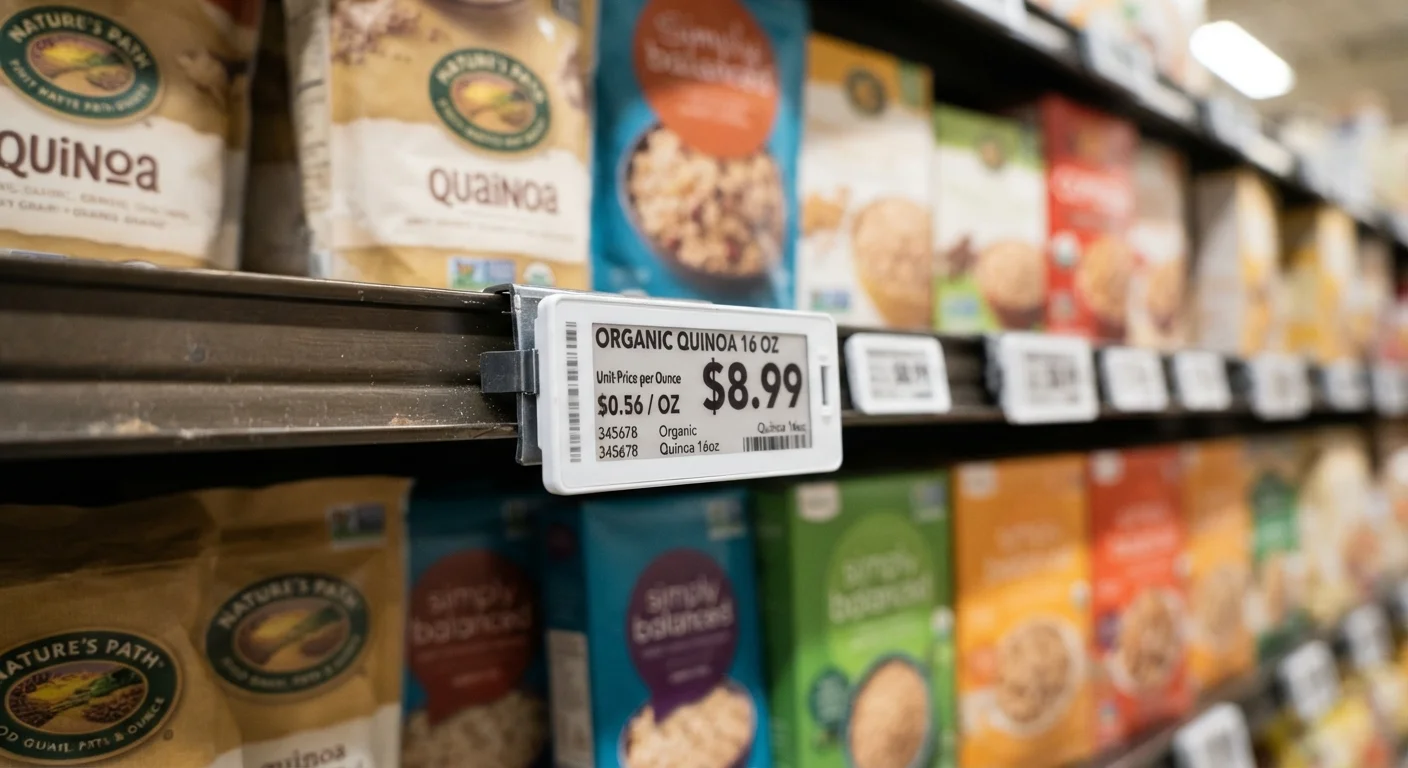
Every grocery shelf label carries two prices: the big number everyone sees, and a smaller figure - the unit price - that most shoppers walk past. That smaller number does the real comparison work. It converts every product on the shelf to the same measuring stick so you can evaluate a 12-ounce jar against a 24-ounce jar without doing the math in your head.
Typical unit price labels show the cost per ounce, per pound, per 100 count, or per fluid ounce depending on the product category. Paper towels might show cost per sheet. Bottled water often shows cost per ounce. Once you know which line to look at, shelf comparisons take seconds instead of guesswork.
This connects directly to a broader principle covered in our guide to value-based shopping: price and value are different numbers, and confusing them is where grocery budgets quietly leak.
Unit Pricing Laws Vary by State
Some U.S. states require retailers to display unit prices on shelf labels by law, while others have no such mandate. In stores where unit pricing is not required, labels may be inconsistent or absent for some products. When in doubt, the calculation is always available to you: price divided by quantity.
The Math Behind the Number
Unit price is straightforward arithmetic: divide the shelf price by the package quantity. A 28-oz can priced at $2.24 works out to $0.08 per ounce. A 15-oz can at $1.50 comes to $0.10 per ounce. The larger can wins - but only because you ran the numbers. The sticker price alone never tells you that.
The calculation retailers use is identical. Where it gets tricky is when two competing products use different base units. One laundry detergent might show cost per ounce while another shows cost per load. Before you treat those numbers as directly comparable, make sure the denominator is the same - or convert one to match the other.
~$500
Estimated annual savings for consistent unit-price shoppers
Consumer advocacy research has estimated that households that routinely compare unit prices can reduce grocery spending by hundreds of dollars annually, though exact figures vary by household size and location.
30%+
Typical unit-price gap between package sizes
Studies on grocery pricing have observed unit price differences of 30% or more between the smallest and largest package sizes of the same product, though this varies widely by category and retailer.
Unit pricing also exposes a common promotional illusion. A sale-tagged item at a 20% discount can still carry a higher unit price than a store brand at full price. As our article on how markdowns are priced explains, a discount is only meaningful if the starting price was competitive to begin with.
Common Situations Where Unit Price Matters Most
Certain shopping moments are where unit price awareness pays off most reliably:
- Multi-pack promotions: A "buy two" bundle priced together may or may not beat buying two singles. Divide the bundle price by total units to check.
- Store brand vs. name brand: Unit pricing removes brand packaging from the equation and puts both on equal footing.
- Warehouse-club sizes: Large-format quantities usually carry lower unit prices, but not universally - and only if you'll use the product before it expires.
- Weekly sale items: A sale sign creates urgency; the unit price tells you whether it's actually a deal.
These comparisons extend beyond food. Paper towels, dish soap, shampoo, and vitamins all benefit from the same unit-price check. If a shelf label is missing, the math is simple enough on a phone calculator.
Quick Unit Price Check at the Shelf
If the shelf label is missing or the unit doesn't match another product you're comparing, use your phone's calculator: divide the total price by the total quantity (ounces, count, etc.). This takes under 10 seconds and removes all guesswork from the comparison.
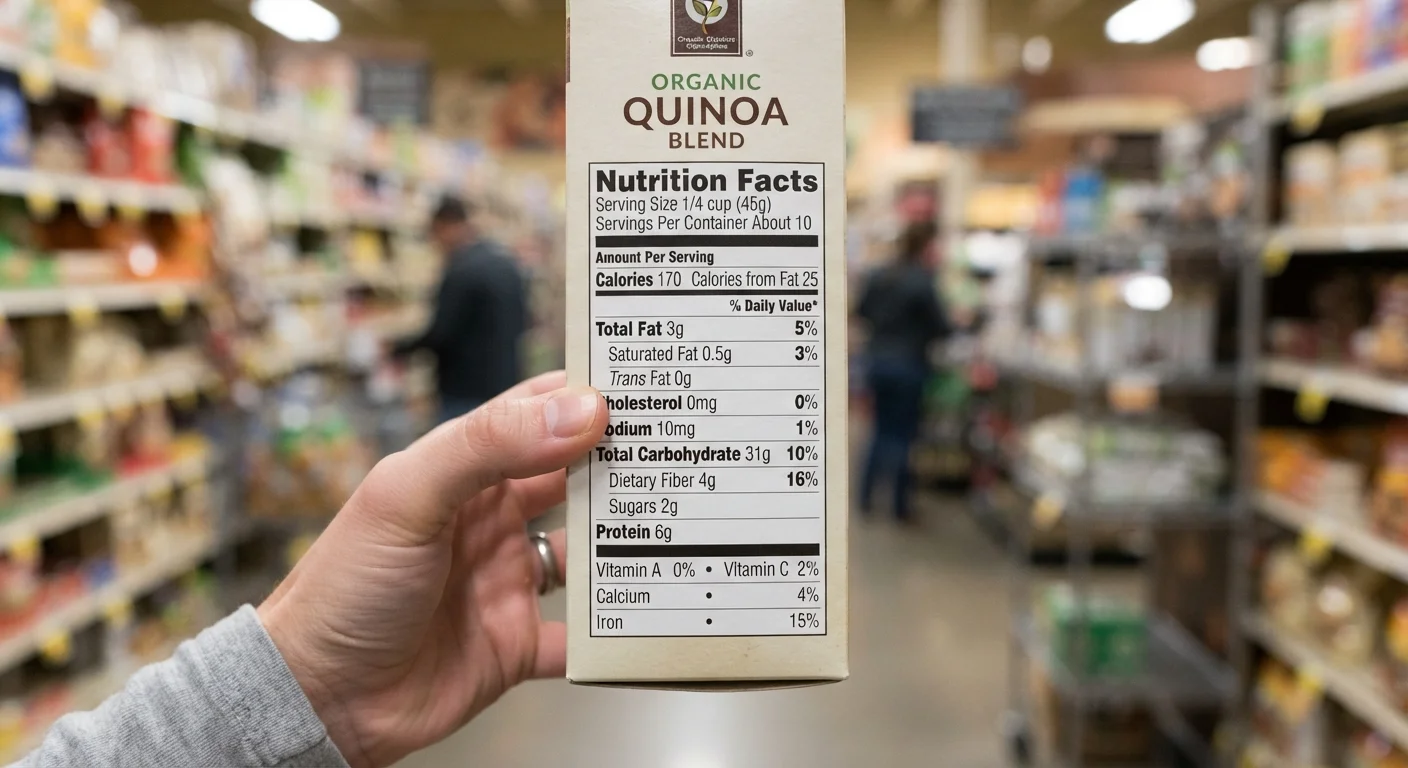
For food products, pairing unit price awareness with label literacy helps you compare like with like - our guide to reading nutrition labels walks through how package size affects the per-serving numbers you see there too.
Why Shoppers Miss It - and How to Build the Habit
Retail environments are designed to direct attention toward the shelf price, promotional signage, and packaging size - not the unit price. The unit price is typically in the smallest font on the label, placed below the item name and total price. Stores aren't required to make it prominent.
Building the habit is mostly about knowing where to look. Before you pick a product off the shelf, glance at the bottom-left corner of the label for the per-unit figure. Over a few shopping trips, it becomes automatic. The payoff compounds: consistent unit-price comparisons across a weekly grocery run can meaningfully reduce the total at checkout without requiring coupons, apps, or loyalty programs.
The habit also protects against a psychological tendency to equate larger packages with better value - a shortcut that's wrong often enough to cost real money. As we examine in why a lower price tag doesn't always mean a better deal, perceived savings and actual savings frequently diverge. Unit price math is one of the simplest tools to close that gap.