Why Most Skincare Advice Feels Overwhelming
Scroll through any beauty account for five minutes and you'll encounter 12-step routines, serums layered in precise sequences, and ingredients that sound more like a chemistry exam than a morning habit. No wonder so many people freeze and do nothing at all.
Here's the reality: the skincare industry benefits from complexity. The more steps seem essential, the more products get sold. But healthy, well-cared-for skin doesn't require a shelf of bottles - it requires a few consistent habits done regularly. This guide cuts through the noise so you can start confidently, not perfectly.
If you're also working to build other healthy habits on a budget, you might find our guides on building a home workout routine or starting a personal budget useful companions to this one - the principle is the same: start small, stay consistent.
The Only Three Products You Actually Need
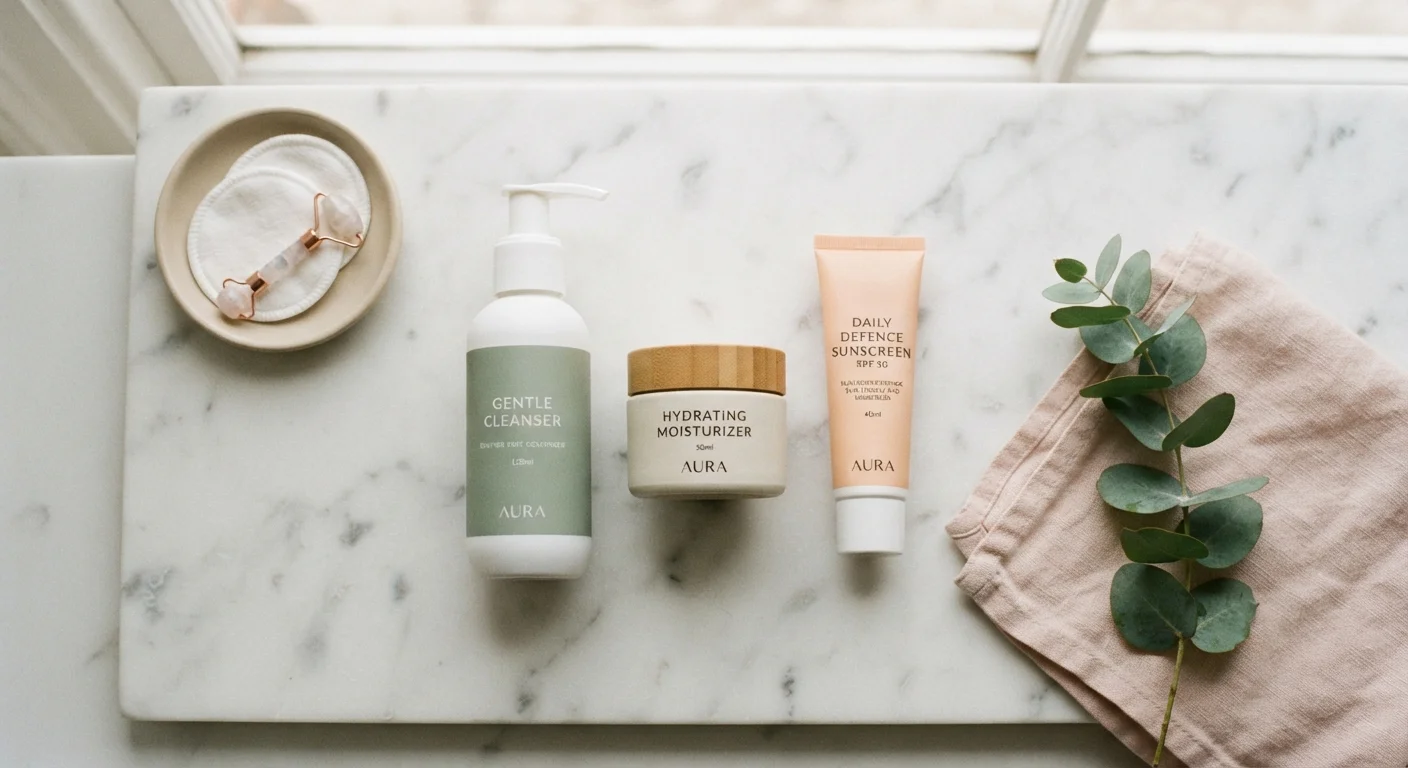
Before anything else, lock in these three:
- Cleanser: Removes dirt, excess oil, sunscreen, and pollution. A gentle, fragrance-free formula works for nearly every skin type.
- Moisturizer: Helps your skin maintain its barrier - that protective layer that keeps hydration in and irritants out. Even oily skin benefits from a lightweight moisturizer.
- Sunscreen (SPF 30 or higher): UV exposure is the leading external cause of premature skin aging and is linked to skin cancer risk. Daily SPF is the single highest-impact skin health habit you can build.
That's genuinely it for a foundational routine. Once these three feel automatic, you can thoughtfully add extras - but they're not the foundation. They're the decoration.
Order matters more than you think
Even with just three products, applying them in the right sequence helps each one do its job. As a rule: thinnest to thickest, with sunscreen always last in the morning. Once your basic routine feels solid, learning the logic behind layering makes a real difference.
Once you've got the basics down, learn how product order affects results: see skincare layering explained for a practical walkthrough.
Understanding Your Skin Type
Choosing products that suit your skin type makes a real difference in how well they work and how your skin feels day to day. The four common types:
Skin barrier
The outermost layer of skin that acts like a shield, keeping moisture in and irritants out. When it's healthy, skin feels comfortable and resilient.
SPF
Sun Protection Factor - a measure of how well a sunscreen protects against UVB rays. SPF 30 or higher is the general recommendation for daily use.
Dry skin type
Skin that produces less oil than average, often feeling tight or looking flaky. It benefits from richer, more hydrating moisturizers.
Oily skin type
Skin that produces excess sebum (natural oil), often appearing shiny. Lightweight, non-comedogenic (pore-friendly) products work best.
Combination skin
Skin that is oily in the T-zone (forehead, nose, chin) but normal or dry elsewhere. It may need slightly different care in different areas.
Non-comedogenic
A term used on product labels to indicate the formula is designed not to clog pores - particularly useful for oily or acne-prone skin.
A quick at-home test: wash your face with a gentle cleanser, pat dry, and observe after 60 minutes with nothing applied. Tightness or flaking points to dry skin. Shine across your whole face suggests oily. Shine only across the forehead, nose, and chin (the T-zone) with drier cheeks indicates combination skin. Calm, comfortable skin with no extremes is generally normal.
Sensitive skin isn't technically a type on its own - it describes reactivity. You can have sensitive oily skin or sensitive dry skin. If your skin frequently turns red, stings, or reacts to new products, look for fragrance-free, minimal-ingredient formulas and introduce one new product at a time.
If you have a diagnosed skin condition such as eczema, psoriasis, or rosacea, consult a dermatologist before building your routine - general advice may not apply.
Building Your Morning and Evening Routine
Keep both routines short and purposeful:
Morning
- Cleanse (or simply rinse with water if your skin is on the drier side)
- Moisturize
- Apply sunscreen as the final step
Evening
- Cleanse thoroughly - especially if you've worn sunscreen or makeup
- Moisturize (you can use a slightly richer formula at night if desired)
That's two minutes in the morning and two at night. The goal at this stage is repetition, not perfection. Skipping a night occasionally won't derail your skin; abandoning the habit entirely will.
If you're building out a beauty toolkit alongside your routine, a practical look at basic makeup essentials can help you avoid overbuying there too.
Double-cleansing: worth knowing about
If you wear sunscreen daily (which you should), a single cleanse may not fully remove it. Double-cleansing - using an oil-based cleanser first, followed by your regular gentle cleanser - is a helpful evening technique. It's not mandatory for beginners, but worth experimenting with once your routine is established.
What to Skip (At Least for Now)
The following categories are frequently marketed as essentials but are genuinely optional for beginners:
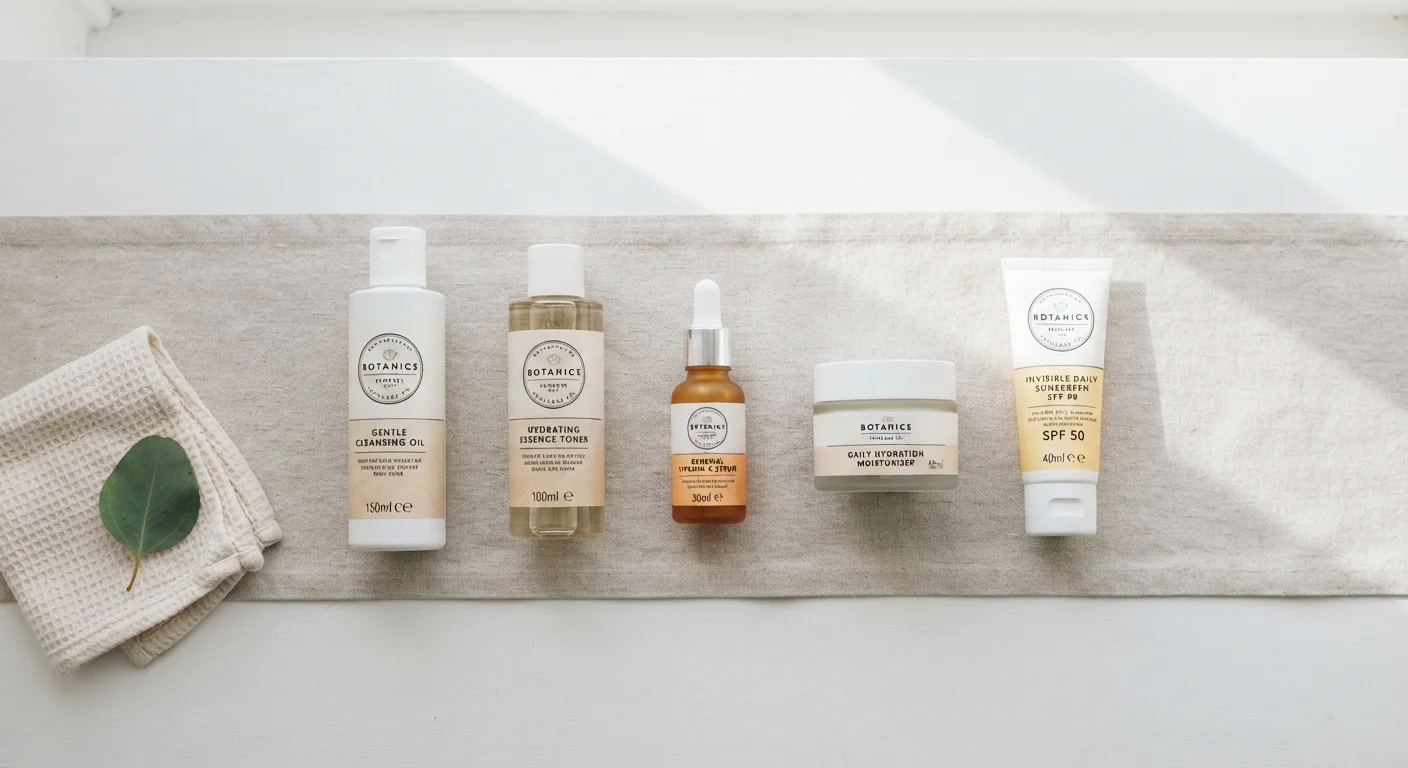
- Toners: Historically used to restore pH after harsh cleansers. Modern gentle cleansers don't disrupt pH the same way, making toners largely redundant for most people starting out.
- Exfoliants (physical or chemical): Useful for some skin concerns, but a common source of irritation when overused. Not a beginner priority.
- Eye creams: The skin around the eye is thinner and more delicate, but a gentle moisturizer applied carefully to that area generally provides comparable benefits.
- Serums and actives (retinol, vitamin C, acids): Genuinely effective ingredients - but for later, once your basic routine is stable and your skin has adjusted. Introducing multiple actives at once is a recipe for irritation and confusion about what's causing what.
A simple routine you actually stick to will outperform an elaborate one you abandon by week two. Build the habit first; refine it later.
This article provides general skincare information for educational purposes only and is not a substitute for advice from a licensed dermatologist or healthcare professional.