Understanding the Core Components
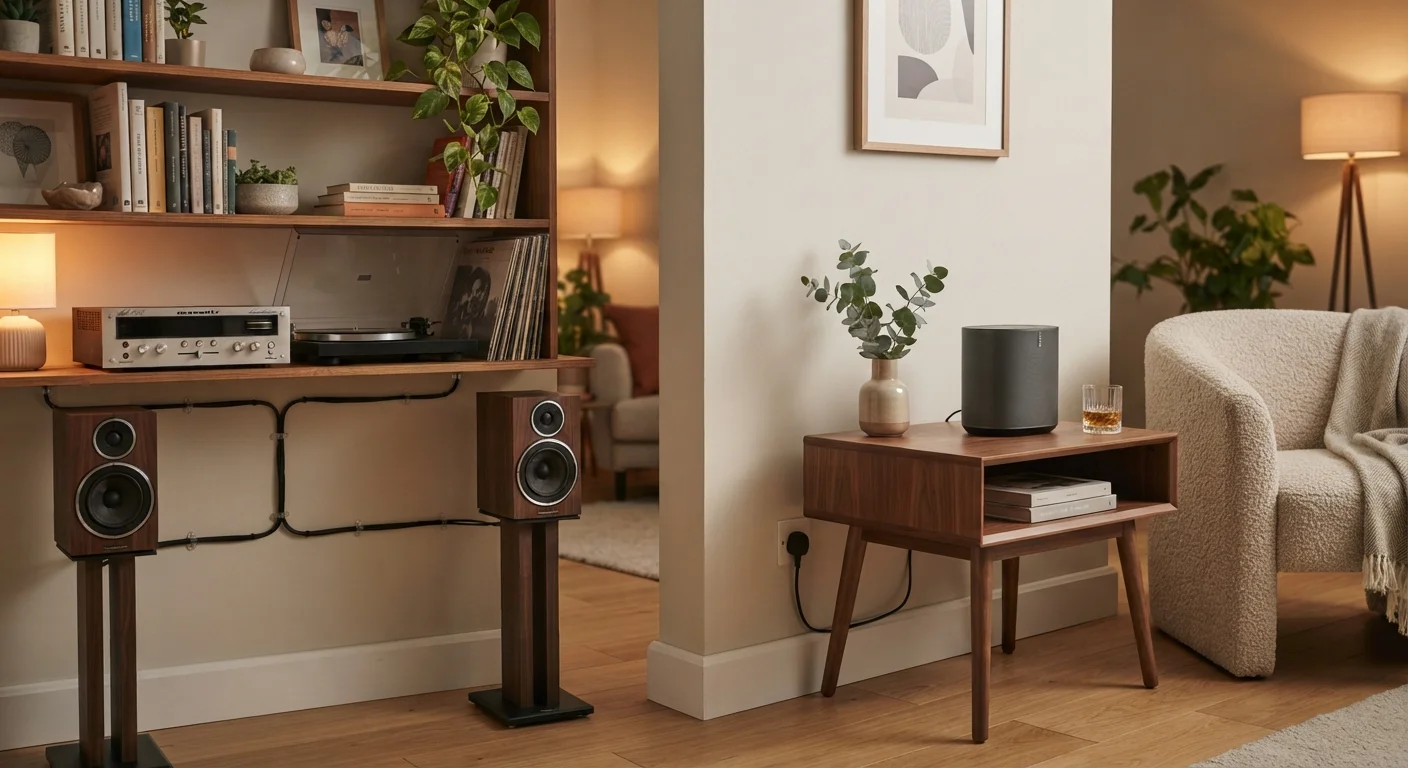
Every home audio system - regardless of complexity - is built from the same foundational parts: a source, an amplifier, and speakers. Understanding how these three interact removes most of the confusion beginners face.
Receiver
An all-in-one unit that combines an amplifier, input selector, and (in AV models) HDMI switching. It is the control hub of most home audio systems.
Impedance
A measure of electrical resistance (in ohms) that a speaker presents to an amplifier. Mismatching impedance can cause overheating or component damage.
Sensitivity
How efficiently a speaker converts amplifier power into sound, expressed in decibels (dB). Higher sensitivity means louder output from less power.
Subwoofer
A dedicated speaker designed to reproduce deep bass frequencies (typically below 80-120 Hz) that standard speakers cannot handle effectively.
AWG (American Wire Gauge)
A standardized wire thickness scale. For speaker cable, lower AWG numbers mean thicker wire, which is needed for longer runs or low-impedance speakers.
HDMI ARC
Audio Return Channel - a feature of HDMI that lets a TV send audio back to a connected receiver through the same cable, eliminating the need for a separate audio cable.
The source is whatever feeds audio into the system: a streaming device, TV, turntable, or CD player. The amplifier takes that low-level signal and boosts it to a level that can drive speakers. The speakers convert that electrical signal into the sound you hear. In most beginner setups, the amplifier and source switching are combined inside a single unit called a receiver.
A subwoofer is an optional fourth element that handles the lowest bass frequencies - typically below 80-120 Hz - which standard speakers often struggle to reproduce at meaningful volume. Adding one transforms a flat-sounding system into something noticeably fuller, especially for movies and music with deep bass content.
Choosing the Right Speaker Configuration
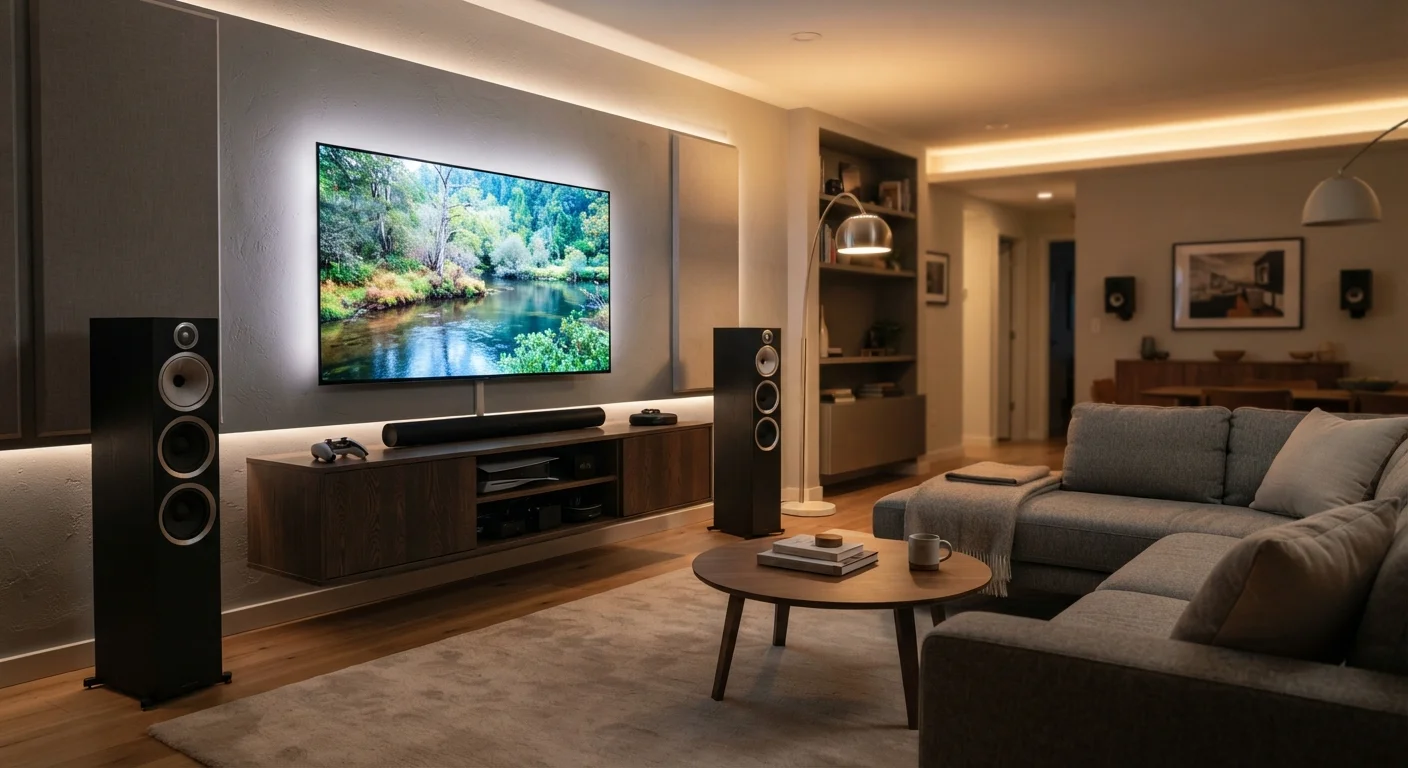
The most common configurations for a first home system are 2.0 (stereo), 2.1 (stereo plus subwoofer), and 5.1 (surround sound). Each has practical trade-offs that depend more on your room and habits than on which sounds most impressive on paper.
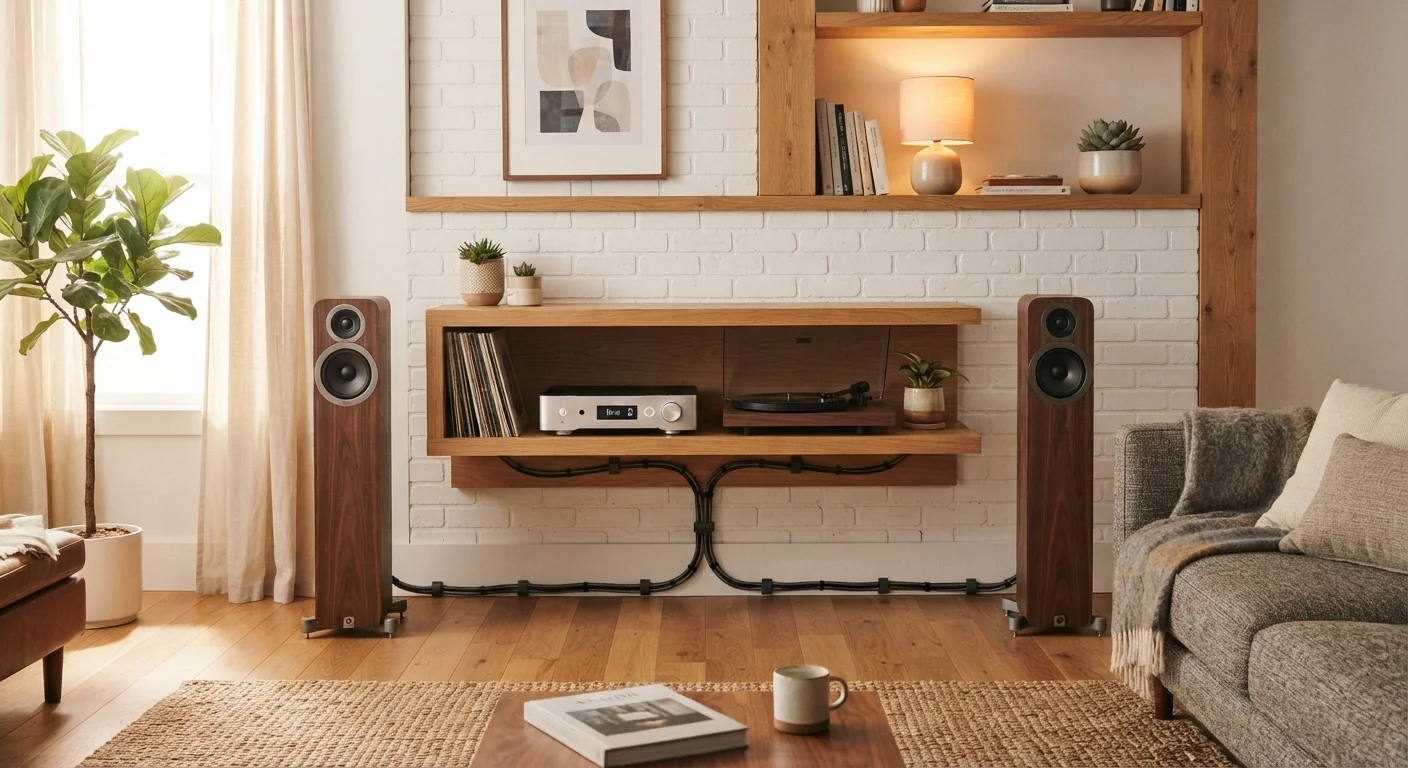
A stereo pair - two speakers, left and right - is the simplest, most space-efficient starting point. It works excellently for music and handles TV dialogue reasonably well. Adding a subwoofer (.1) fills in low-end weight without expanding the speaker footprint dramatically.
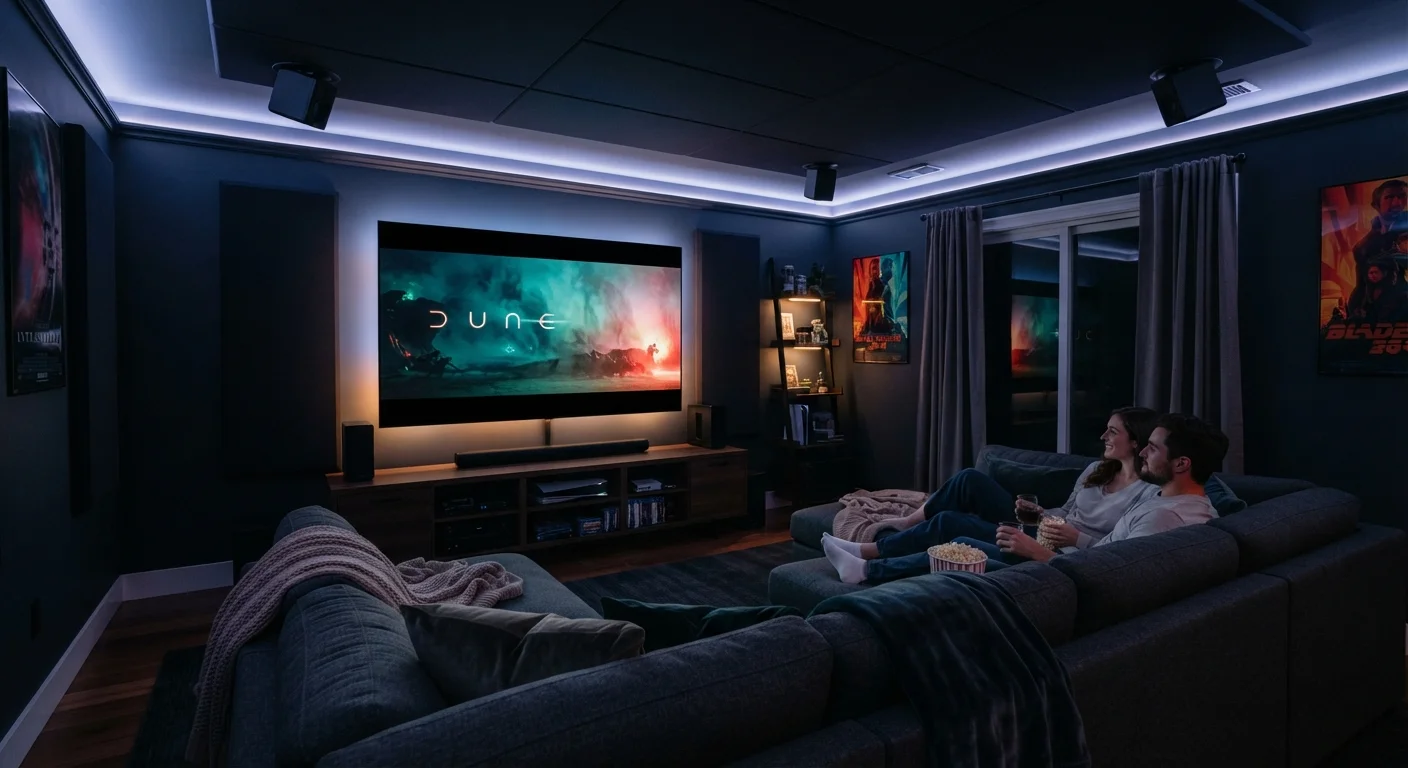
A 5.1 surround system adds a center-channel speaker (anchors dialogue to the screen) and two rear or side surrounds, creating enveloping sound for movies and gaming. It demands more space, more receiver channels, and more cable management. For rooms under roughly 200 square feet or for primarily music listeners, stereo often outperforms surround in perceived quality per dollar spent.
For a detailed side-by-side of these formats, comparing soundbars, stereo, and surround setups walks through practical scenarios by room type.
Start Smaller Than You Think You Need
Most first-time buyers overestimate how much speaker power and channel count their room actually needs. A well-matched stereo pair in a mid-sized living room almost always sounds better than a poorly calibrated 5.1 system in the same space. Master a 2.0 or 2.1 setup first, then expand if the listening experience genuinely calls for it.
Receivers, Amplifiers, and Power
When evaluating a receiver, most shoppers focus on wattage - but that number is less meaningful than two others: impedance compatibility and speaker sensitivity.
Impedance (measured in ohms) must match between receiver and speakers. A receiver rated for 8-ohm speakers can be damaged over time by 4-ohm speakers. Sensitivity (measured in dB/W/m) describes how loud a speaker gets from a given amount of power. A high-sensitivity speaker (90 dB+) can reach satisfying volume with modest amplifier power; a low-sensitivity speaker (84-86 dB) requires significantly more watts for the same result.
Stereo receivers handle two channels and suit 2.0 or 2.1 setups. AV (audio/video) receivers handle five or more channels and add HDMI switching for home theater use. For first-timers building a TV-centered system, an AV receiver provides the most connectivity flexibility. For a dedicated music system, a stereo receiver is simpler and often delivers better two-channel performance at the same price point.
Wattage Ratings Are Often Misleading
Receiver wattage is typically measured under ideal lab conditions - a single channel driven at a specific frequency. Real-world multi-channel playback draws more power simultaneously. Rather than chasing high watt numbers, verify that the receiver's rated impedance matches your speakers and that it has enough channels for your intended configuration.
Cables, Connections, and Placement
Speaker wire connects your receiver's output terminals to each speaker. The key variable is gauge (AWG): lower numbers mean thicker wire. For runs under 50 feet, 16 AWG is adequate for 8-ohm speakers. Use 14 AWG for longer runs or 4-ohm loads. Spending significantly more on exotic cable materials produces no measurable sonic improvement in standard home setups.
Connections between components (receiver to TV, streaming device to receiver) typically use HDMI, optical (TOSLINK), or RCA analog cables. HDMI supports the highest-quality audio formats, including lossless and spatial audio. Optical is a reliable fallback when HDMI ARC (Audio Return Channel) is unavailable. RCA analog works for turntables and older sources.
Placement shapes sound as much as equipment does. For stereo speakers, aim for an equilateral triangle between the two speakers and your primary listening position. Keep speakers at least 12 inches from walls to reduce bass buildup. Subwoofers are more flexible - they can often sit in a corner (which reinforces bass) or along a front wall without dramatic quality loss. Understanding spatial audio formats like Dolby Atmos becomes relevant once your core system is dialed in.
Setting a Realistic Budget
Building a complete system means budgeting across all components - not just speakers. A common beginner mistake is overspending on one element and leaving insufficient funds for the others, which creates a system bottlenecked by its weakest link.
A rough allocation framework for a 2.1 stereo system:
- Speakers (pair): 40-50% of total budget
- Receiver or amplifier: 30-35% of total budget
- Subwoofer: 15-20% of total budget
- Cables and accessories: 5-10% of total budget
This balance ensures no single component dramatically outpaces the others. A high-end speaker pair driven by an underpowered or mismatched receiver will underperform compared with a well-matched mid-tier system throughout.
If you're new to managing larger purchases like this within a household budget, building a personal budget from scratch provides a practical foundation for planning discretionary spending. Once your core system is running well, evaluating wired vs. wireless speaker options can help inform future expansions.
Soundbars, Stereo, and Surround: Matching Audio to Your Space
A practical comparison of audio system formats - soundbars, stereo pairs, and full surround - to help you determine which configuration fits your room and listening habits.
Wired vs. Wireless Home Speakers: Trade-Offs Explained
An honest breakdown of what you gain and lose with wireless speakers versus traditional wired setups, covering reliability, flexibility, and long-term usability.
Dolby Atmos Explained: What Spatial Audio Sounds Like at Home
Explains what spatial audio formats like Dolby Atmos actually deliver in a typical home environment and what equipment is required to experience them meaningfully.