Why Format Matters Before Brand
Most audio buying conversations jump straight to brand names and watt counts, skipping the question that actually determines satisfaction: which format fits your room and habits? A high-end soundbar in a large, acoustically dead room will disappoint just as reliably as a full surround setup crammed into a studio apartment overwhelms its neighbors.
The three core formats - soundbars, stereo speaker pairs, and full surround systems - represent different philosophies about how sound should fill a space. Each involves real trade-offs in cost, complexity, physical footprint, and sonic character. Understanding those trade-offs upfront prevents expensive regrets. For buyers also thinking through their TV setup more holistically, audio output details and smart platform choices are easy to overlook but shape how any of these formats actually integrates with your display.
| Soundbar | Stereo Pair | 5.1 Surround | 7.1 Surround | |
|---|---|---|---|---|
| Setup complexity | Low - single cable | Moderate - amp + cables | High - 6 components | Very high - 8 components |
| Room size suitability | Small to medium | Small to large | Medium to large | Large dedicated rooms |
| Music listening quality | Adequate | Excellent | Good with stereo mode | Good with stereo mode |
| Movie surround realism | Simulated | Limited | Genuine discrete | Full discrete |
| Cable/wire management | Minimal | Front only | Requires rear runs | Extensive rear runs |
| Dolby Atmos support | Virtual via processing | Not applicable | With height add-ons | Native with height speakers |
| Typical entry cost range | Lower | Moderate | Moderate to high | High |
Soundbars: Convenience With Real Limits
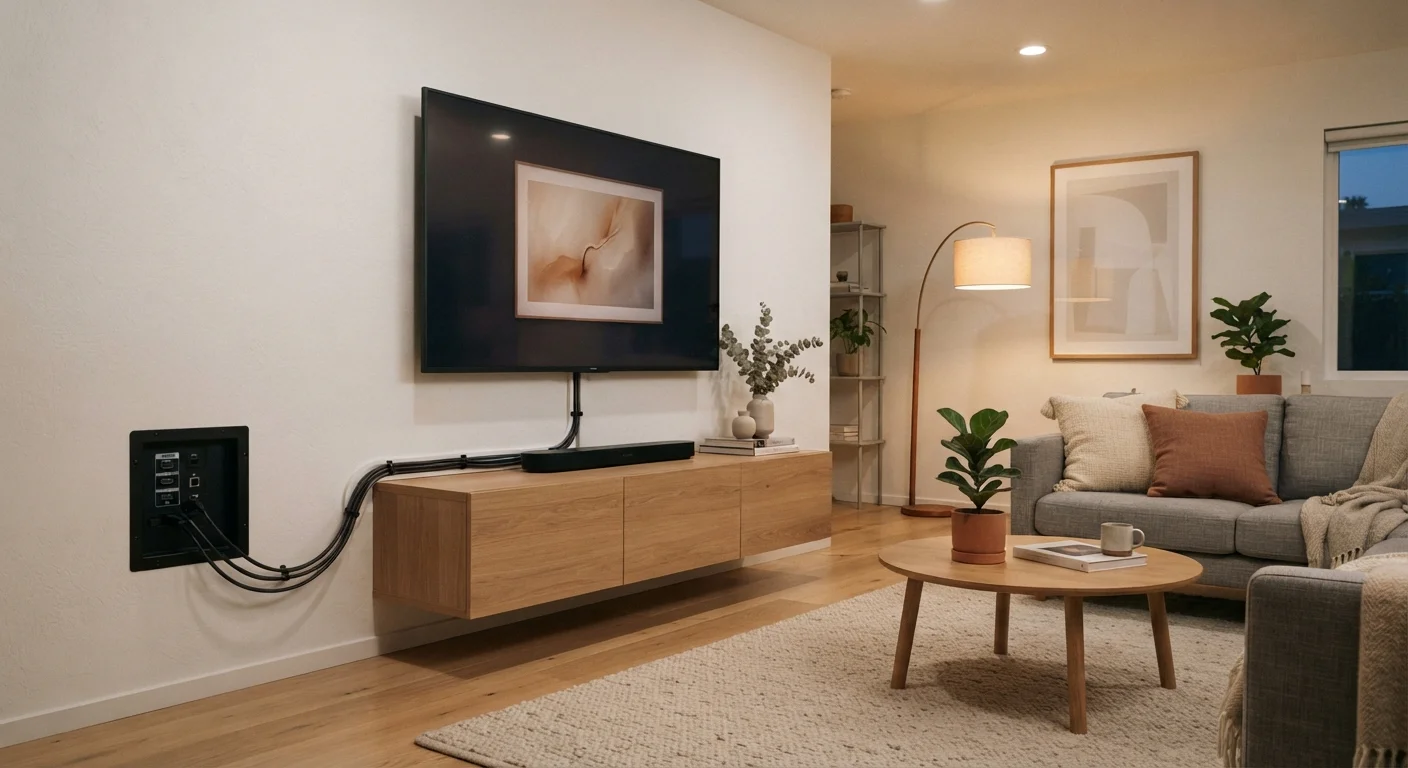
A soundbar consolidates multiple speaker drivers into a single horizontal enclosure that sits below or mounts near your TV. Most include HDMI ARC or eARC connectivity, letting them receive audio directly from your television with a single cable. Higher-end models add a separate wireless subwoofer and satellite speakers, blurring the line between a soundbar and a true surround system.
The core appeal is simplicity: unbox, connect, done. For renters, rooms without easy cable-routing options, and viewers who primarily watch dialogue-heavy content, a soundbar is often the most practical path to noticeably better audio than built-in TV speakers.
The limits are real, though. Soundbars create a phantom stereo or simulated surround image from a fixed point in front of you. No processing, however sophisticated, fully replicates what discrete speakers placed at the sides and rear of a room actually do. If you want to understand what Dolby Atmos support on a soundbar actually delivers versus what it promises, the practical reality of spatial audio at home is worth reading before committing.
Match Soundbar Width to Your TV
A soundbar noticeably narrower than your TV can look mismatched and may produce a narrower stereo image than the screen warrants. Aim for a soundbar within a few inches of your TV's width. If your TV is 65 inches or larger, a compact 2.1 soundbar may feel sonically underwhelming relative to what the screen size implies.
Stereo Speaker Pairs: The Underrated Middle Ground
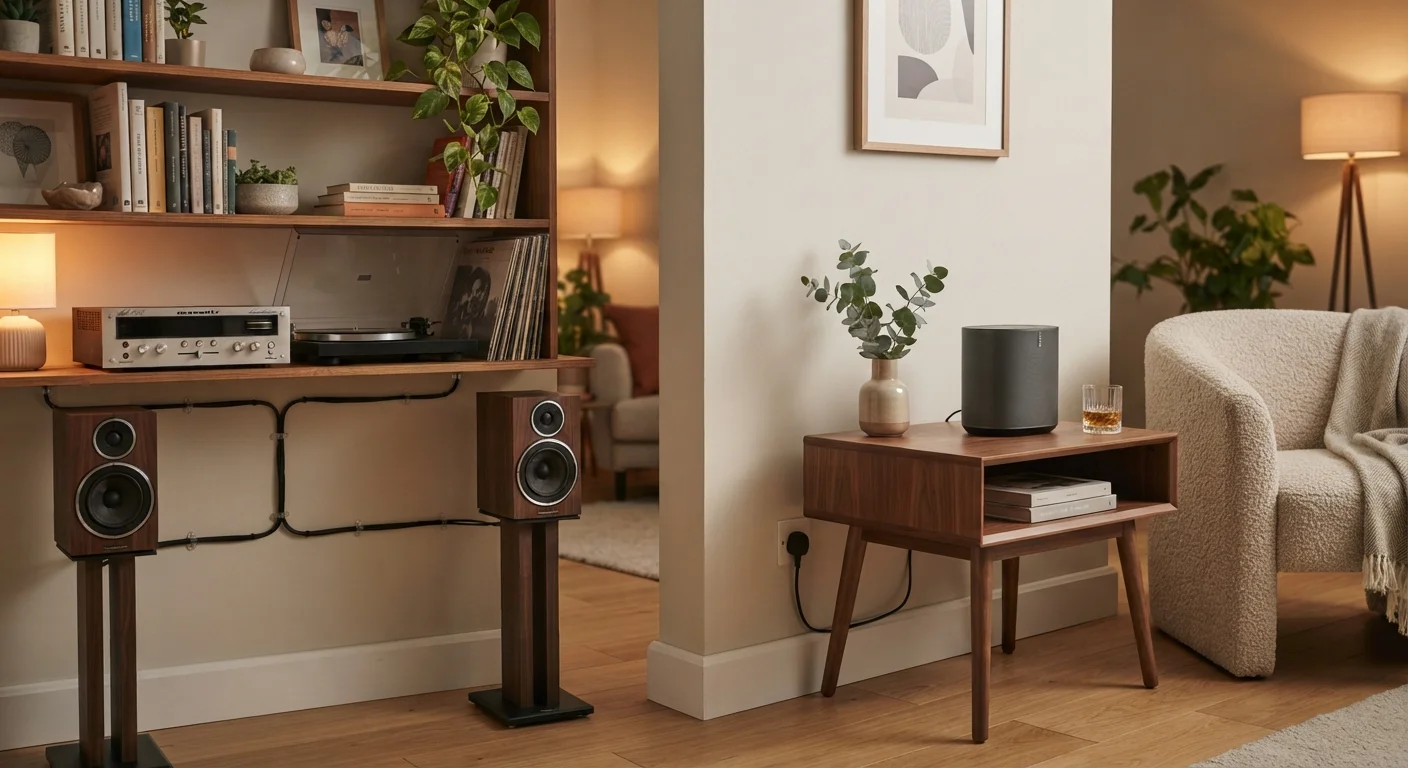
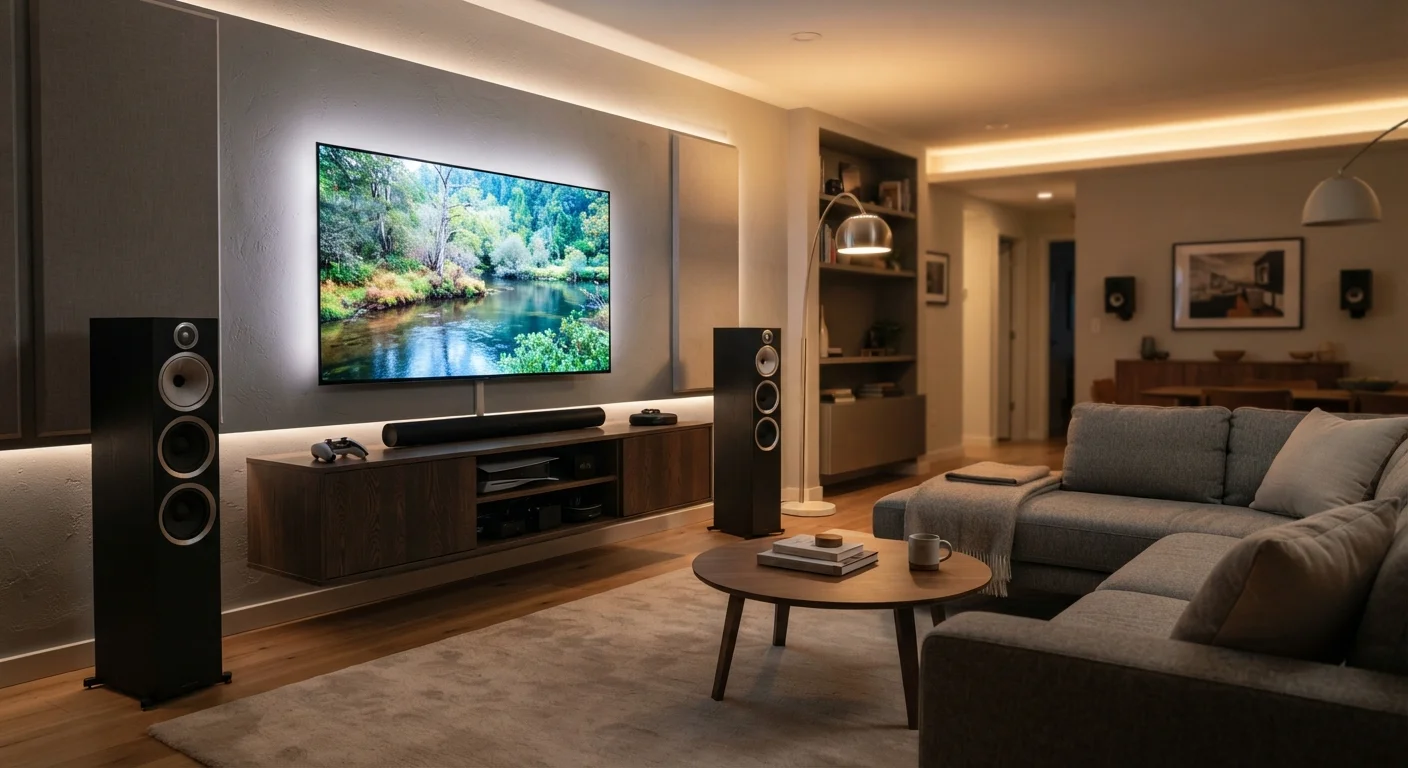
Two dedicated speakers driven by a stereo amplifier or AV receiver represent the format with the longest engineering history and, for music listening, the most mature performance per dollar. A well-matched stereo pair creates a convincing soundstage - the perception of instruments and voices occupying distinct left-right and front-back positions - in a way that a soundbar's width-constrained drivers cannot replicate.
For medium-sized living rooms where the primary use is a mix of TV watching and music listening, stereo often outperforms both soundbars and full surround systems in everyday satisfaction. Adding a subwoofer to a stereo setup addresses bass extension without requiring five or seven speaker positions. The trade-off is that you'll need speaker cables, an amplifier or receiver, and some willingness to position the speakers correctly relative to your seating - typically one-third of the room's length from the front wall, angled slightly inward.
Connectivity questions - whether to run speaker wire or rely on wireless rear channels - matter here too. the practical differences between wired and wireless speaker setups covers this honestly.
~60%
TV viewers using only built-in speakers
Industry estimates suggest a majority of TV owners have never added external audio, indicating significant headroom for improvement even with entry-level options.
3-4 ft
Minimum recommended stereo speaker separation
Acousticians generally recommend speaker-to-speaker spacing of at least three to four feet to produce a coherent stereo image at a typical listening distance.
5.1
Most common surround configuration sold
Consumer electronics sales data consistently shows 5.1 channel systems as the dominant surround format in U.S. home theater purchases.
Full Surround Systems: When the Room Earns It
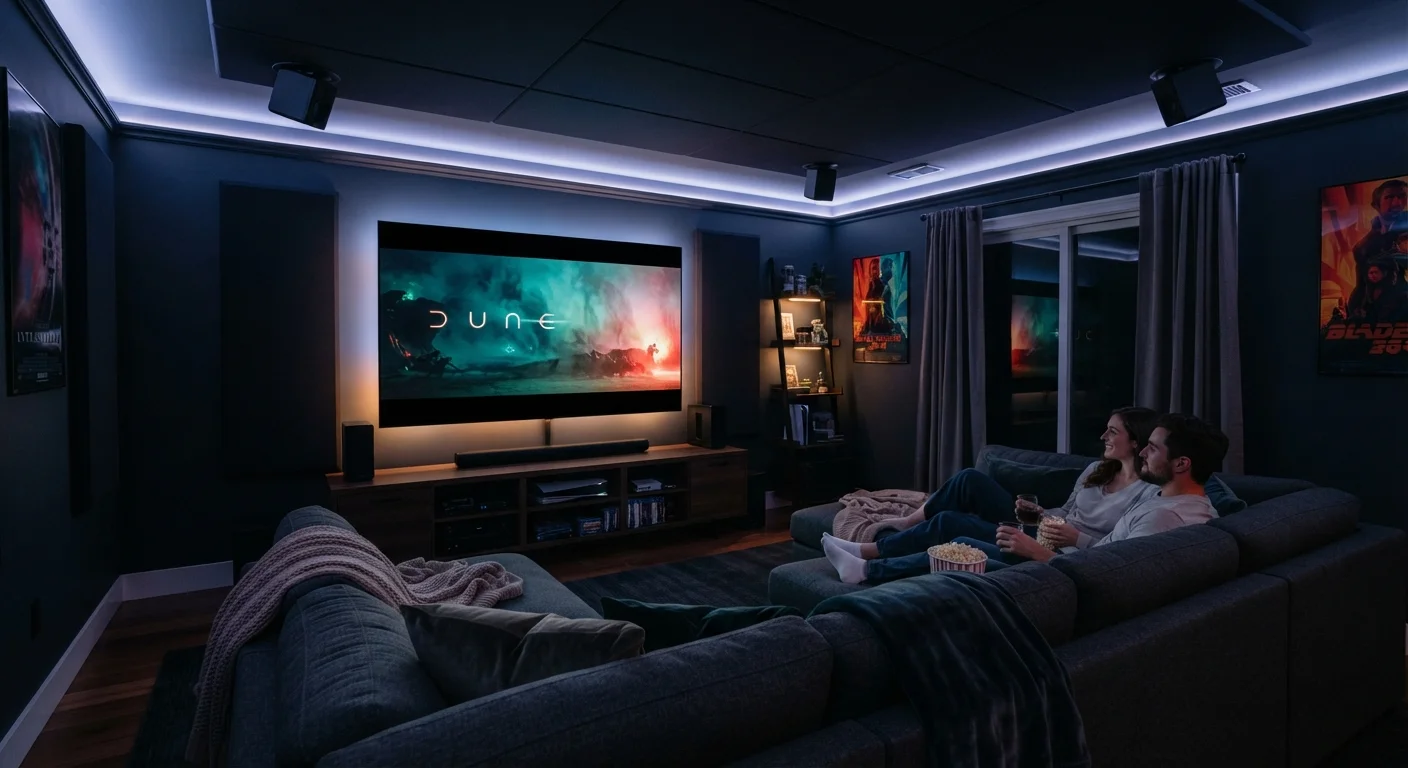
A 5.1 system places speakers at front-left, center, front-right, surround-left, and surround-right positions, plus a subwoofer. A 7.1 adds two additional rear or wide channels. Atmos configurations layer height channels on top of that. The result, in the right room, is genuinely immersive: sound moves around and above you in response to on-screen action rather than being anchored to the front wall.
That caveat - in the right room - is essential. Full surround setups require cable runs to rear speakers, enough square footage that surround speakers can be placed at an appropriate distance from the seating position (roughly 90-110 degrees to the side in a 5.1 layout), and ideally some acoustic treatment to prevent excessive reflections. Open-plan living spaces with hard floors and high ceilings can undermine a surround system's coherence even more than a small room can.
If you're starting from scratch, a step-by-step guide to building a home audio system walks through receivers, speaker placement, and cabling in plain language. Room acoustics also interact with how you position your display - factors covered in our guide to managing glare and contrast in bright rooms apply to the broader room-setup picture.
Don't Over-Buy for an Acoustically Challenging Room
Open-plan kitchens combined with living areas, rooms with vaulted ceilings, or spaces with minimal soft furnishings can cause surround sound to become diffuse and confusing rather than immersive. A well-calibrated stereo pair often performs more coherently in these environments than a full 5.1 system. Consider the acoustics of your space honestly before committing to a complex multi-speaker layout.