How the Signal Gets from Source to Speaker
The most fundamental difference between wired and wireless speakers is how audio data travels to the driver. In a wired system - typically a passive speaker connected to an amplifier or AV receiver via speaker cable - the signal travels as an analog electrical current. There is no encoding, compression, or transmission handshake involved. The audio arrives at the driver in essentially the same state it left the source.
Wireless speakers handle this differently depending on the protocol. Bluetooth compresses audio before transmission; the degree of compression depends on the codec in use (such as SBC, AAC, aptX, or LDAC). Wi-Fi-based systems can transmit lossless or higher-resolution audio streams, but they introduce their own dependencies - router proximity, network congestion, and firmware compatibility all play a role. For a deeper dive into how these audio pathways affect surround sound formats, see how spatial audio works in practice.
| Criterion | Wired Speakers | Wireless Speakers |
|---|---|---|
| Audio signal quality | Uncompressed, full fidelity | Compressed (Bluetooth) or lossless (Wi-Fi) |
| Latency | Effectively zero | Low to moderate depending on protocol |
| Installation effort | High - cable routing required | Low - place and connect to network |
| Placement flexibility | Limited by cable length | High, though power outlet often needed |
| Multi-room audio | Requires long cable runs or matrix system | Built into most modern systems |
| Long-term reliability | Very high - minimal failure points | Dependent on software support lifecycle |
| Susceptibility to interference | None | Possible from Wi-Fi congestion or walls |
Installation, Placement, and the Cable Question
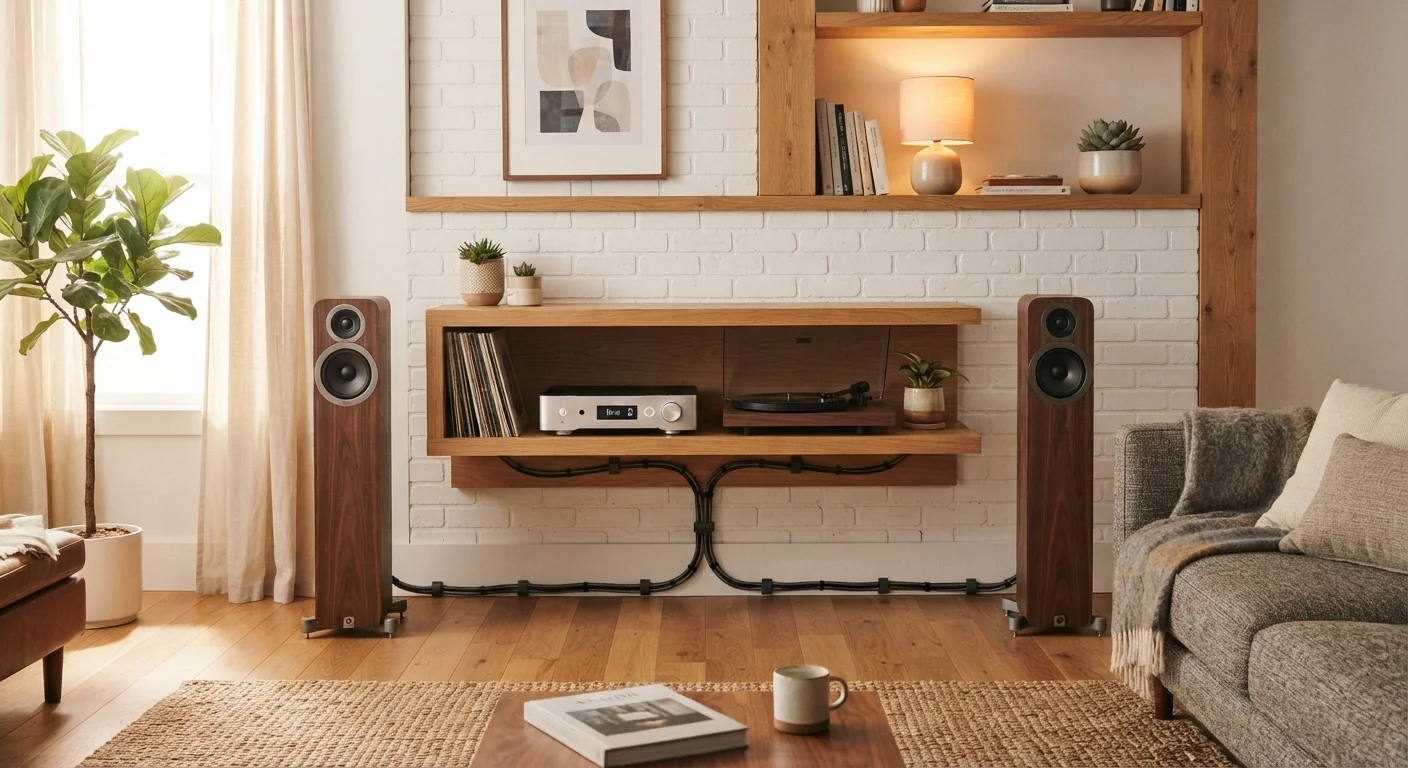
Wired speaker systems demand more planning before the first note plays. Running speaker cable discreetly through a room often means routing along baseboards, through walls, or under flooring - work that requires time, tools, and in some cases, a landlord's permission. That said, once installed, a wired system stays put without needing Wi-Fi passwords, charging, or software updates.
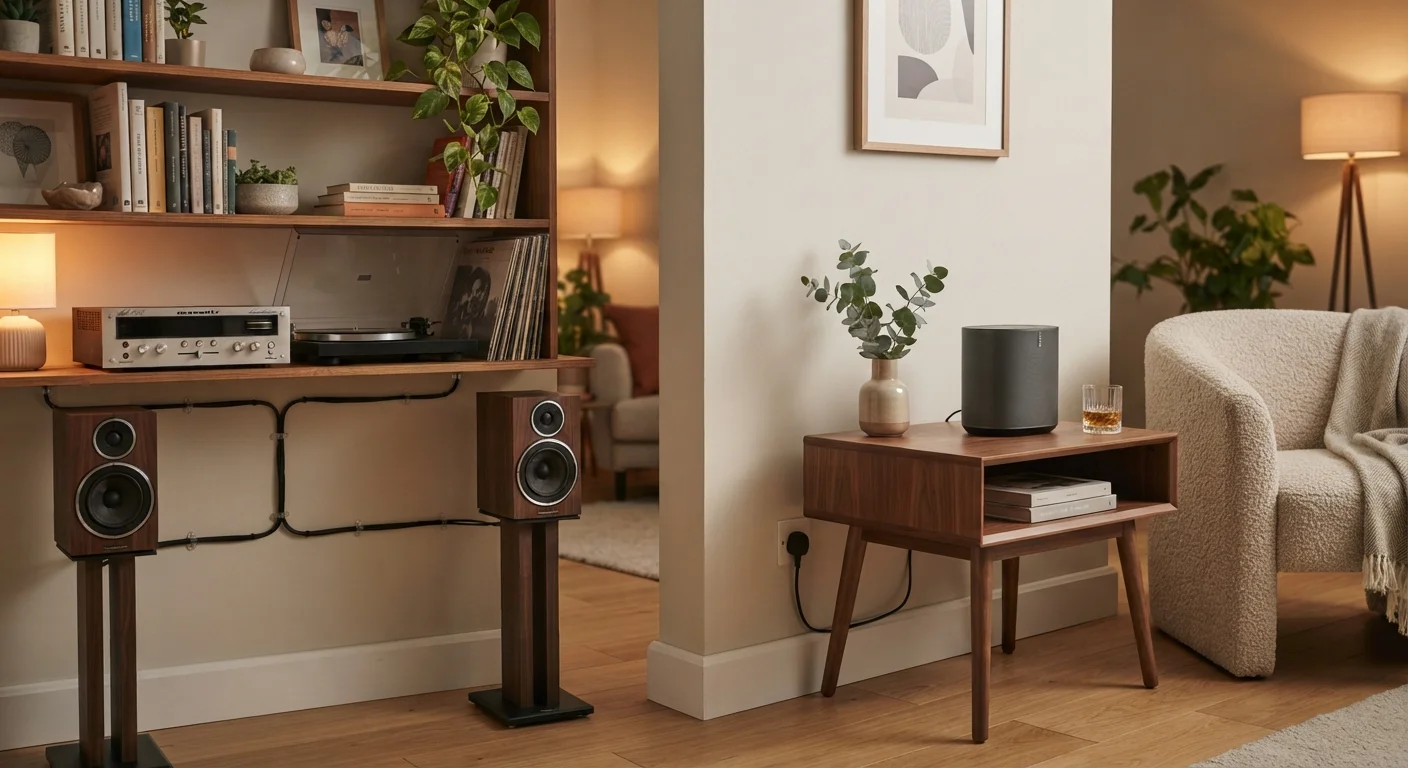
Wireless speakers sidestep most of that friction. A Wi-Fi speaker still needs a power cable, which limits placement to within reach of an outlet - a constraint many buyers overlook. Battery-powered Bluetooth speakers offer true cord-free placement, but they trade audio quality and output power for portability. If you're starting a home audio system from scratch, the installation demands of a wired setup are worth understanding before committing.
~200ms
Typical Bluetooth SBC codec latency
Standard SBC Bluetooth latency averages around 200 milliseconds, which is perceptible when watching video; aptX Low Latency reduces this to approximately 40ms.
24-bit/192kHz
Maximum resolution over wired connections
Wired speaker systems driven by compatible amplifiers can handle 24-bit/192kHz audio files without any compression or downsampling in the signal path.
~30 ft
Typical indoor Bluetooth range
Bluetooth Class 2 devices - the most common in home speakers - have a practical indoor range of approximately 30 feet, with walls and interference reducing effective distance.
Sound Quality: What the Specs Don't Tell You
Wired systems have a measurable advantage in signal purity, but that advantage shrinks considerably in average living rooms. Room acoustics - parallel walls, soft furnishings, ceiling height - influence perceived sound quality more than cable versus wireless in most domestic environments. A well-designed wireless speaker in a treated room will outperform a poorly positioned wired speaker in an untreated one.
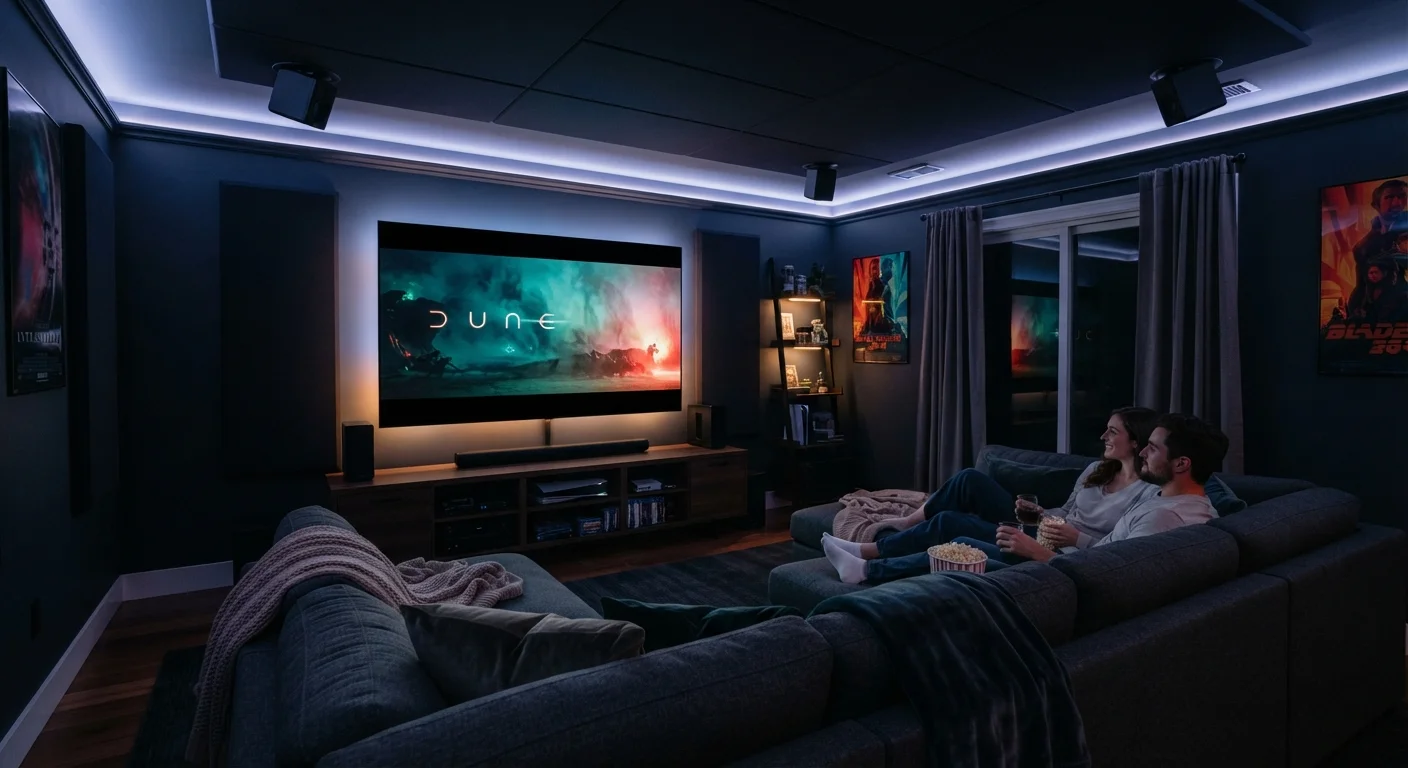
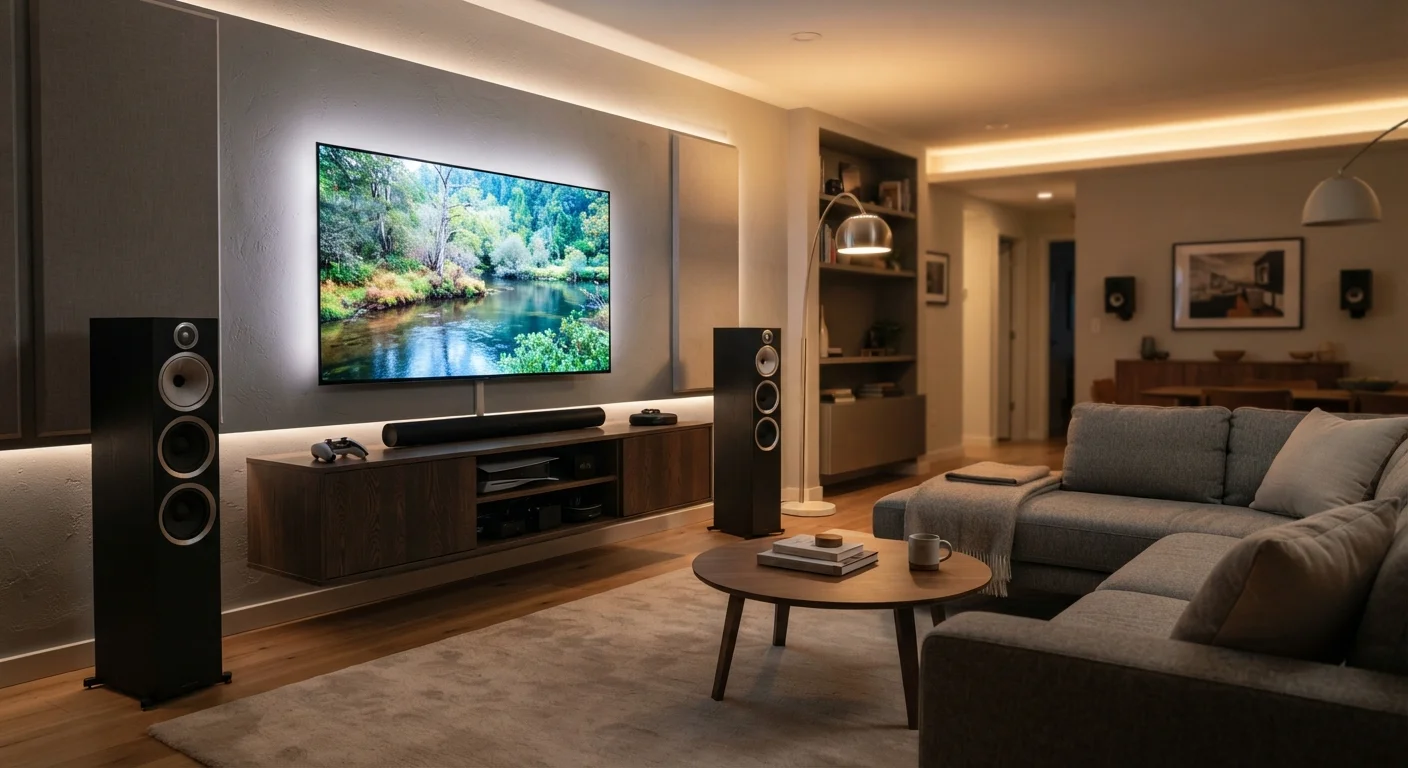
Where wired systems pull ahead most noticeably is in low-latency applications: home theater lip-sync, gaming audio, or playback of high-resolution files. Wireless protocols have improved significantly, but measurable latency remains a real characteristic of the technology. For listeners building full surround sound configurations, matching speaker type to your room's layout is as important as the connection method.
Active vs. Passive Wired Speakers
Not all wired speakers are the same. Passive speakers require a separate amplifier or AV receiver to drive them, while active (powered) wired speakers have a built-in amplifier and connect directly to a source. Active wired speakers occupy a middle ground - they share the reliability of a wired signal path but simplify the component count considerably. If you're comparing options, clarifying whether a speaker is active or passive changes both the setup requirements and the total system cost.
Long-Term Reliability and Future-Proofing
A wired passive speaker with a quality driver can remain functional for decades. There is no battery to degrade, no firmware to become unsupported, and no cloud service to be discontinued. The amplifier and cables may need attention over time, but the speaker itself has few failure points.
Wireless speakers carry more uncertainty over longer time horizons. A speaker that depends on a companion app or a manufacturer's streaming infrastructure is exposed to product discontinuation. Several well-regarded wireless speaker lines have had their cloud services sunset, rendering features non-functional even on otherwise working hardware. That is not a reason to avoid wireless entirely - it is a reason to treat software-dependent features as a bonus rather than a core requirement. This consideration also applies when weighing any connected home technology, much as the longevity trade-offs between laptops and desktops differ in meaningful ways. Understanding where a product sits on the durability spectrum - and how much you value that - is ultimately what separates a purchase that ages well from one that doesn't. See where spending more on home gear genuinely matters for a broader perspective on that question.