Why Passengers Change the Risk Equation
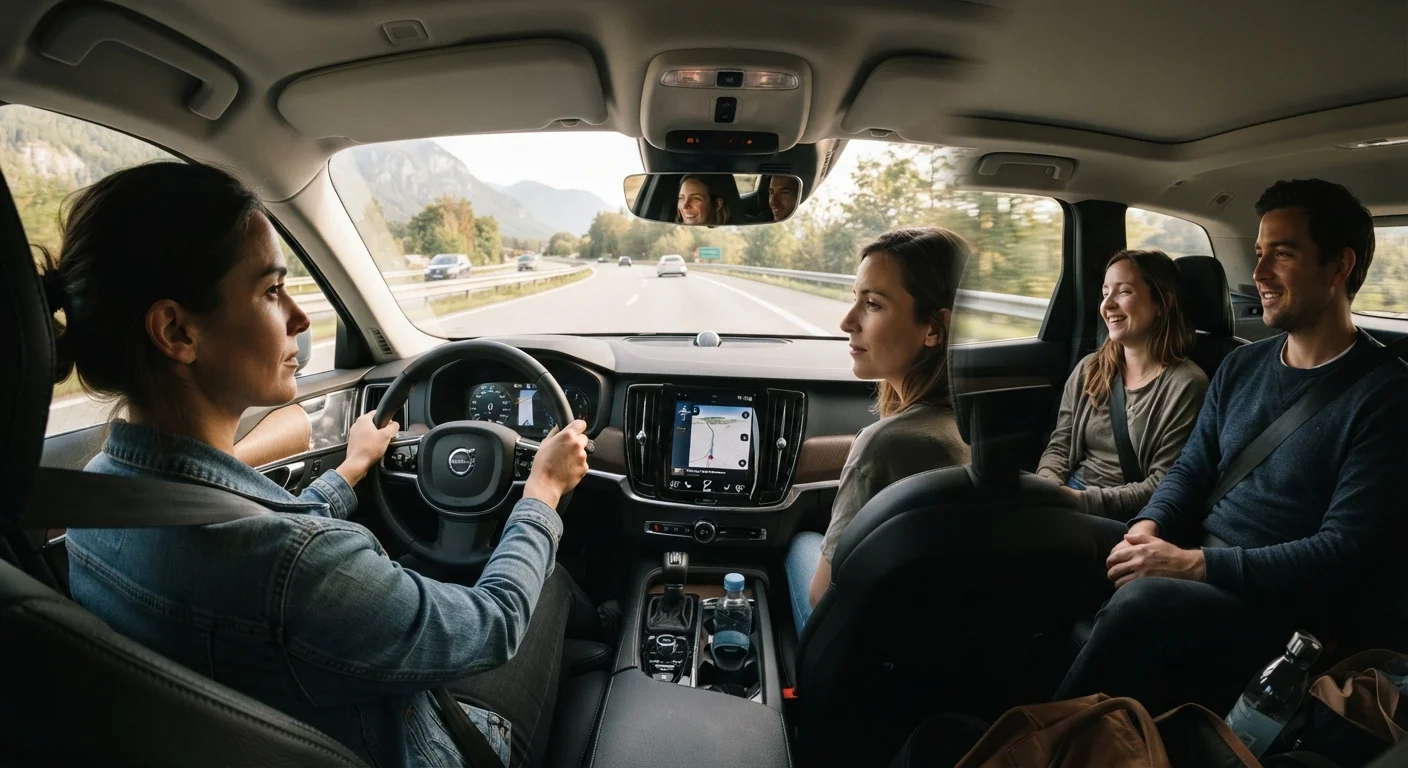
Most drivers think of passenger risk as a teenager problem. The data supports that concern - but the underlying dynamics affect drivers of any age. When another person is in the car, your brain is doing more work: managing conversation, responding to social cues, and monitoring reactions from the back seat. That cognitive load competes directly with the attention required to drive safely.
Research from the AAA Foundation for Traffic Safety has consistently shown that for teen drivers, carrying one peer passenger nearly doubles crash risk compared to driving alone. Two or more passengers triples it. For adult drivers, the effect is smaller but still present - particularly during complex maneuvers like merging, navigating intersections, or driving in unfamiliar areas. See how other distractions compound this problem in our piece on distracted driving beyond the phone screen.
2x
Teen crash risk with one peer passenger
AAA Foundation for Traffic Safety research found that one peer-age passenger nearly doubles crash risk for teenage drivers compared to driving alone.
3x+
Teen crash risk with two or more passengers
The same AAA Foundation research showed crash risk more than triples for teen drivers when two or more peers are in the vehicle.
Best Practices for Driving With Passengers
The habits below apply across driver experience levels, though the urgency increases for newer drivers or higher-risk environments like highways and wet roads. See our guide on adjusting your habits for rain, snow, and fog for how conditions stack on top of passenger risk.
Set expectations with passengers before you pull out of the driveway.
Conversations about noise level, music control, and phone use are far easier to have while parked than when you're already in motion. Establishing a shared understanding upfront removes the need to manage social dynamics while driving.
Reduce speed and increase following distance when carrying a full car.
More people in the vehicle means more noise, more potential for distraction, and more total weight - all of which affect stopping distance and reaction time. A small speed reduction gives you meaningfully more time to respond to hazards.
Designate a navigator rather than managing directions yourself.
Reading a map or interacting with GPS while driving is a well-documented distraction. Assigning that task to a passenger not only frees your attention but also gives the passenger a constructive role.
Pause difficult or emotionally loaded conversations until you're parked.
Emotionally engaging conversations - arguments, serious news, stressful topics - occupy working memory and slow reaction times in ways comparable to low-level alcohol impairment, according to driving behavior research.
Keep the cabin environment calm and predictable.
Sudden loud sounds, physical movement in the back seat, or unexpected actions from passengers can trigger a startle response that briefly overrides your driving judgment. A quieter, calmer cabin keeps your nervous system in a steadier state.
Don't rely on passengers to manage your phone for you.
Handing your phone to a passenger to "just send this text" still pulls your attention to the exchange and can create a norm where in-car phone use seems acceptable. It's cleaner to treat the phone as fully off-limits during the drive.
Quick Actions You Can Take Before Every Trip
The best time to manage passenger-related risk is before you leave the driveway. A few seconds of preparation can shift the entire dynamic of the trip - and it doesn't require a conversation that feels awkward or authoritarian.
For night trips with passengers, the stakes are even higher. Combine these steps with the evidence-based habits in our night driving guide for a more complete safety approach.
A Note for Parents of Teen Drivers
If your household has a newly licensed driver, passenger rules deserve an explicit conversation - not just an assumption. Many states include Graduated Driver Licensing (GDL) laws that restrict the number of non-family passengers a teen can carry during their first months of licensure. Knowing your state's rules is the starting point, but research suggests that parental agreements that go beyond the legal minimum - setting earlier curfews, limiting passengers to one at a time, and requiring check-ins - are associated with lower crash rates.
Check Your State's GDL Passenger Restrictions
Graduated Driver Licensing laws vary significantly by state. Some states prohibit teen drivers from carrying any non-family passengers during the first six months of licensure; others allow one. Violations can result in fines or license suspension, and some insurers factor GDL compliance into how they assess household risk. Check your state DMV's website for the exact rules in your area.
It's also worth noting that insurance premiums for households with teen drivers often reflect crash statistics. Understanding how driving behavior connects to coverage costs is covered in our overview of saving on insurance. For a deeper look at how different road environments demand different skills - which matters when your teen starts driving on highways - see highway vs. city driving safety skills.
“The presence of passengers is one of the most powerful contextual factors shaping crash risk - not just for teens, but for drivers across the lifespan. Managing that context is a learnable skill, not a matter of luck.”
— David Strayer, Cognitive psychologist and distracted driving researcher at the University of Utah