Why Each Environment Demands Different Skills
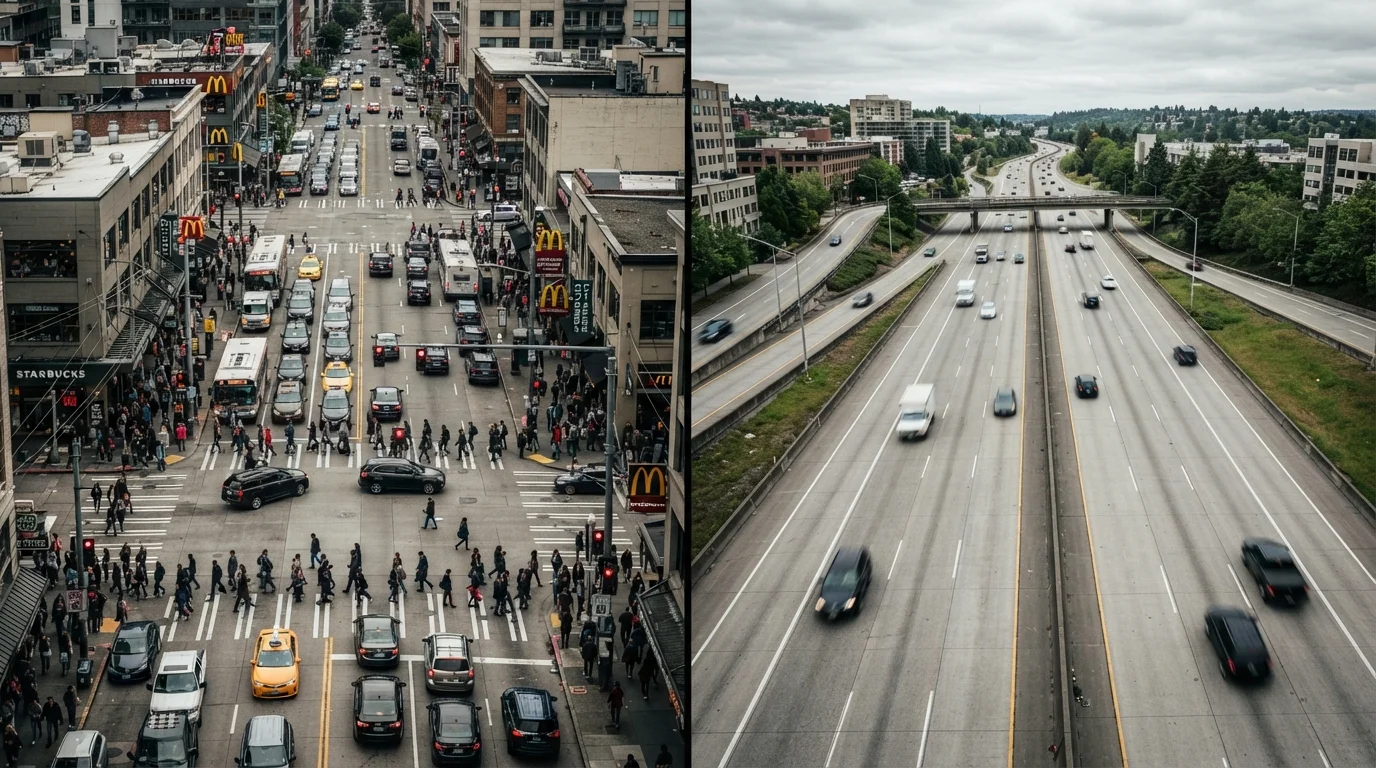
Most drivers learned the rules of the road in one environment and gradually adapted to another. But highway driving and city driving aren't just different in speed - they require genuinely different mental frameworks. One asks you to sustain focus across miles with minimal input. The other asks you to process a dozen competing signals every few seconds.
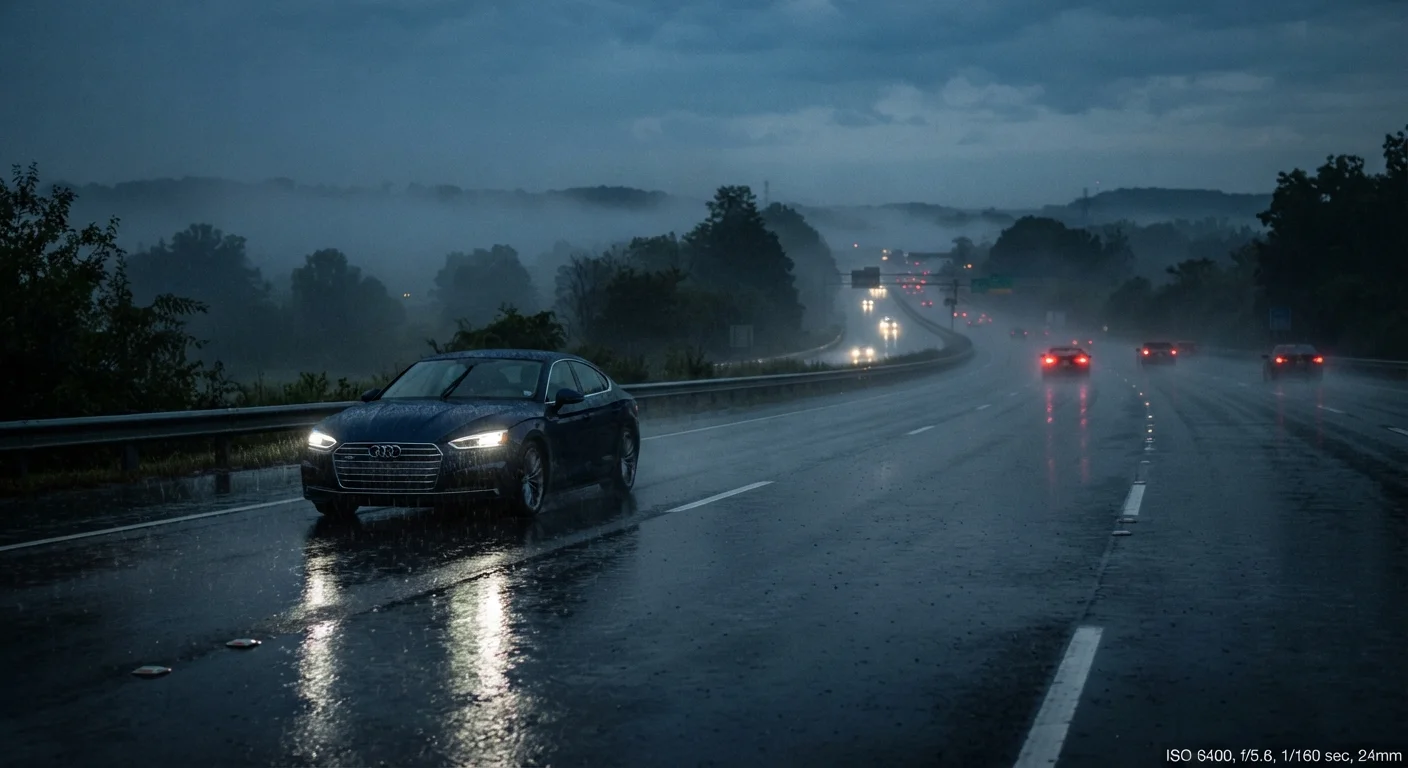
Understanding what each environment actually demands - not just the obvious stuff, but the overlooked habits - is the first step to becoming safer in both. For context on how other external variables layer onto this, see our guide on adapting your driving in rain, snow, and fog.
| Criterion | Highway Driving | City Driving |
|---|---|---|
| Primary risk factor | Speed and fatigue | Intersection conflicts and distraction |
| Crash frequency | Lower overall | Higher overall |
| Crash severity | More likely to be fatal | Usually lower severity |
| Key skill: space | Following distance at speed | Blind spot and gap management |
| Key skill: attention | Sustained focus over distance | Rapid multi-point scanning |
| Pedestrian exposure | Minimal | Constant |
| Fatigue risk | High (monotony) | Lower (frequent stimuli) |
| Merging demands | Critical - speed matching required | Moderate - lane changes at low speed |
Highway Driving: The Skills That Keep You Safe at Speed
Highways feel deceptively manageable - lanes are wide, signals are absent, and traffic mostly flows in one direction. That predictability lulls some drivers into complacency, which is where serious risk enters.
Following Distance
At 65 mph, a vehicle covers roughly 95 feet per second. The standard recommendation is a three-second gap to the car ahead, but many safety researchers suggest four to five seconds in heavier traffic or adverse conditions. Closing that gap even slightly eliminates your reaction window almost entirely.
Merging and Lane Changes
Entering a highway at speed is one of the higher-risk maneuvers most drivers perform routinely. The skill isn't just checking mirrors - it's matching speed precisely before merging, not forcing other vehicles to adjust for you. Cutting in short triggers hard braking upstream, which ripples backward and can cause rear-end collisions hundreds of feet behind the entry point.
Fatigue and Monotony
Highway driving's biggest hidden hazard is cognitive drift. Long, uninterrupted stretches lower stimulation and trigger highway hypnosis - a real phenomenon where drivers operate on autopilot with reduced conscious awareness. Night driving amplifies this risk significantly. Taking a break every two hours is a practical, evidence-supported countermeasure.
~50%
U.S. traffic injuries occurring near intersections
The Federal Highway Administration attributes roughly half of all U.S. traffic injuries to intersection-related incidents.
95 ft/sec
Distance covered at 65 mph
At highway speed, a vehicle covers approximately 95 feet every second, leaving very little time to react to sudden hazards.
3-5 sec
Recommended highway following gap
Traffic safety guidance generally recommends a minimum three-second following distance, with four to five seconds advised in poor conditions.
City Driving: Managing Complexity at Lower Speeds
Urban environments compress everything - lanes, speeds, decision points, and the number of things that can go wrong. Crashes are more frequent in cities, though they're less likely to be fatal than highway incidents. The injuries and property damage still add up.
Intersection Management
According to the Federal Highway Administration, roughly half of all traffic injuries in the U.S. occur at or near intersections. The common failure isn't running a red light outright - it's misjudging a yellow, assuming a green means it's safe to proceed without checking cross-traffic, or turning left without accounting for oncoming vehicle speed.
Pedestrians and Cyclists
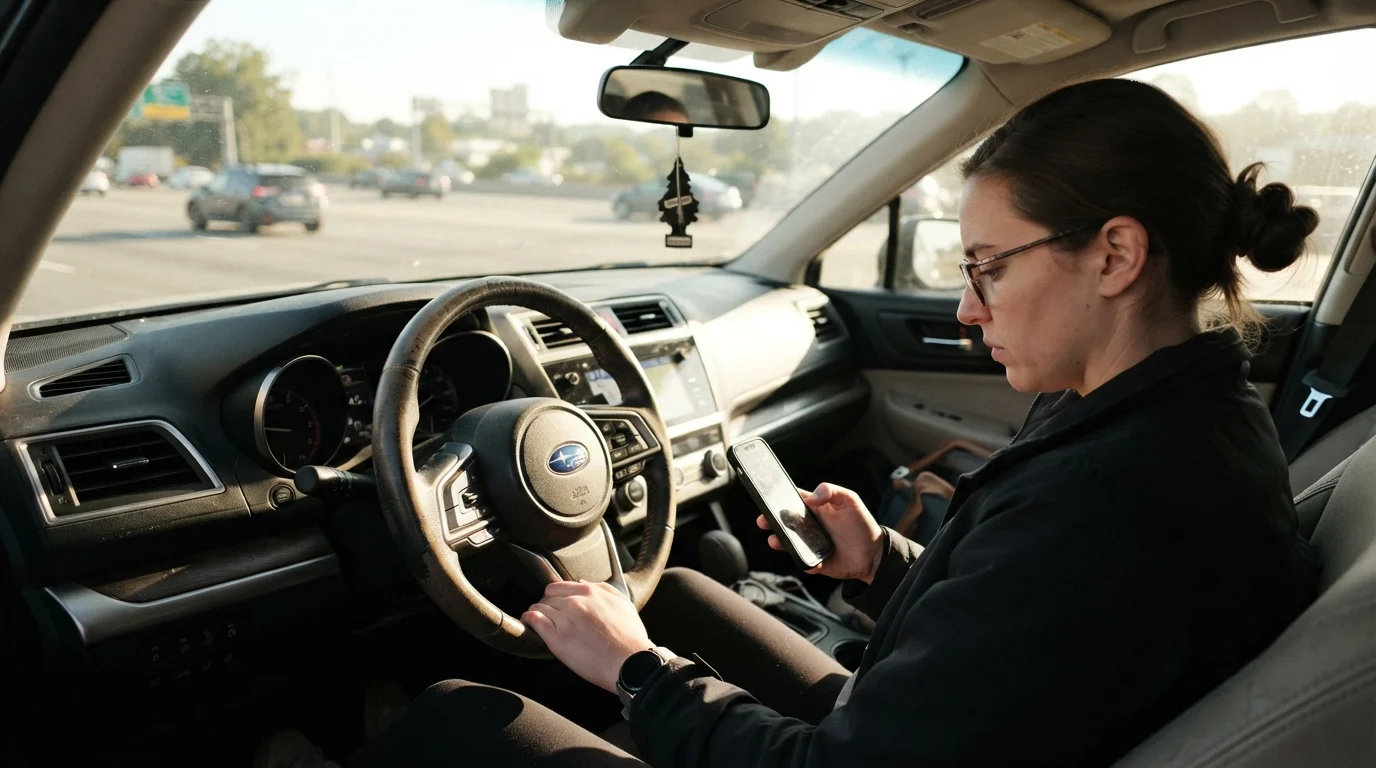
In cities, your hazard scan must extend off the road. Pedestrians step into crosswalks mid-block. Cyclists filter between lanes. Delivery vehicles double-park without warning. An effective urban driver scans at least one block ahead, not just the car immediately in front. Distraction beyond phones - like adjusting navigation mid-block - is especially dangerous in this environment.
Blind Spots in Urban Settings
Large vehicles, parked trucks, and building corners all create blind spots that highways don't. Creeping slowly into an intersection before committing, rather than pulling forward at full speed, gives you a view before it's too late to react.
Driving with passengers adds another layer of complexity worth understanding - see our piece on how your habits should shift with passengers in the car.
The Skills That Transfer - and The Ones That Don't
Some driving habits are universal: checking mirrors regularly, eliminating phone distraction, signaling consistently. Others are environment-specific and can actually work against you if you bring highway instincts into the city, or vice versa.
Highway drivers who keep large following distances sometimes struggle with the city tendency for other drivers to fill that gap immediately - leading to frustration or sudden aggressive responses. Urban drivers accustomed to frequent stops and slow speeds can underestimate stopping distances when they hit the interstate.
A few common assumptions about what makes driving safer in each environment don't hold up under scrutiny. For a direct look at those, see our article on road safety myths that could actually get you in trouble.
Also worth noting: how you maintain your vehicle affects safety outcomes in both settings. Tire pressure, brake condition, and wiper function behave differently under highway sustained-speed demands versus stop-and-go city stress. The car maintenance hub covers the essentials for keeping your vehicle road-ready in both scenarios.
Construction Zones: Where Both Worlds Collide
Work zones on highways and city roads combine the hazards of both environments - reduced lanes, shifting traffic patterns, workers on foot, and sudden speed changes. They deserve special attention as a distinct driving context. Our guide on driving safely through construction zones breaks down the rules, common signs, and habits that reduce risk in these high-pressure stretches.