
Why Driving Myths Are More Dangerous Than They Seem
Many American drivers learned the rules of the road from parents, driving instructors, or informal word-of-mouth - and not all of that advice has aged well. Vehicle technology, road design, and crash research have all evolved significantly since the 1980s and 1990s, but some long-held beliefs haven't kept up. The result? Millions of drivers confidently practicing habits that are outdated, misleading, or outright dangerous.
This isn't about nitpicking technicalities. When a myth shapes how you position your hands, judge your following distance, or evaluate your vehicle's capabilities, it can directly affect whether you walk away from a close call. The myths below are among the most widespread - and the most worth correcting.
For a broader look at how environment shapes safe driving choices, see our highway vs. city driving safety guide.
Myth
You should always keep your hands at the 10-and-2 position on the steering wheel.
Fact
Modern driving safety guidance recommends the 9-and-3 position, which provides better control and reduces airbag injury risk.
The 10-and-2 rule dates back to an era before airbags were standard equipment. With today's steering wheel-mounted airbags, hands placed at 10 and 2 sit directly in the airbag deployment zone. If the airbag fires in a crash, hands in that position can be driven back toward the driver's face at high speed. The 9-and-3 position - hands at the sides of the wheel - keeps your arms out of the blast zone and also gives you more balanced, symmetrical leverage for quick steering corrections.
Myth
SUVs are inherently safer than cars because they're bigger and heavier.
Fact
SUVs have a higher center of gravity than sedans, making them significantly more prone to rollover crashes, particularly during emergency maneuvers.
Size and weight do offer some protection in certain collision types - a heavier vehicle can absorb more energy in a head-on crash. But that advantage comes with a serious trade-off. The taller profile of an SUV raises its center of gravity, which makes it more likely to tip or roll during sharp turns or sudden lane changes. Rollover crashes are among the most deadly. Additionally, SUVs require longer stopping distances than lower-profile vehicles of similar weight. The vehicle's safety rating and driver behavior matter far more than the body style alone.
Myth
Driving faster on the highway is safer because it reduces time spent on the road.
Fact
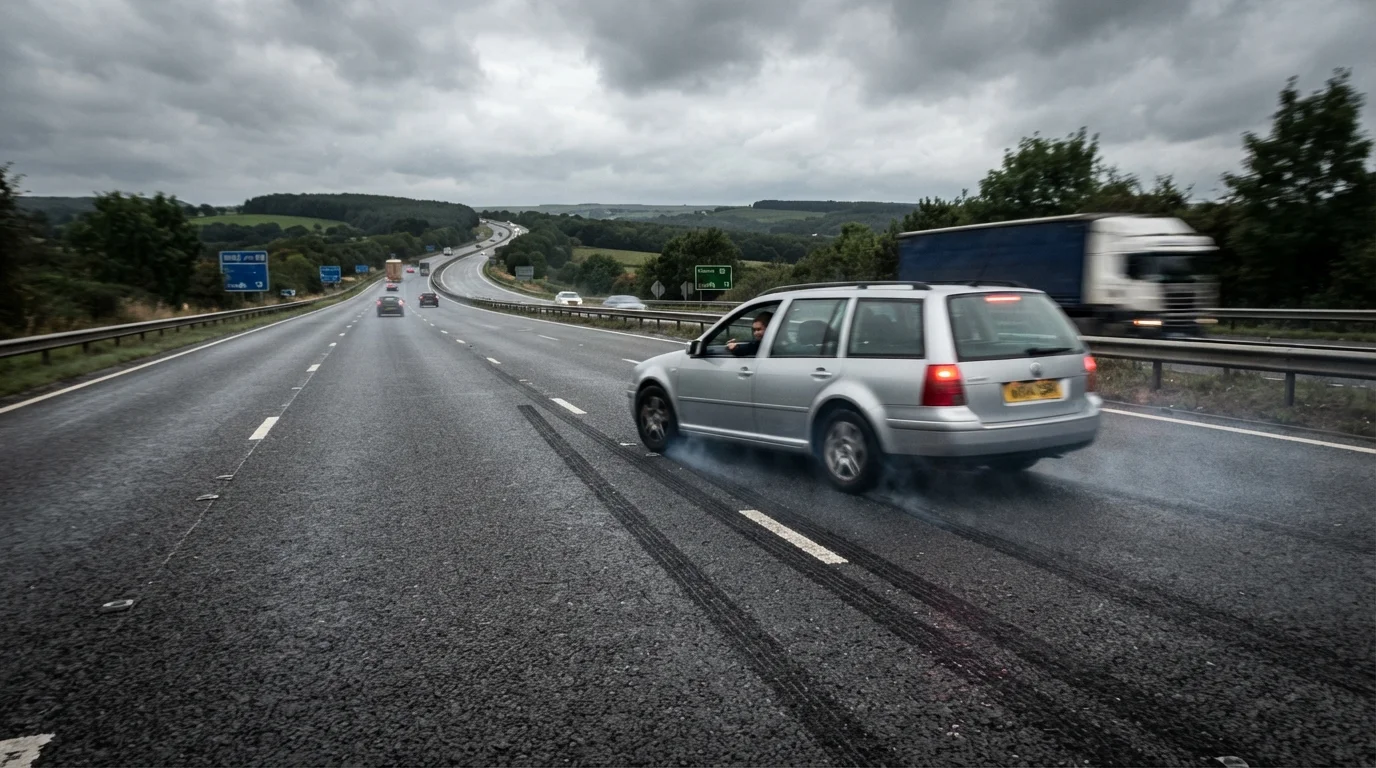
Higher speeds exponentially increase both stopping distance and crash severity - the time saved is negligible compared to the increased risk.
The physics are straightforward: kinetic energy increases with the square of velocity. A vehicle traveling at 70 mph carries nearly twice the kinetic energy of one at 50 mph, which means it takes dramatically longer to stop and collisions are far more destructive. Research consistently shows that speed is a contributing factor in a large percentage of fatal crashes. The time saved by driving 10-15 mph faster on a typical commute is often just a few minutes - a trade-off most people wouldn't accept if they understood the crash physics involved.
Myth
Hands-free phone calls are safe because your eyes stay on the road.
Fact
Hands-free phone use still creates significant cognitive distraction that measurably slows reaction time, even with eyes forward.
Distracted driving research distinguishes between visual distraction (eyes off the road), manual distraction (hands off the wheel), and cognitive distraction (mind off the task). Hands-free calls eliminate the first two but leave the third fully intact. Studies from the National Safety Council and academic traffic researchers have consistently found that phone conversations - regardless of device - divert mental resources away from the driving task. Drivers in active phone conversations can miss visual cues they would otherwise notice, a phenomenon sometimes called "inattention blindness." Texting is worse, but hands-free is not equivalent to driving with full attention.
Myth
Cruise control is a good tool to use in rainy or wet driving conditions.
Fact
Using cruise control on wet roads can reduce your ability to respond quickly to hydroplaning and increases the risk of losing control.
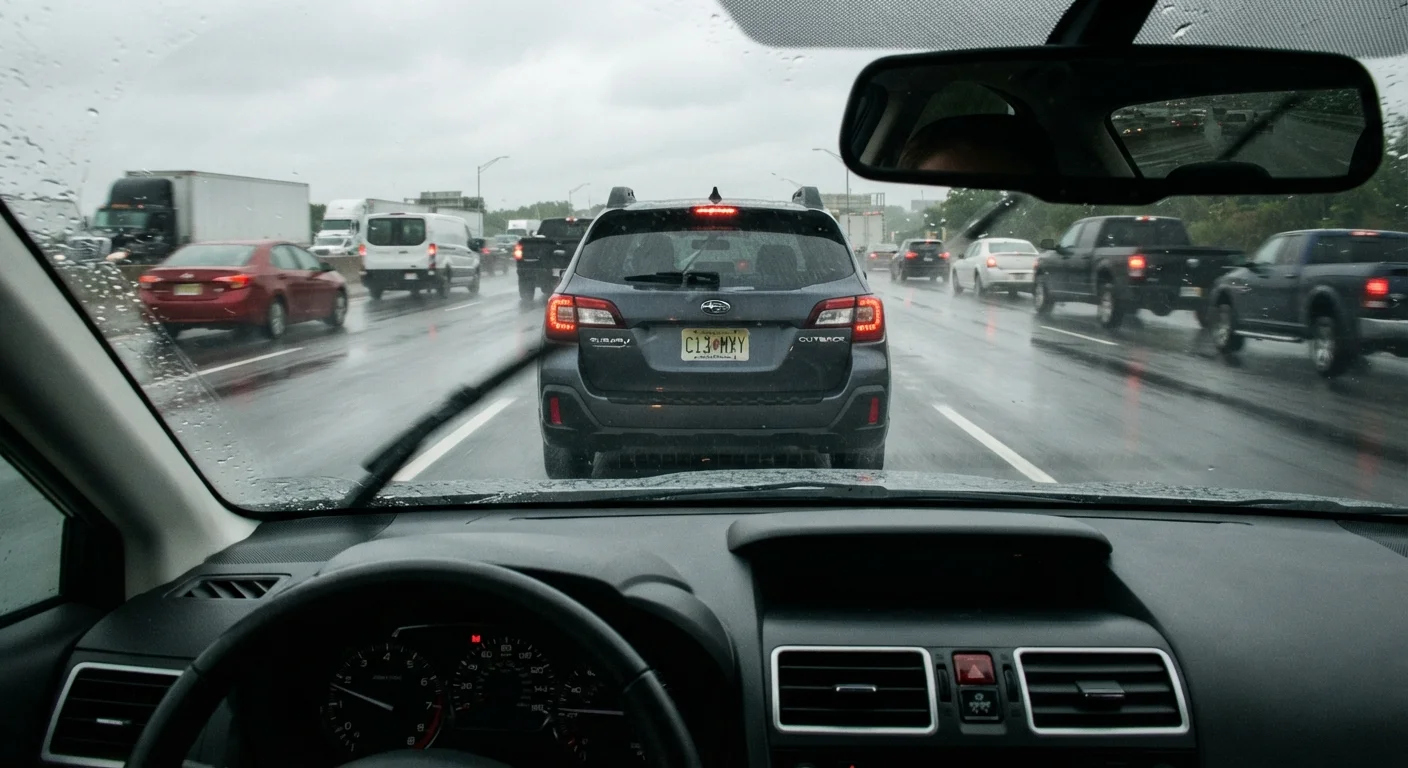
Cruise control is designed to maintain a constant speed, which is exactly the wrong behavior when road conditions are unpredictable. If your tires begin to hydroplane - essentially riding on a film of water rather than gripping the pavement - cruise control will attempt to maintain your set speed by sending more power to the wheels, potentially spinning them faster and worsening the loss of traction. Recovering from hydroplaning typically requires easing off the accelerator gently, something cruise control works against. Most driving safety resources recommend disabling cruise control whenever precipitation, ice, or heavy traffic is present.
Myth
If you're a good driver, a 2-second following distance is plenty at any speed.
Fact
The 3-second rule is the widely recommended minimum, and it should increase significantly in poor weather, at night, or at higher speeds.
The 2-second guideline originated as a rough rule of thumb, but it underestimates stopping distances at highway speeds. At 65 mph, a vehicle travels roughly 95 feet per second - before factoring in reaction time. A 3-second gap gives you more margin to perceive a hazard, decide to brake, and actually stop. Wet pavement, worn tires, or fatigue can each push that needed distance further. Defensive driving principles emphasize that following distance is one of the highest-leverage habits any driver can change immediately, with no cost and no special skill required.
What the Evidence Actually Supports
Correcting these myths isn't just academic. Each one has a practical, actionable replacement habit that safety researchers and traffic engineers broadly endorse. The common thread: modern safe driving is less about rigid rules and more about managing risk dynamically - staying aware, maintaining margins, and not overestimating what your vehicle or your attention can handle.
~38,000
U.S. traffic fatalities annually
According to the National Highway Traffic Safety Administration (NHTSA), approximately 38,000 people die in motor vehicle crashes in the U.S. each year, with speed and distraction among the leading contributing factors.
~25%
Of fatal crashes involve speeding
NHTSA data consistently finds that speeding is a factor in roughly one in four traffic fatalities, underscoring why speed-related myths carry serious real-world consequences.
4x
Greater crash risk with phone use
Research published by the National Safety Council estimates that cell phone use while driving - including hands-free - makes a crash roughly four times more likely.
Following distance is one of the clearest examples. Most drivers dramatically underestimate how long it takes to stop at highway speeds. Stopping distance grows exponentially with speed, not linearly - a fact that surprises even experienced drivers. Similarly, the dangers of following too closely are well-documented; tailgating is a leading cause of rear-end collisions and the physics work against you faster than your instincts suggest.
Night Driving Amplifies Every Myth's Risk
Reduced visibility after dark shortens the window you have to identify hazards and react. Myths like the 2-second following rule or the 'I drive better than average' belief are especially costly at night. Our night driving risk-reduction guide covers evidence-based habits specifically for low-light conditions.
If you're newer to U.S. roads or want to build a stronger foundation, our practical safety orientation for U.S. drivers covers the fundamentals. And for unpredictable stretches, work zone driving rules and risks are worth reviewing before you encounter them at 60 mph. Vehicle upkeep also plays a role - bald tires and neglected brakes make every one of these myth-driven errors worse. See our car maintenance hub for practical upkeep guidance.