How U.S. Traffic Laws Are Structured
The United States does not have a single national traffic code. Instead, each of the 50 states - plus the District of Columbia - sets its own laws governing speed limits, licensing requirements, cell phone use, and more. Federal guidelines create a general framework, but the specifics can vary meaningfully from one state to the next.
What this means practically: if you're licensed in one state but frequently drive in others, it's worth a quick review of local rules. For example, hands-free phone laws, school zone speed limits, and rules around DUI thresholds differ across state lines. Your state's DMV handbook is the authoritative, free reference - and most are available online.
Right of way
The legal priority one driver has over another to proceed through an intersection or merge point. Knowing who has the right of way prevents collisions at intersections and merges.
Posted speed limit
The maximum legal speed for a stretch of road under ideal conditions, displayed on white rectangular signs. Driving above this limit is illegal; driving at it in poor conditions can still be unsafe.
Graduated Driver Licensing (GDL)
A multi-stage licensing system used in all U.S. states that gradually expands driving privileges as new drivers gain experience. Common restrictions include nighttime driving limits and passenger restrictions.
Three-second rule
A method for maintaining a safe following distance by ensuring at least three seconds elapse between when the car ahead passes a fixed point and when you reach the same point.
Yield
To give priority to other vehicles or pedestrians before proceeding. A yield sign means slow down, check for oncoming traffic, and only proceed when the way is clear.
Defensive driving
A driving approach that anticipates potential hazards and the actions of other road users, rather than simply reacting after something goes wrong.
Reading Signs, Signals, and Road Markings
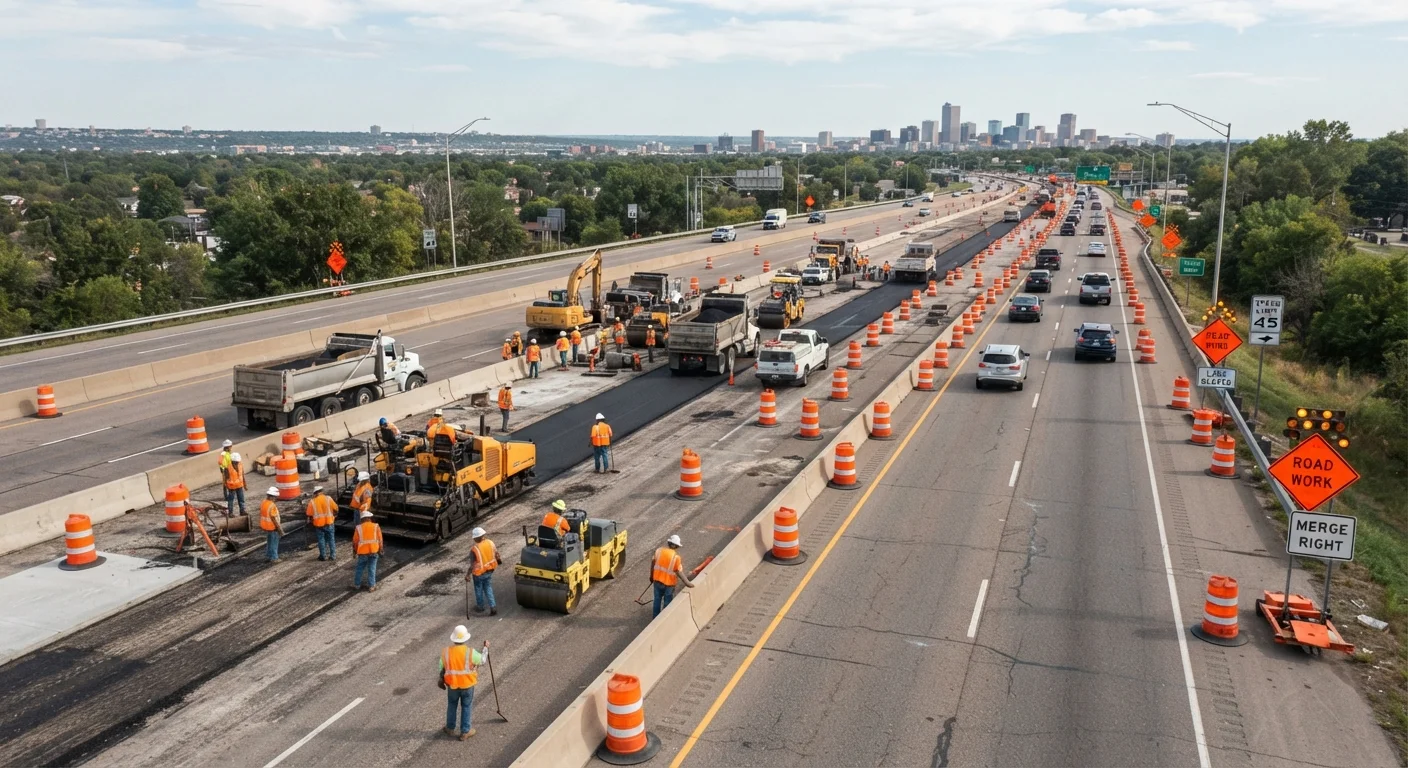
U.S. road signs follow a standardized system based on shape and color, so a driver can read intent even before reading words. Octagons always mean stop. Triangles pointing downward mean yield. Orange signs indicate construction or work zones - learn more about navigating these in our guide to driving in construction zones.
- Red signs: Prohibition or stop (stop signs, do not enter, wrong way).
- Yellow signs: General warnings (curves, intersections, pedestrian crossings).
- Green signs: Direction and distance information.
- Blue signs: Services such as rest areas, hospitals, and fuel.
- White signs: Regulatory rules such as speed limits and turn restrictions.
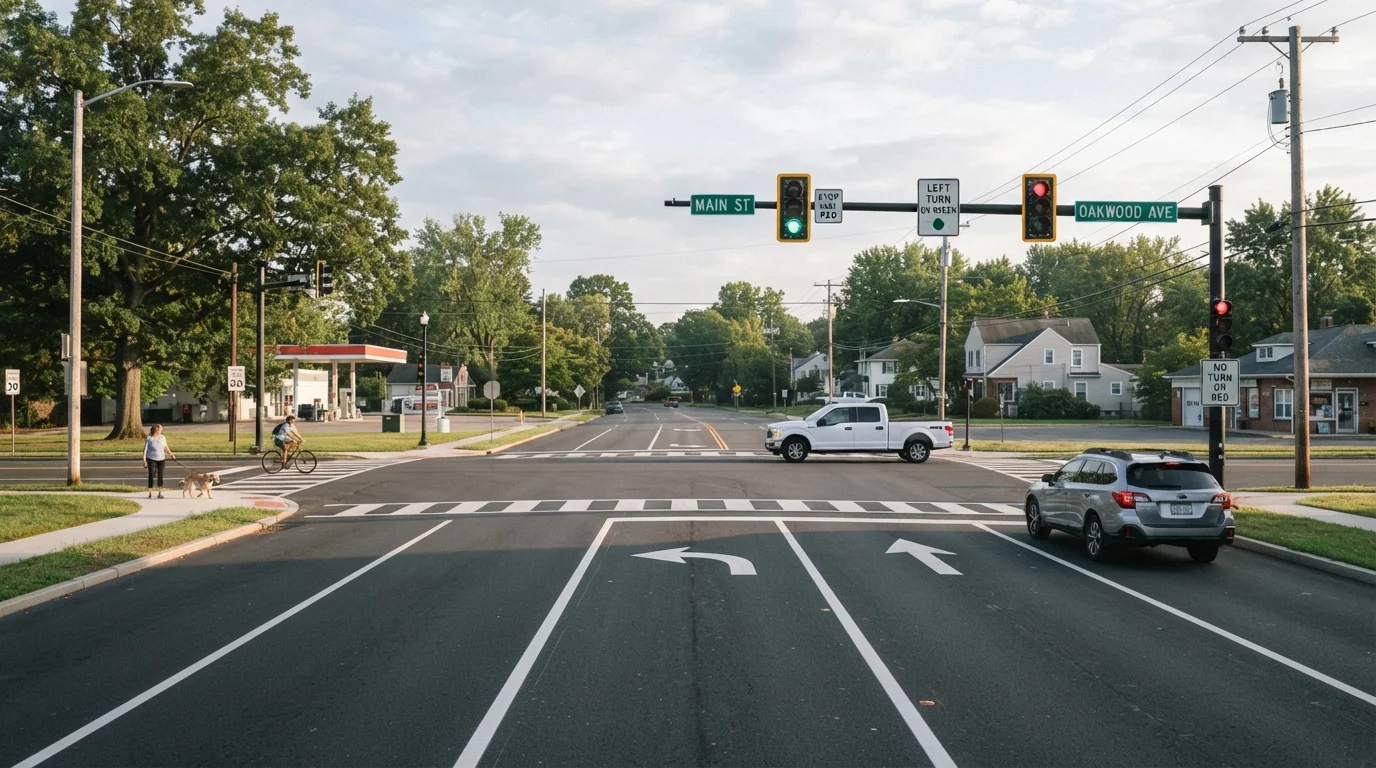
Road markings work alongside signs. A solid yellow center line means no passing. A dashed yellow line allows passing when safe. White lines separate lanes of traffic moving in the same direction - solid white means stay in your lane; dashed white means lane changes are permitted with care.
Use Shape, Not Just Words
When you're new, it's easy to miss a sign because you're focused on reading it. Train yourself to recognize signs by shape and color first - octagon means stop, downward triangle means yield, orange means construction. This lets you process the sign's intent before you're even close enough to read the text.
Core Safety Habits Every New Driver Needs
Safe driving is less about reflexes and more about consistent habits. The following are non-negotiable from your very first solo trip:
- Buckle up before moving: Seat belts are required by law in every U.S. state. They remain the single most effective safety measure in a crash.
- Eliminate phone use: Even hands-free calls affect cognitive attention. Many states ban handheld use entirely. Put the phone away before you start the engine.
- Signal every turn and lane change: Use your turn signal at least 100 feet before turning on a surface road, and earlier on a highway. It communicates your intent to everyone around you.
- Obey right-of-way rules: At a four-way stop, the first vehicle to arrive goes first. When in doubt, yield - being "right" in a crash still causes harm.
Some popular beliefs about safe driving are actually outdated. Our companion piece on road safety myths is worth reading once you have the fundamentals down.
Managing Space, Speed, and Attention
Three variables cause the vast majority of crashes: following too closely, going too fast for conditions, and not paying attention. Managing all three simultaneously is the real skill of driving.
Following distance: Use the three-second rule - watch the car ahead pass a fixed object, then count. If you reach that object in fewer than three seconds, you're too close. Add a second for rain, fog, or heavy traffic. Our article on driving in rain, snow, and fog covers how to adjust for challenging conditions.
Speed: Posted speed limits are maximums for ideal conditions - not targets. In rain, reduced visibility, heavy traffic, or unfamiliar areas, drive below the limit if needed.
Scanning: Experienced drivers continuously scan 10-15 seconds ahead while also checking mirrors every 5-8 seconds. New drivers tend to fixate on the car directly in front. Practice lifting your gaze further down the road.
Avoid Driving When Fatigued
Drowsy driving impairs reaction time and judgment in ways similar to alcohol impairment. If you feel yourself yawning repeatedly or having difficulty focusing on the road, pull over safely and rest. No destination is worth the risk of a fatigue-related crash.
As you get comfortable on local streets, gradually introduce more complex environments. Our guide to highway vs. city driving explains what each environment demands in terms of technique and attention.
Vehicle Readiness and Ongoing Learning
A safe driver also maintains a safe vehicle. Before any trip - especially longer ones - take 90 seconds to check the basics: tire pressure and visible condition, all lights functioning, mirrors properly adjusted, and that you have your license, registration, and proof of insurance. Our car maintenance guide for new drivers walks through the full set of essentials for keeping any vehicle road-ready.
Safe driving is also a social skill. When you carry passengers - especially other teenagers - the risk profile of a trip changes. Research consistently shows that peer passengers increase distraction and risk-taking in new drivers. Our article on driving with passengers breaks down what the data shows and what to do about it.
State DMV Driver's Handbooks
Each U.S. state's DMV publishes a free driver's handbook covering local traffic laws, signs, and licensing rules. Download your state's version directly from the official DMV website for the most accurate local guidance.
Car Maintenance Hub
Our car maintenance hub covers essential upkeep topics - from oil changes to tire care - to help new drivers keep their vehicles safe and reliable.
Finally, driving costs money - fuel, maintenance, registration, and especially insurance. Understanding how your driving habits affect your insurance premiums is worth learning early. Our saving on insurance hub covers the financial side of responsible vehicle ownership.
This article is for general informational and educational purposes only. Traffic laws vary by state and locality. Always consult your state's official DMV resources or a licensed driving instructor for guidance specific to your situation.