Thread Count: What the Number Actually Measures
Thread count is defined as the number of threads woven into one square inch of fabric - counting both horizontal (weft) and vertical (warp) threads. A single-ply 200-thread-count sheet has 100 threads running each direction. That's the baseline definition.
Where it gets murky: many manufacturers count each individual strand within a twisted, multi-ply yarn as a separate thread. A fabric woven with 2-ply yarn at a true 200-thread count gets relabeled as 400. At 4-ply, that same fabric becomes "800 thread count." The physical weave hasn't changed - only the marketing number has.
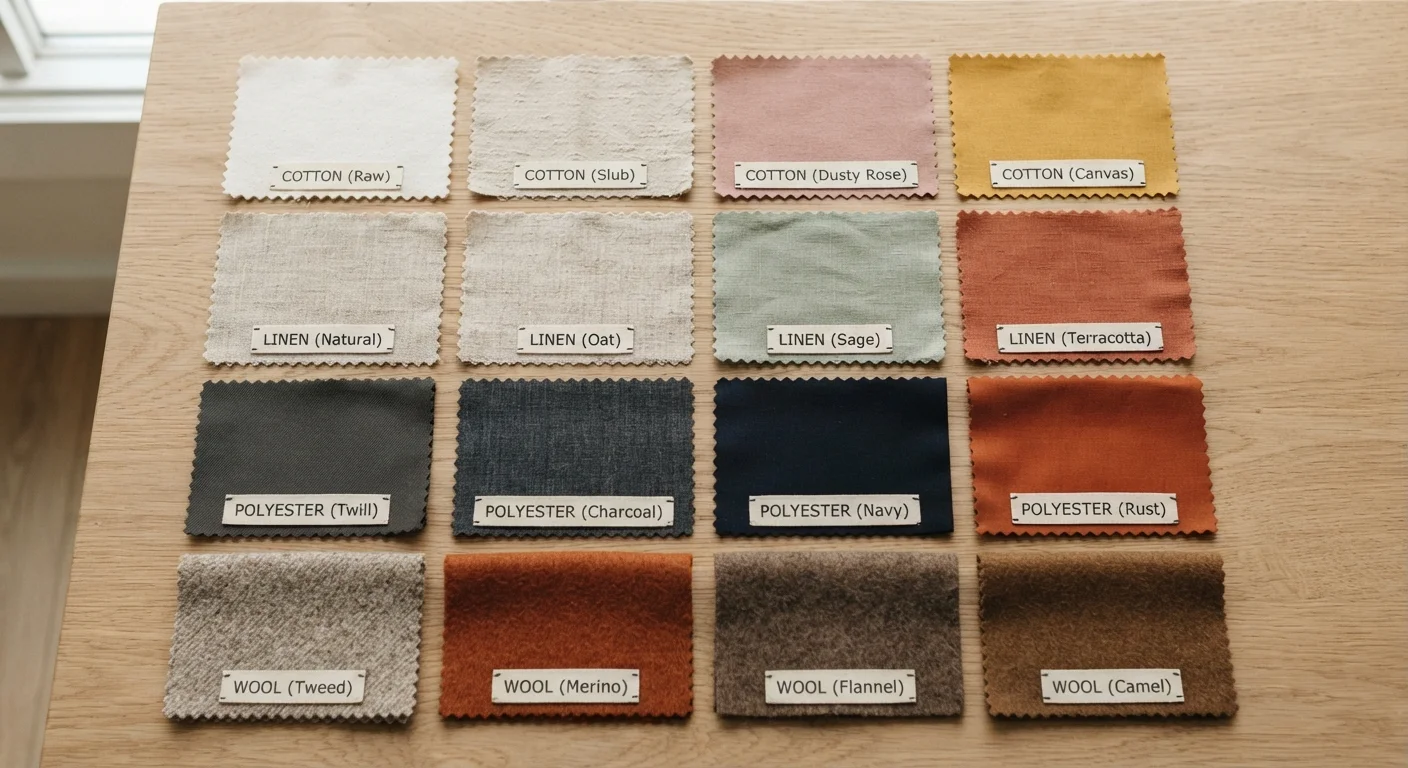
Textile experts generally hold that practical quality improvements level off somewhere between 300 and 500 threads per square inch in single-ply cotton. Beyond that threshold, tighter weaves can actually reduce breathability. What matters more is the fiber length - long-staple cotton varieties like Egyptian or Pima produce smoother, stronger individual threads that hold up through washing. See our guide to fabric basics for more on how fiber type shapes feel and durability.
Check Ply Count Before Trusting Thread Count
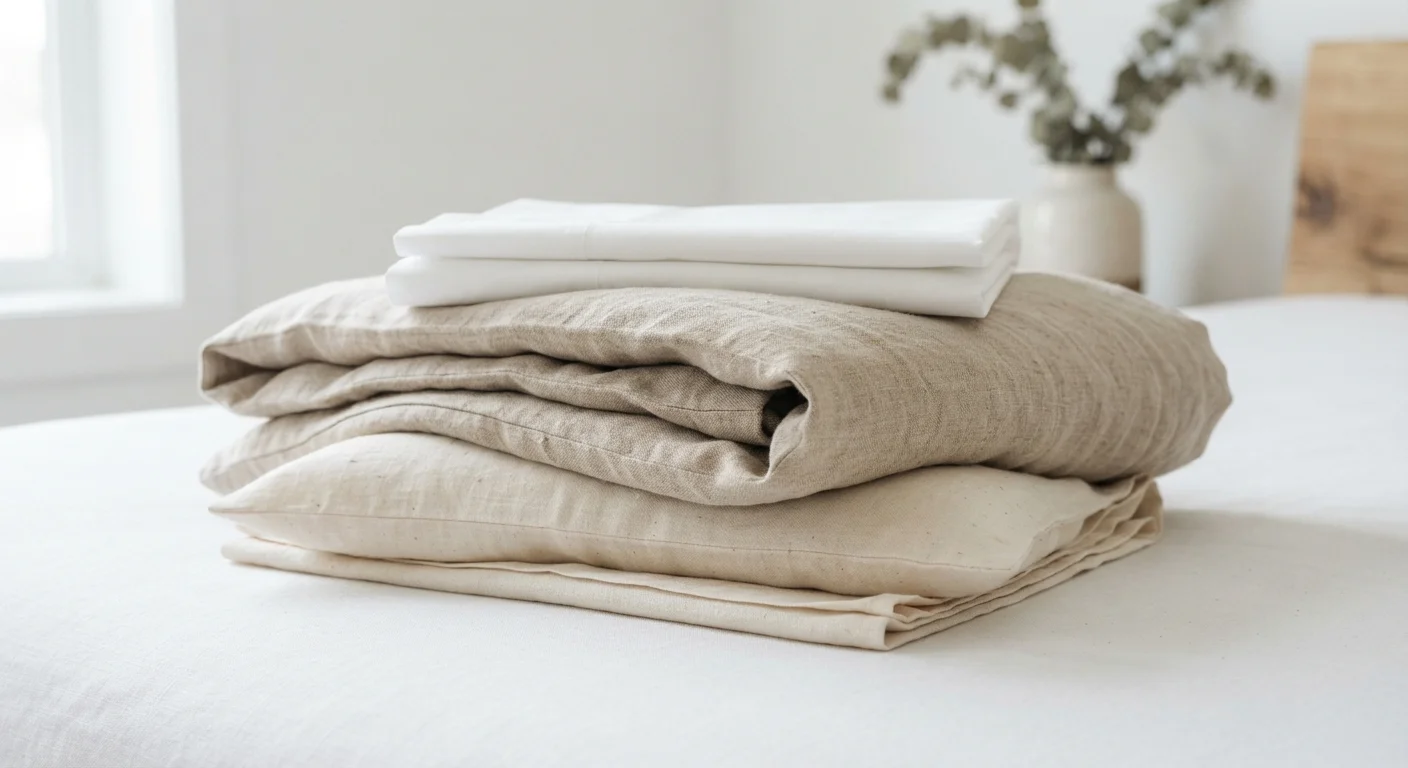
When evaluating sheets, look for whether the label specifies single-ply yarn. If it doesn't mention ply at all, assume multi-ply counting may be inflating the number. A single-ply 300-400 thread count sheet from a quality long-staple cotton is a more reliable quality signal than an unspecified "800 thread count" claim.
Fill Power: Loft Efficiency, Not a Warmth Guarantee
Fill power measures how much volume - in cubic inches - one ounce of down occupies when allowed to expand fully. A cluster with 800 fill power expands to fill 800 cubic inches per ounce. Higher fill power clusters are larger, trap more air, and provide more insulation relative to their weight.
The common misread is treating fill power as a direct warmth rating. It isn't. Warmth depends on both fill power and fill weight - the total number of ounces of down in the comforter. A lightweight 800-fill-power comforter with a low fill weight can be less warm than a 600-fill-power product packed with more down. Manufacturers sometimes advertise impressive fill power numbers without disclosing fill weight, which makes comparison difficult.
600-800
Fill power range considered quality for everyday use
Industry textile guidance generally places standard-to-premium down comforters in this fill power range, with higher values associated with lighter-weight luxury products.
300-500
Thread count range where quality improvements plateau
Textile and consumer goods researchers generally agree that single-ply thread count improvements beyond this range produce diminishing returns in feel or durability.
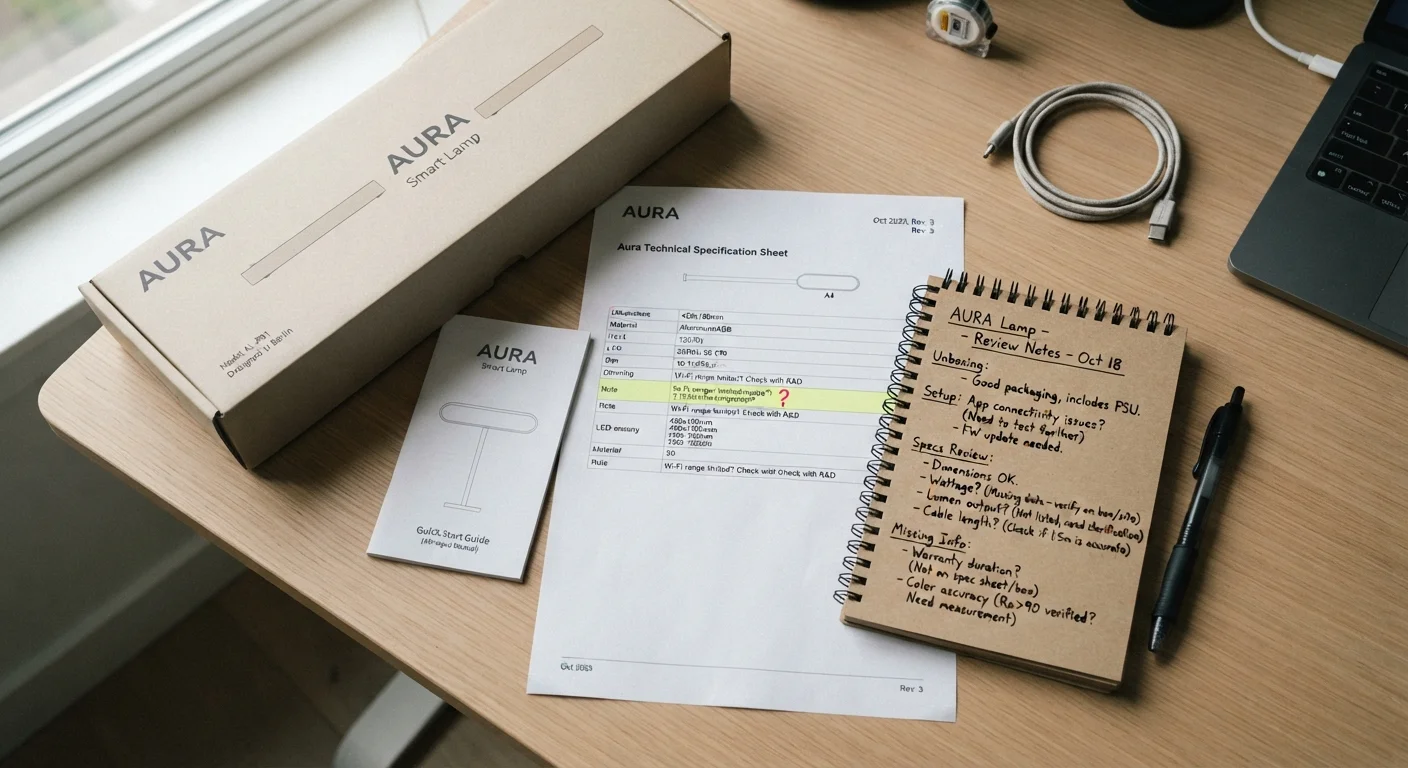
Down alternatives (synthetic fills) don't use the fill power scale. Their loft and insulation are measured differently, and comparisons with real down fill power figures aren't apples-to-apples. The information spec sheets routinely leave out often includes exactly this kind of fill weight disclosure.
GSM, Weave Type, and the Specs Packaging Skips
GSM - grams per square meter - is a fabric weight measurement applied to sheets, duvet covers, and blankets. It's more straightforward than thread count: a higher GSM fabric is heavier per unit area. For sheets, lighter GSM (roughly 90-150) tends to breathe more easily; heavier GSM (170-220) feels more substantial and is often described as "crisp" or "hotel-like."
GSM doesn't capture weave structure, which also shapes the feel. Percale is a plain one-over-one-under weave that produces a cool, matte finish. Sateen uses a four-over-one-under structure that creates a silky sheen but is more prone to pilling over time. Twill weaves like flannel add texture and warmth. None of these differences show up in a thread count or GSM figure - they require reading the product description carefully.
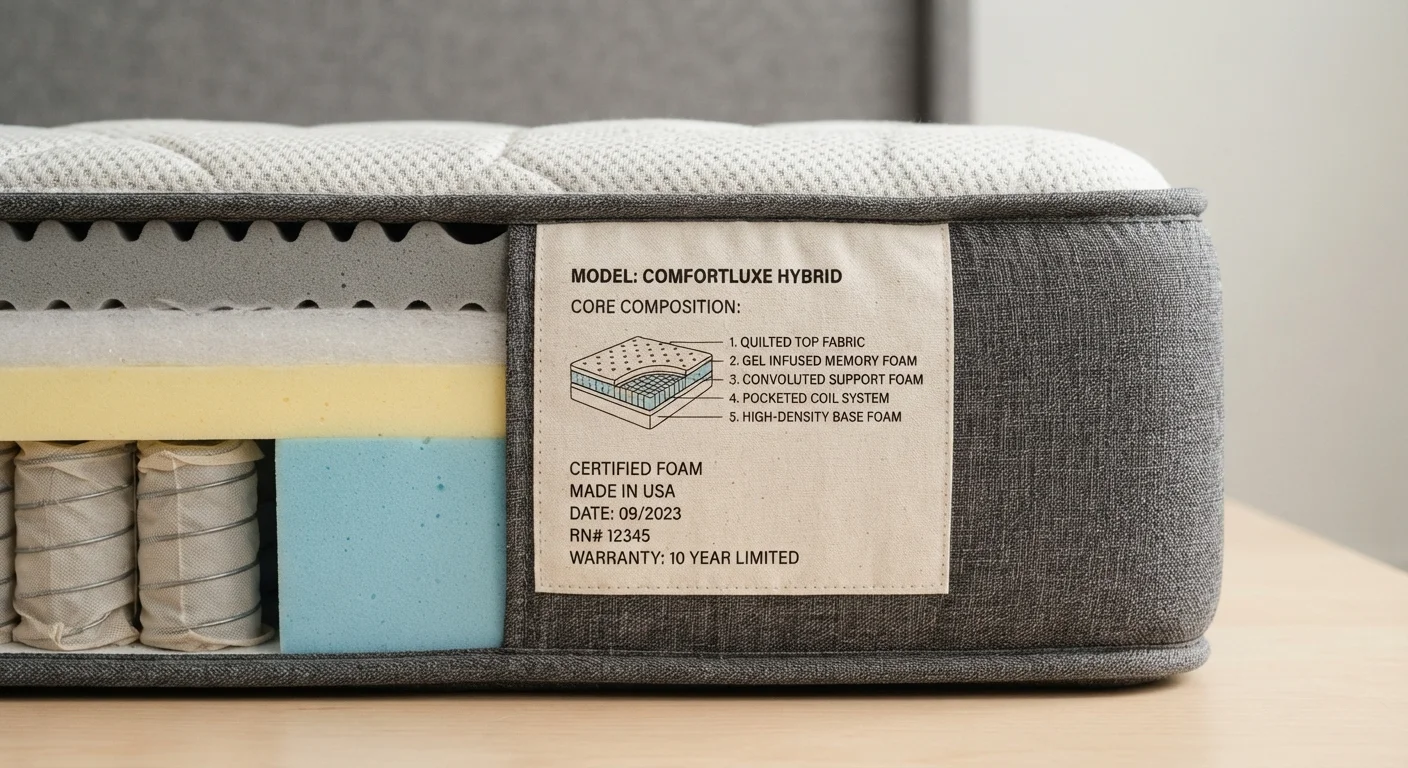
Certifications are worth factoring in alongside any spec number. OEKO-TEX Standard 100 verifies the fabric has been tested for harmful substances. The Responsible Down Standard (RDS) audits down sourcing. GOTS applies to organic textile processing. These labels are independently verified in ways that thread count claims are not. For a broader look at what labels don't tell you, see our guide to decoding mattress labels, which covers similar marketing dynamics in a related category.
Understanding which specs signal real quality - and which are mostly marketing - is one of the more practical skills a shopper can build. The real cost of low-quality linens becomes clearer once you know what to look for before buying.
Specs Vary by Product Category
Thread count applies to woven sheets and pillowcases; fill power applies to down and down-alternative products; GSM applies broadly to fabric weight. These metrics are not interchangeable across categories. When comparing products, make sure you're looking at the same type of spec - comparing the GSM of a sheet to the GSM of a blanket, for example, won't yield a meaningful quality comparison.