Why Skincare Claims Outpace the Science
Walk down any beauty aisle and you'll encounter a dizzying vocabulary: pore-minimizing, collagen-rebuilding, skin-detoxifying, clinically proven. These phrases are carefully chosen to feel scientific and results-driven - but the gap between marketing language and peer-reviewed evidence is often significant.
Skincare products occupy a regulatory middle ground. In the U.S., cosmetics are regulated for safety under the FDA, but efficacy claims are largely self-policed by manufacturers. That means a brand can call a product "firming" without submitting proof that it firms anything. Understanding this gap is the first step toward spending on things that actually work for your skin.
Myth
Certain skincare products can permanently shrink your pores.
Fact
Pore size is primarily determined by genetics and cannot be permanently altered by any topical product.
Pores are follicle openings - their baseline size is largely genetic. What products can do is temporarily reduce their appearance: ingredients like salicylic acid clear out debris that stretches pores, and certain astringents cause mild, short-lived swelling that makes pores look smaller. But once the product washes off, the effect fades. Consistent sun protection and keeping pores clear are the best evidence-supported strategies for managing their look. Understanding your skin type versus skin condition also helps you choose products that genuinely address your concerns.
Myth
Applying a collagen cream replenishes the collagen in your skin.
Fact
Collagen molecules in most topical products are too large to penetrate the dermis, where skin's structural collagen actually lives.
Collagen is a large protein. When applied topically, it sits on the surface and can act as a humectant - helping skin feel temporarily plumper and more hydrated - but it does not integrate into the deeper dermal layer. Ingredients with more evidence for supporting collagen production include retinoids and certain peptides, though even these vary significantly in study quality and concentration. Always look past the front-of-label claim to the actual ingredient list and its position in the formula.
Myth
Skincare products labeled "detoxifying" draw toxins out of your skin.
Fact
The skin is a barrier, not an excretory organ. Detoxification is the job of the liver and kidneys, not face masks.
"Detox" is one of the most persistently misused terms in both beauty and wellness marketing. In a clinical sense, toxin removal is handled by the body's internal organs. Skincare products - including activated charcoal masks and clay formulas - can remove surface debris, excess oil, and some environmental particles from the skin's surface, which is genuinely useful. But calling that process "detoxification" overstates what's happening. If you're curious how similar language is used in nutrition marketing, our breakdown of nutrition myths covers the same pattern.
Myth
"Clinically tested" on a label means a product has been proven to work.
Fact
"Clinically tested" only means a test was conducted - it says nothing about the test's design, size, independence, or outcome.
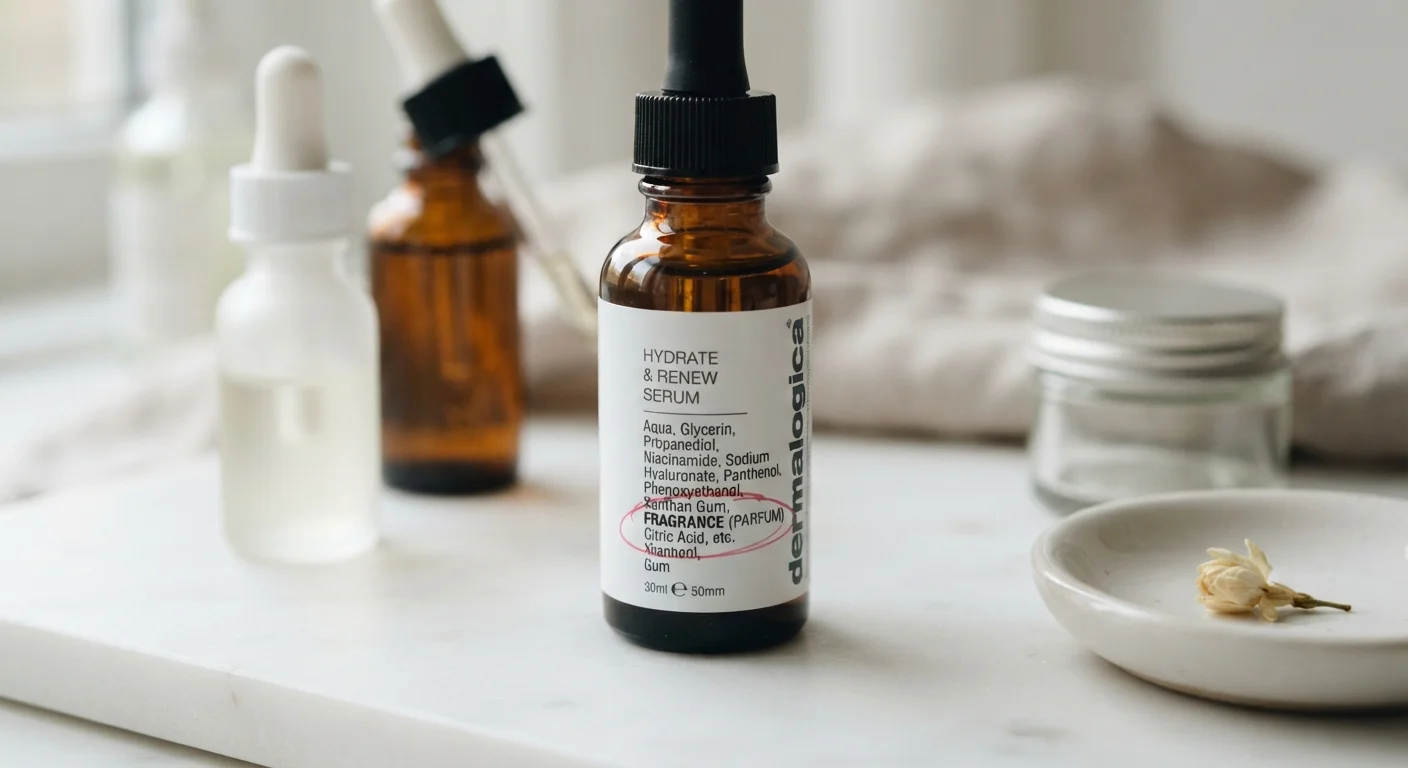
This phrase is one of the most misleading in skincare marketing because it sounds authoritative without confirming anything. A study involving twelve participants, funded by the manufacturer, with no control group still qualifies as "clinically tested." Look for specifics: peer-reviewed publication, sample size, and whether results were statistically significant. It's also worth knowing how ingredient lists themselves can be constructed to mislead - our article on what fragrance on a label really means is a good companion read.
Myth
Expensive skincare products are more effective because of superior ingredients.
Fact
Price correlates with marketing spend and packaging far more reliably than with ingredient efficacy or concentration.
Many active ingredients - like niacinamide, glycerin, and retinol - appear in both drugstore and luxury formulas. What often differs is fragrance, texture, packaging, and brand positioning, not the functional ingredient at a meaningful concentration. Reading an ingredient list carefully (actives appear near the top; fillers near the bottom) gives you far more useful information than price. For a deeper look at how ingredient lists can obscure what's really inside a product, see our guide on ingredient label tactics worth knowing.
How to Read Past the Label
Once you know what common claims actually mean - or don't mean - reading skincare labels becomes a more useful exercise. A few practical habits help:
- Prioritize the ingredient list over front-label claims. Actives are listed in descending concentration order. If a hero ingredient appears near the very end, it's present in a small amount.
- Look for specificity. "Helps reduce the appearance of fine lines" is a weaker claim than a product citing a specific concentration of a well-studied active. The former is almost always marketing; the latter at least gives you something to research.
- Be skeptical of proprietary blends. When a formula is listed as a "complex" without individual ingredient disclosures, it can be harder to evaluate what you're actually getting.
How you layer your products also affects what they can do. Our guide on skincare layering and product order explains how applying products out of sequence can reduce their effectiveness. And before combining actives, it's worth checking which ingredient pairs to avoid to prevent irritation or reduced efficacy.
"Natural" Does Not Mean Safe or Effective
Products marketed as "all-natural" or "chemical-free" carry no guarantee of being gentler, safer, or more effective than conventional formulas. Many natural ingredients - including essential oils and certain plant extracts - are common sensitizers. If you have reactive or compromised skin, always patch-test new products regardless of how they're labeled.
Marketing Language Is Not the Same as Evidence
Skincare labels are regulated for safety, not for truthfulness of efficacy claims in most cases. Terms like "firming," "renewing," and "detoxifying" are largely unregulated marketing language. No label claim replaces independent, peer-reviewed evidence. When in doubt about a skincare ingredient for a specific skin concern, a board-certified dermatologist is your most reliable resource.
This article is for general informational purposes only and is not medical or dermatological advice. For concerns about your specific skin health, consult a licensed dermatologist or qualified healthcare professional.