How Phone Tiers Are Defined
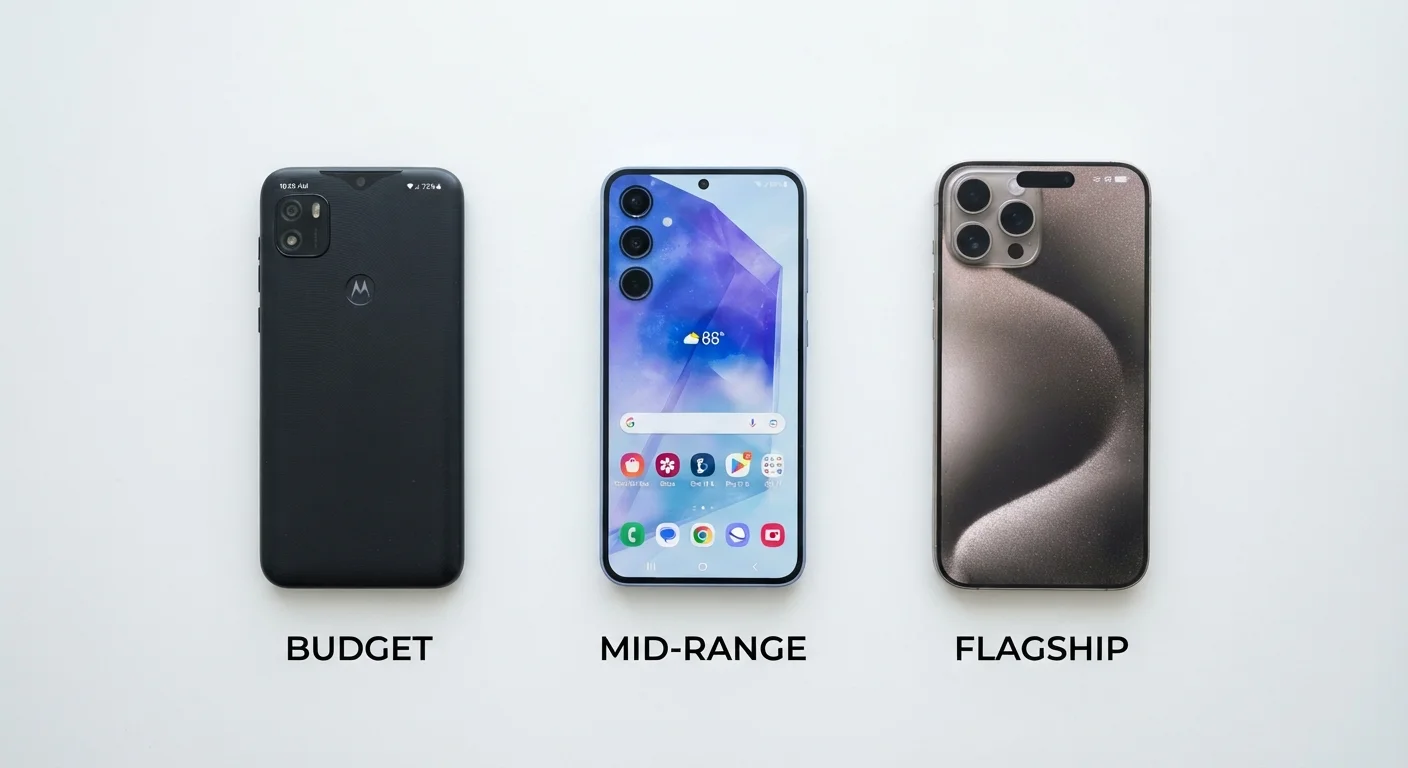
Smartphone pricing generally falls into three recognized tiers. Budget phones typically land under $300. Mid-range devices span roughly $300 to $600. Flagship models sit above $600, often reaching $1,000 or more. These aren't arbitrary lines - each tier reflects deliberate engineering trade-offs around processors, cameras, displays, and materials.
Understanding what changes between tiers helps you avoid paying for features you don't need - or skimping on specs that will frustrate you daily. If you're new to evaluating phones, this beginner's guide to buying a smartphone walks through each major decision point in detail.
| Budget (Under $300) | Mid-Range ($300-$600) | Flagship ($600+) | |
|---|---|---|---|
| Processor performance | Entry-level, adequate for basic tasks | Strong, handles most tasks smoothly | Top-tier, sustained under heavy load |
| Camera system | Single sensor, limited low-light | Multi-lens, solid computational photography | Large sensors, advanced optics, best low-light |
| Display quality | 60Hz, LCD common, lower brightness | 90-120Hz, OLED frequent, good outdoor use | 120Hz, premium OLED, high peak brightness |
| Build materials | Plastic body typical | Plastic or aluminum, glass rear possible | Aluminum or titanium, premium glass |
| Software update years | 1-2 years typical | 3-4 years increasingly common | 5-7 years on leading platforms |
| Battery life | Often good due to modest chipsets | Solid, efficient processors help | Varies; larger cells, but power-hungry screens |
What Budget Phones Deliver - and Where They Fall Short
Budget phones have improved considerably. Today's sub-$300 devices handle social media, streaming, navigation, and messaging without significant friction. Manufacturers achieve this by using entry-level processors - often mid-tier chips from a generation or two back - that handle routine tasks competently but struggle under sustained load.
The clearest trade-offs appear in three areas:
- Camera systems: Budget phones typically use a single rear sensor, smaller image sensors, and basic processing algorithms. Low-light photography suffers most visibly.
- Display: Lower refresh rates (often 60Hz) and lower brightness ceilings are common. Colors may appear less accurate compared to pricier panels.
- Software longevity: Budget devices frequently receive two years or fewer of OS updates, meaning security patches and new features stop arriving sooner.
For genuinely light users - those who rarely push a phone hard - these limitations rarely surface. But power users will hit ceilings quickly.
Check Software Support Before Committing
Before purchasing any phone, look up the manufacturer's stated OS update policy for that specific model. Two phones at the same price can have very different support timelines. A device guaranteed three more years of security patches is meaningfully different from one with twelve months remaining - especially if you plan to keep the phone for two or three years.
The Mid-Range Sweet Spot
Mid-range phones represent the most competitive segment in the smartphone market. Processors in this tier now deliver performance that would have qualified as flagship-class just two or three years ago. Displays commonly feature 90Hz or 120Hz refresh rates, OLED panels, and adequate peak brightness for outdoor use.
Camera systems at this tier gain meaningful advantages: multiple lenses (ultrawide and telephoto options appear more frequently), larger sensors, and improved computational photography. The gap between mid-range and flagship cameras has narrowed considerably, though it hasn't closed entirely.
Software support has also improved here, with many mid-range devices now receiving three to four years of OS updates. That extended support window changes the long-term value calculation significantly - something worth factoring in before assuming a cheaper option saves money. Our piece on how upfront price can obscure long-term costs explores this dynamic further.
~50%
Share of U.S. smartphone sales in mid-range tier
Industry analyst data consistently shows mid-range devices capturing the largest segment of unit sales volume in the U.S. market.
5-7 years
OS update support on leading flagship platforms
Several major manufacturers have extended software support commitments on flagship lines, significantly changing long-term value calculations.
2x
Typical camera sensor size difference: budget vs. flagship
Sensor area differences between entry-level and flagship camera modules commonly reach two times or more, directly affecting low-light performance.
What Flagships Actually Add
Flagship phones justify their price through a cluster of advantages that compound over ownership time. The most powerful current-generation processors deliver faster app launches, smoother multitasking, and better sustained performance during demanding tasks like video editing or gaming. Thermal management - how well the phone maintains performance under load - also tends to be more refined.
Camera hardware represents the clearest flagship differentiator. Larger image sensors, wider aperture lenses, multiple telephoto options, and more sophisticated image processing pipelines produce measurable quality differences, especially in challenging lighting or when shooting at distance.
Build quality and software longevity are the less-discussed advantages. Flagship devices typically use premium materials (aluminum or titanium frames, Gorilla Glass on both sides) and receive OS updates for five to seven years on some platforms. For buyers planning to hold a phone four or more years, that support window changes the real cost per year of ownership.
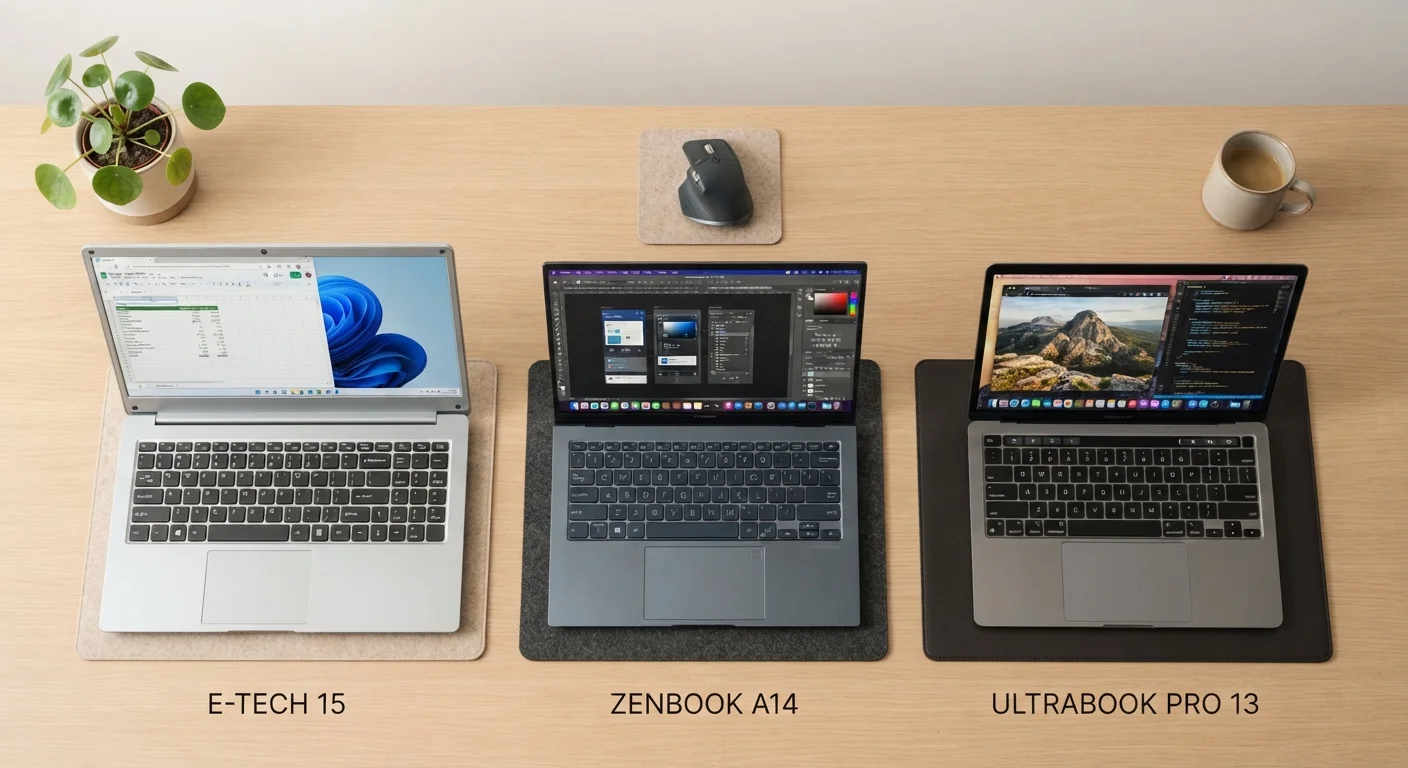
If you're comparing how this tier logic applies to computers as well, our laptop tier breakdown follows similar principles.
Choosing the Right Tier for How You Actually Use Your Phone
The most useful question isn't which tier is objectively better - it's which tier matches your actual usage. A person who checks email, streams audio, and texts doesn't benefit meaningfully from a $1,100 flagship. Conversely, someone who shoots extensive video, plays graphics-intensive games, or plans to use their device for five-plus years will find a budget phone's limitations compounding over time.
A few practical considerations that often get overlooked:
- Carrier vs. unlocked: Where you buy can affect price and flexibility across all tiers. Understanding unlocked vs. carrier-locked phones helps clarify what changes between purchase paths.
- Refurbished options: A certified refurbished mid-range or flagship device can shift the value equation significantly. Knowing what to check on a used phone before buying protects you from common pitfalls.
- Operating system preference: Tier differences intersect with platform differences. A plain-language Android vs. iOS comparison covers what changes between ecosystems at any price point.
Matching your tier choice to honest self-assessment of daily use - not aspiration - is the most reliable path to satisfaction.
Avoid Judging Tiers by Specs Alone
Spec sheets don't always reflect real-world performance. A phone with a high-resolution camera sensor can still produce worse photos than a device with a lower-resolution but larger sensor and better processing. Similarly, processor benchmark scores don't always translate to smoother daily use. Whenever possible, consult independent hardware reviews that test sustained performance rather than peak specifications.