
Why Two Drivers Pay Completely Different Rates
Auto insurance pricing can feel like a black box. Two neighbors with similar cars can pay wildly different premiums, and the reasons aren't always obvious. Insurers don't set prices arbitrarily - they assign rates based on dozens of data points that predict how likely a policyholder is to file a claim and how costly that claim might be.
Understanding those factors doesn't just satisfy curiosity. It helps you see which costs you can influence and which you simply have to plan for. For a fuller picture of where insurance fits within the total cost of owning a vehicle, see car ownership costs from purchase to resale.
~$2,000+
Average annual U.S. auto insurance premium
According to data from the National Association of Insurance Commissioners (NAIC), average expenditures on auto insurance have increased notably in recent years, with full-coverage averages topping $2,000 annually in many states.
Up to 50%
Premium increase after a single at-fault accident
Industry analyses consistently show that one at-fault accident can raise a driver's premium by 30% to 50% or more at renewal, depending on the insurer and state.
3-5 years
How long incidents affect your rate
Most at-fault accidents and serious moving violations remain on your driving record and influence your insurance rating for three to five years, though this varies by state and insurer.
Your Driving Record: The Single Clearest Signal
Insurers treat your driving history as the most direct evidence of future risk. A clean record - no at-fault accidents, no DUIs, no major moving violations - consistently produces lower premiums. Each incident that goes on your record tells the insurer you're statistically more likely to cost them money.
- At-fault accidents can raise premiums for three to five years, depending on severity and state rules.
- DUI or DWI convictions often trigger surcharges of 50% to 100% or more, and some insurers won't renew at all.
- Speeding tickets and other moving violations carry smaller but still meaningful surcharges.
New drivers and teenagers pay higher rates simply because they lack a track record. As a clean history builds, premiums typically decline.
Defensive Driving Courses Can Lower Your Rate
Many insurers offer a discount for completing an approved defensive driving or driver safety course. The discount amount varies, but it's one of the few premium levers available even after a violation has already hit your record. Check with your insurer before enrolling to confirm the course qualifies.
Your Vehicle: What You Drive Changes What You Pay
The car itself is a major cost variable. Insurers evaluate several vehicle-specific factors:
- Repair and replacement cost: A vehicle with expensive parts or a high MSRP costs more to insure because a total loss or collision claim is more expensive to pay out.
- Safety ratings: Vehicles with strong crash-test results and advanced safety features may qualify for lower collision and medical payment premiums.
- Theft rates: Some models are stolen more frequently than others. Higher theft rates typically push comprehensive coverage costs up.
- Engine size and horsepower: High-performance vehicles are associated with higher speeds and accident risk, which often raises premiums.
If you're weighing vehicle options and budget is a concern, checking estimated insurance costs before purchase is a practical step - not an afterthought.
Where You Live and How Much You Drive
Location is a factor you may not think about until you move and your renewal arrives with a different number. Insurers rate based on your garaging address - where the car sleeps at night - not just your state.
Dense urban ZIP codes with higher accident frequency, vehicle theft, and vandalism rates generate higher premiums than rural or suburban areas. Weather patterns also matter: regions prone to hail, flooding, or severe storms see elevated comprehensive coverage costs.
Annual mileage plays a role too. The more miles you drive, the more exposure you have to accidents. Drivers who commute long distances typically pay more than those who drive infrequently. Some insurers now offer usage-based or pay-per-mile programs that tie premiums directly to how and how much you drive - worth exploring if your mileage is genuinely low.
Coverage Choices and Deductibles: The Levers You Control
Unlike your age or driving history, coverage decisions are entirely within your control. The types of coverage you carry and the limits you set directly affect your premium.
Liability-only policies cost less than full coverage (which adds collision and comprehensive), but they leave you financially exposed if your own vehicle is damaged. Choosing higher coverage limits raises your premium but reduces what you'd owe after a serious claim.
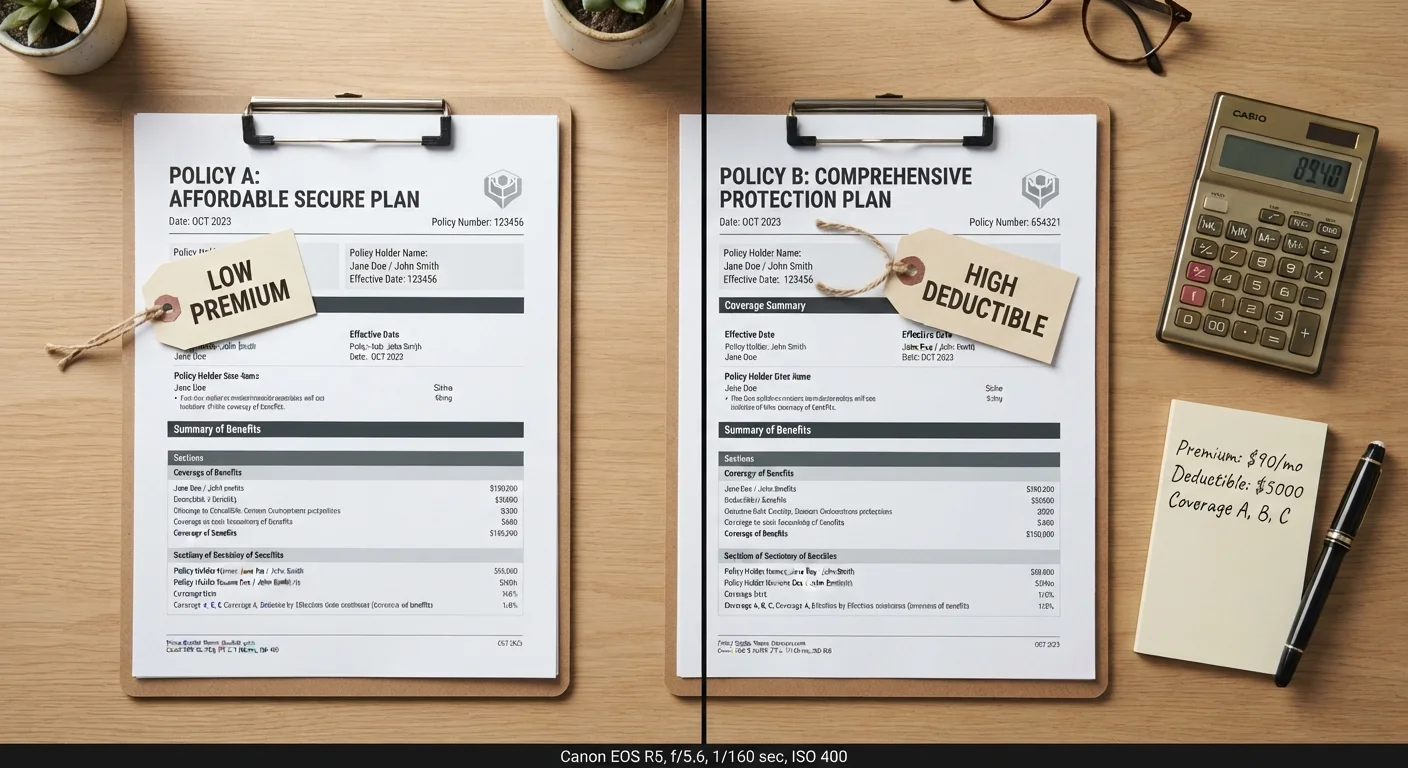
Your deductible - the amount you pay out of pocket before insurance kicks in - has an inverse relationship with your premium. A higher deductible lowers your monthly cost but means you absorb more of any claim. For a plain-language explanation of how this trade-off works, see what a deductible actually means for your coverage.
Before adjusting coverage to cut costs, it's worth understanding the full picture. Low premiums can become expensive when a gap in coverage surfaces at claim time.
State Regulations Shape What Insurers Can Use
Not every rating factor is permitted in every state. California, Hawaii, and Massachusetts, for example, prohibit the use of credit scores as an auto insurance rating factor. Michigan has its own unique no-fault insurance structure that affects how premiums are calculated. Always verify what rules apply in your state, as they materially affect how your premium is determined.
Other Rating Factors Worth Knowing
Beyond the headline factors, insurers use several additional variables that budget-conscious drivers should be aware of:
- Credit-based insurance score: In most states, a version of your credit history is used as a rating factor. Improving your credit over time can gradually reduce your premium in states where this is permitted.
- Age and driving experience: Young drivers under 25 and, to a lesser extent, older drivers over 75 often pay higher rates due to statistical risk patterns.
- Marital status: Married drivers statistically file fewer claims and may receive slightly lower rates in some states.
- Prior insurance history: Gaps in coverage - even short ones - can raise your premium because they're associated with higher-risk behavior.
Understanding these factors helps you avoid surprises and spot whether you might be overpaying. Many drivers overpay without realizing it due to outdated coverage or unclaimed discounts. If you want to get grounded in the full vocabulary of policies, insurance terms every budget shopper should know is a solid starting point.
This article provides general information about auto insurance pricing factors and is not personalized insurance, financial, or legal advice. Coverage, eligibility, and premiums vary by insurer and state. Consult a licensed insurance agent or adviser for guidance specific to your situation.