Why Purchase Price Is the Wrong Place to Start
Most car-buying decisions hinge on the sticker price or the monthly payment. Neither number tells you what the vehicle will actually cost you to own. The real figure - what you'll spend from purchase to eventual sale or trade-in - involves depreciation, financing, insurance, maintenance, repairs, registration, and fuel. Miss any of those, and you're planning on incomplete information.
For a fuller view of every financial layer involved, see our guide to car ownership costs from purchase to resale. The comparison between new and used only makes sense once you understand that framework.
| Criterion | New Car | Used Car |
|---|---|---|
| Purchase Price | Higher upfront cost | Lower upfront cost |
| Depreciation Exposure | Steepest in year one | Already absorbed by prior owner |
| Financing Rate (APR) | Generally lower | Generally higher |
| Insurance Premiums | Higher (greater replacement value) | Lower physical damage premiums |
| Warranty Coverage | Full factory warranty | Limited or none (varies) |
| Maintenance Predictability | High - covered under warranty | Lower - depends on vehicle age/mileage |
| Registration Fees | Higher (based on value) | Lower (older, lower value) |
| Technology & Safety Features | Latest available | Varies by model year |
Depreciation: Where New Cars Take the Biggest Hit
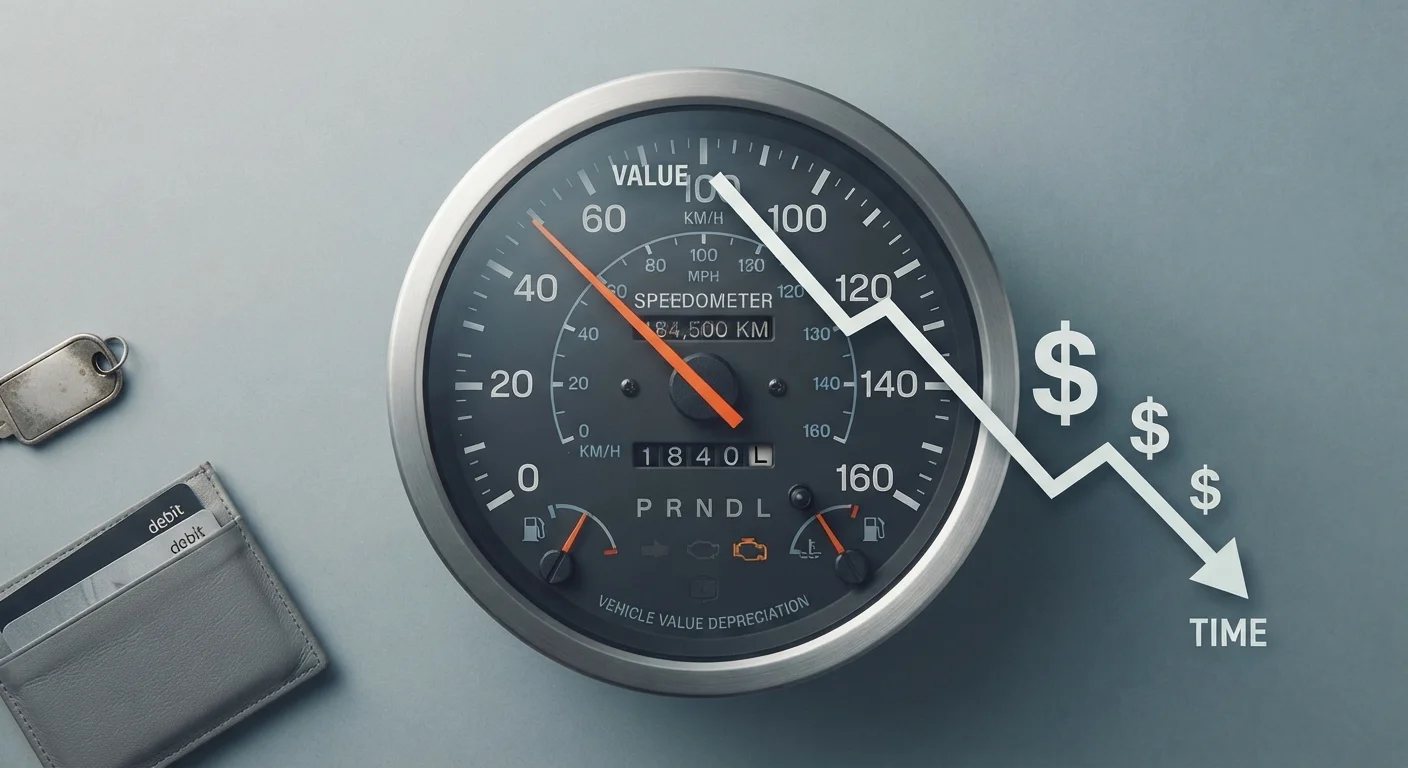
Depreciation is the single largest ownership cost for most drivers, and it hits hardest in the first one to three years. A new vehicle can shed roughly 15-20% of its value within the first 12 months and up to 50% by year five, depending on the model and market conditions. When you buy used, the previous owner has already absorbed that steepest portion of the curve.
That said, depreciation still applies to used vehicles - it just happens at a slower rate. A three-year-old car bought today will continue losing value, though more gradually. For a deeper look at how this works across vehicle types and ages, our article on how vehicle depreciation works and why it's your biggest ownership expense breaks it down clearly.
~20%
Average new-car value lost in year one
Industry data consistently shows new vehicles depreciate most sharply in their first 12 months of ownership.
~50%
Value lost by year five on average
Most new vehicles lose roughly half their original value within five years, though rates vary significantly by make and model.
2-4 years
Sweet spot for used car value
Vehicles in this age range have absorbed steepest depreciation while typically retaining reasonable mechanical reliability.
Financing, Insurance, and the Costs That Follow the Price Tag
New cars typically qualify for lower annual percentage rates (APRs) on auto loans - sometimes significantly lower than used car financing. That gap can partially offset the higher purchase price over a 48- or 60-month loan. Still, a lower rate on a larger principal can mean more total interest paid than a higher rate on a smaller used-car loan. Run the full-loan math, not just the monthly payment comparison.
Insurance also differs between new and used. New vehicles generally carry higher comprehensive and collision premiums because replacement cost is greater. A used car with a lower market value may cost less to insure for physical damage, though liability coverage costs are similar regardless of vehicle age. Practical guidance on choosing the right insurance coverage can help you evaluate those tradeoffs within your overall budget.
Registration fees - which vary by state - are also typically higher for newer, higher-value vehicles. Our reference guide on what car registration and title fees actually pay for explains how those calculations work.
Maintenance and Repairs: Certainty vs. Savings
New cars come with factory warranties - typically a 3-year/36,000-mile bumper-to-bumper and a 5-year/60,000-mile powertrain warranty, though terms vary by manufacturer. That coverage dramatically limits out-of-pocket repair exposure in early years. Some manufacturers also include complimentary scheduled maintenance for a defined period.
Used cars outside of warranty introduce more variability. A well-maintained 4-year-old vehicle with 40,000 miles may need nothing beyond routine service for years. An older or higher-mileage vehicle may require timing belt replacement, brake work, or suspension repairs - costs that can run into the hundreds or thousands depending on the job. A pre-purchase inspection by a qualified mechanic is essential before buying any used vehicle. Never skip that step.
The core principle here - that a lower price tag doesn't automatically mean you're saving money - applies directly. Our article on why a lower price tag doesn't always mean a better deal explores that concept across several buying contexts.
Always Get a Pre-Purchase Inspection
Before buying any used vehicle, have it inspected by an independent, qualified mechanic - not one affiliated with the seller. A typical inspection costs $100-$200 and can surface issues worth far more in potential repairs. This step is especially important for vehicles with more than 60,000 miles or those outside manufacturer warranty. Skipping it is one of the most common and costly mistakes used-car buyers make.
Making the Call: Which Option Fits Your Situation
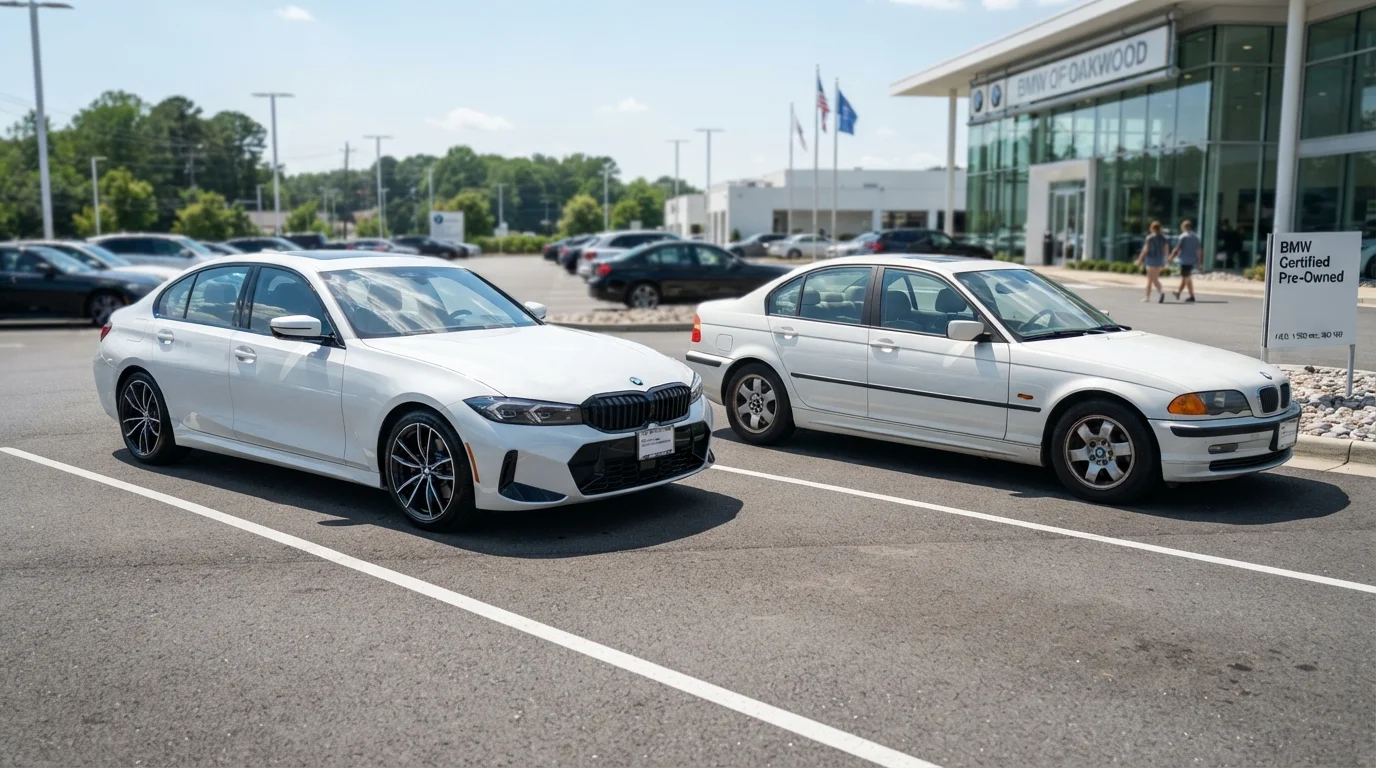
There's no universal answer. A driver keeping a vehicle for a decade gets more value from a new car's depreciation curve and warranty coverage. A driver replacing vehicles every three to four years, or working within a tight monthly budget, generally benefits more from buying used - particularly a certified pre-owned vehicle that comes with some warranty extension.
The full picture of annual costs - fuel, insurance, maintenance, depreciation, and financing combined - is what you should compare, not just the purchase prices. Our breakdown of the true annual cost of owning a car in America gives you a realistic baseline for both scenarios. Once you've run those numbers against your actual driving habits, budget, and ownership timeline, the right answer becomes considerably clearer.
This article is for general informational purposes only and does not constitute financial or purchasing advice. Individual costs vary based on location, vehicle model, lender terms, and driving habits. Consult a qualified financial adviser or licensed automotive professional before making significant vehicle purchase decisions.