
Why Cross-Retailer Comparisons Break Down So Quickly
You open four tabs for the same blender. One lists motor wattage. One leads with jar capacity. One emphasizes the number of speed settings. One uses a name that's slightly different from all the others. None of them use the same structure, and none of them answer your actual question: are these the same product or not?
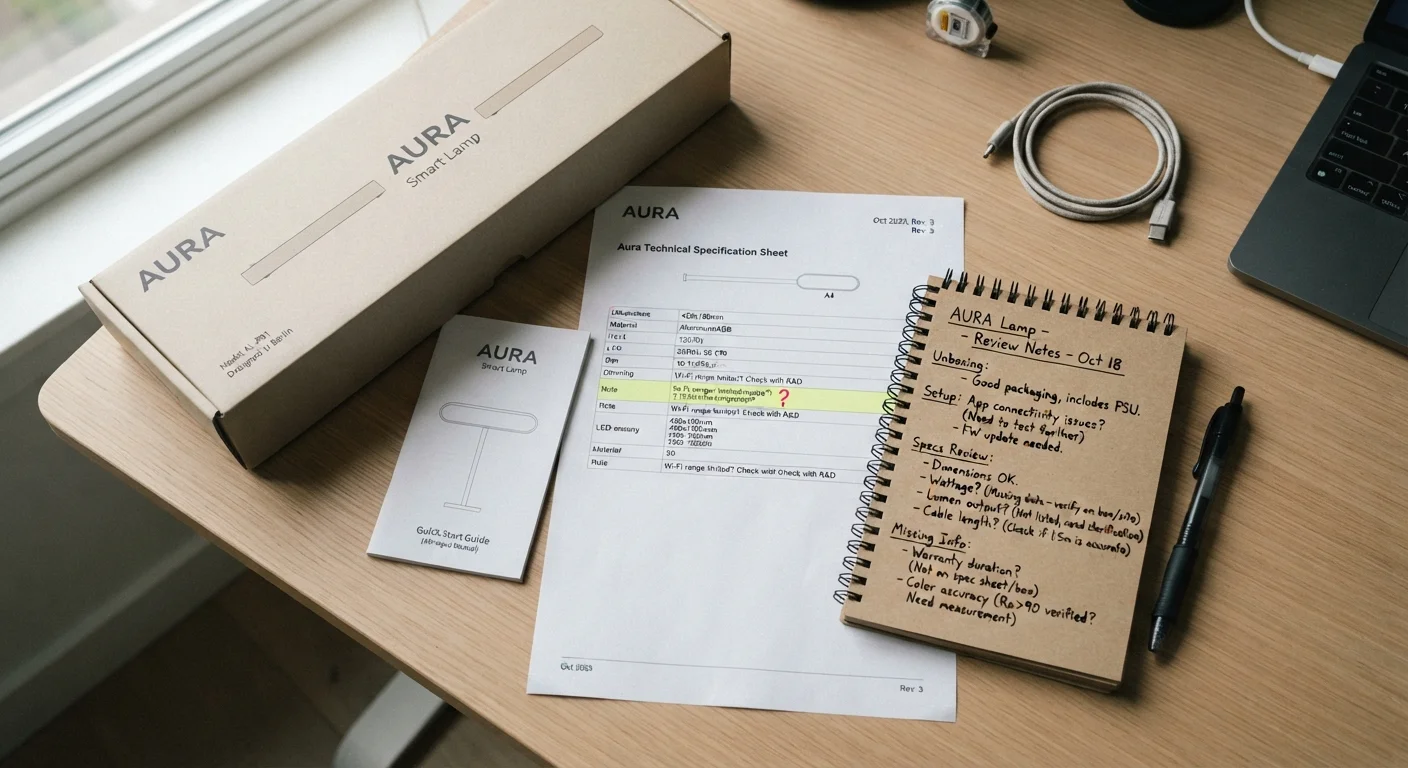
This isn't accidental. Retailers control their own listings, and many receive different configuration data from manufacturers depending on their distribution agreement. The result is genuine inconsistency - not just cosmetic differences in presentation, but meaningful gaps in what's disclosed. Understanding that this is a structural problem, not user error, is the first step toward working around it. See our guide to what spec sheets leave out for a deeper look at where manufacturers routinely omit key details.
Build Your Comparison Grid Before You Start Browsing
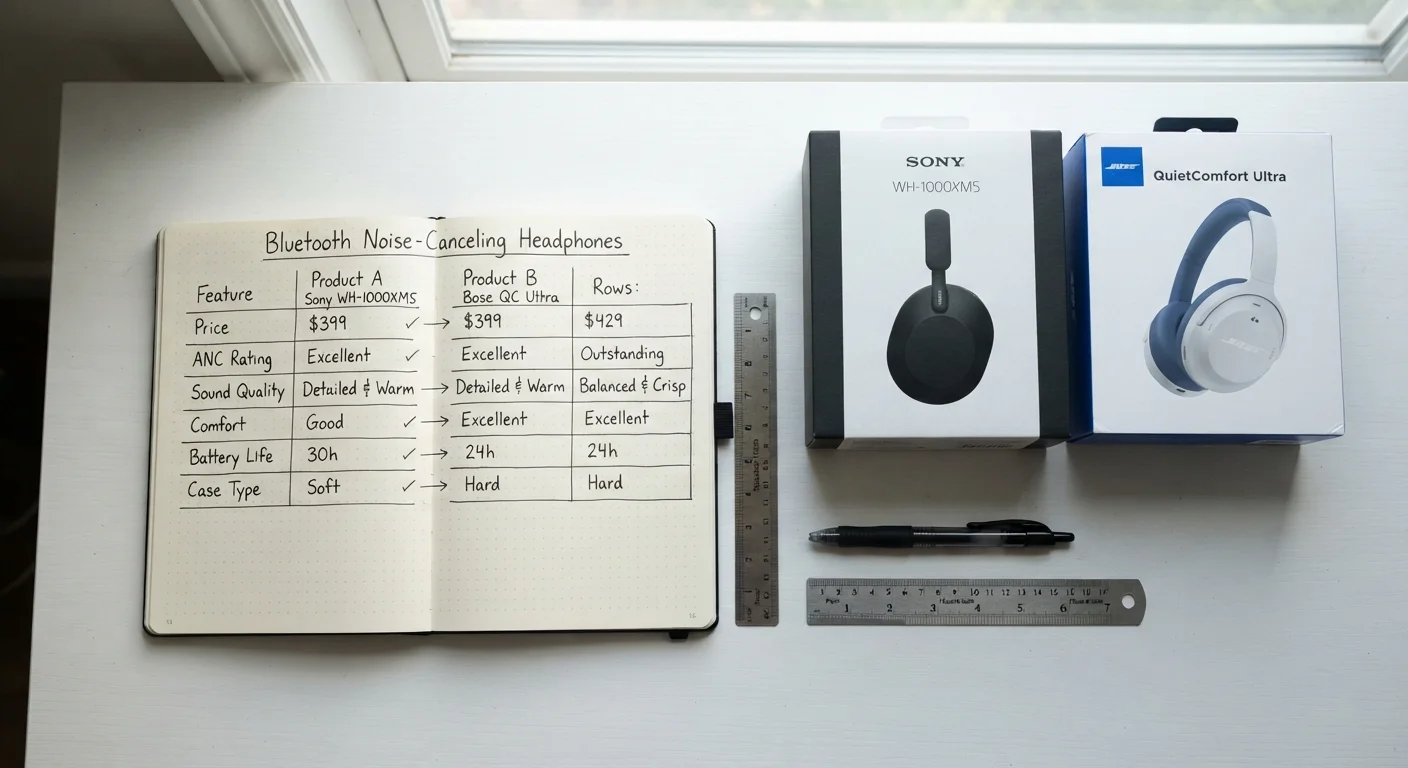
The single most effective habit is deciding what you're comparing before you open any listings. A simple grid - even a handwritten one - with your top three to five must-have specs as column headers anchors your attention. Without it, you unconsciously weight whichever specs each individual retailer happens to emphasize.
Your grid doesn't need to be elaborate. For a kitchen appliance, columns might include: capacity, wattage or BTU rating, dimensions, warranty length, and price including shipping. For bedding or textiles, thread count, material composition, and care requirements. The categories depend entirely on what actually affects how you'll use the item. For more on building evaluation criteria from scratch, this approach to fair product comparisons walks through the process step by step.
Search by Model Number, Not Product Name
Product names are marketing. Model numbers are logistics. When you find a product that looks promising, locate the manufacturer's model number - usually in the product details or spec table, not the headline - and use that to search across other sites. This surfaces identical listings under different names and flags retailer-exclusive variants that may differ in meaningful ways.
Model Numbers Aren't Always Universal
Some manufacturers assign different model numbers to the same product sold through different retailers - small hardware or color variations can trigger a separate SKU. If two listings look identical but carry different model numbers, cross-reference the manufacturer's website directly to confirm whether they're truly the same product or a retailer-exclusive variant.
If model numbers are inconsistent or absent, the manufacturer's website is your fallback. Most publish their full product lineup with complete spec tables, independent of any retailer's presentation decisions. Cross-referencing there also lets you verify whether a retailer has omitted information or simply formatted it differently. This habit is especially valuable when juggling prices and options across multiple sites becomes genuinely disorienting.
Don't Compare Prices Without Comparing Terms
A $10 price difference between two retailers means less than it appears if one charges a restocking fee on returns and the other offers free returns for 90 days. Similarly, a product bundled with accessories at a higher price may represent a lower total cost than buying the base item separately.
42%
Listings missing at least one key spec
A 2022 analysis of major e-commerce product pages found that roughly 42% of home product listings omitted at least one specification relevant to purchase decisions.
3-5x
More tabs opened per shopping session
Research on online shopping behavior suggests shoppers routinely open three to five times more browser tabs than they planned when comparing products across retailer sites.
Add a column to your comparison grid for purchase terms: return window, restocking fees, warranty coverage, and whether the warranty is fulfilled by the manufacturer or the retailer. These factors aren't hidden - they're just consistently overlooked when shoppers focus on unit price alone. The fine print around discounts and promotions is where most of these differences show up.
“Consumers consistently overestimate how standardized product information is across retail channels. The same item can appear under a different name, with different specs listed, at different price points - often because retailers negotiate exclusive configurations or simply present manufacturer data differently.”
— Consumer Reports Research Team, Product testing and consumer advocacy organization
Use Reviews to Fill Gaps Specs Can't Cover
Even a complete spec table won't tell you whether a vacuum is unusually loud, whether a pan warps after heavy use, or whether the handle on a pot runs hot. Reviews exist to fill these gaps - but only if you read them critically rather than averaging star ratings.
Look for patterns across independent reviewers who describe actual use conditions similar to yours. A complaint that appears in 40 reviews is more significant than the same complaint in two. Filter for verified purchasers where possible, and check whether critical reviews cluster around a specific batch date or retailer, which may indicate a quality control issue rather than a product-wide flaw. Our guide to reading customer reviews critically outlines the habits that separate useful signal from noise.
Anchor Your Comparison on One Baseline Product
Pick one product that clearly meets your minimum requirements and use it as your reference point. Every other option should be evaluated in terms of what it adds, removes, or changes relative to that baseline. This prevents the 'endless scroll' trap where all options start to blur together.
If you're weighing a national brand against a private-label alternative, the same review-reading discipline applies - and the comparison between store brands and name brands offers a useful framework for that specific decision.