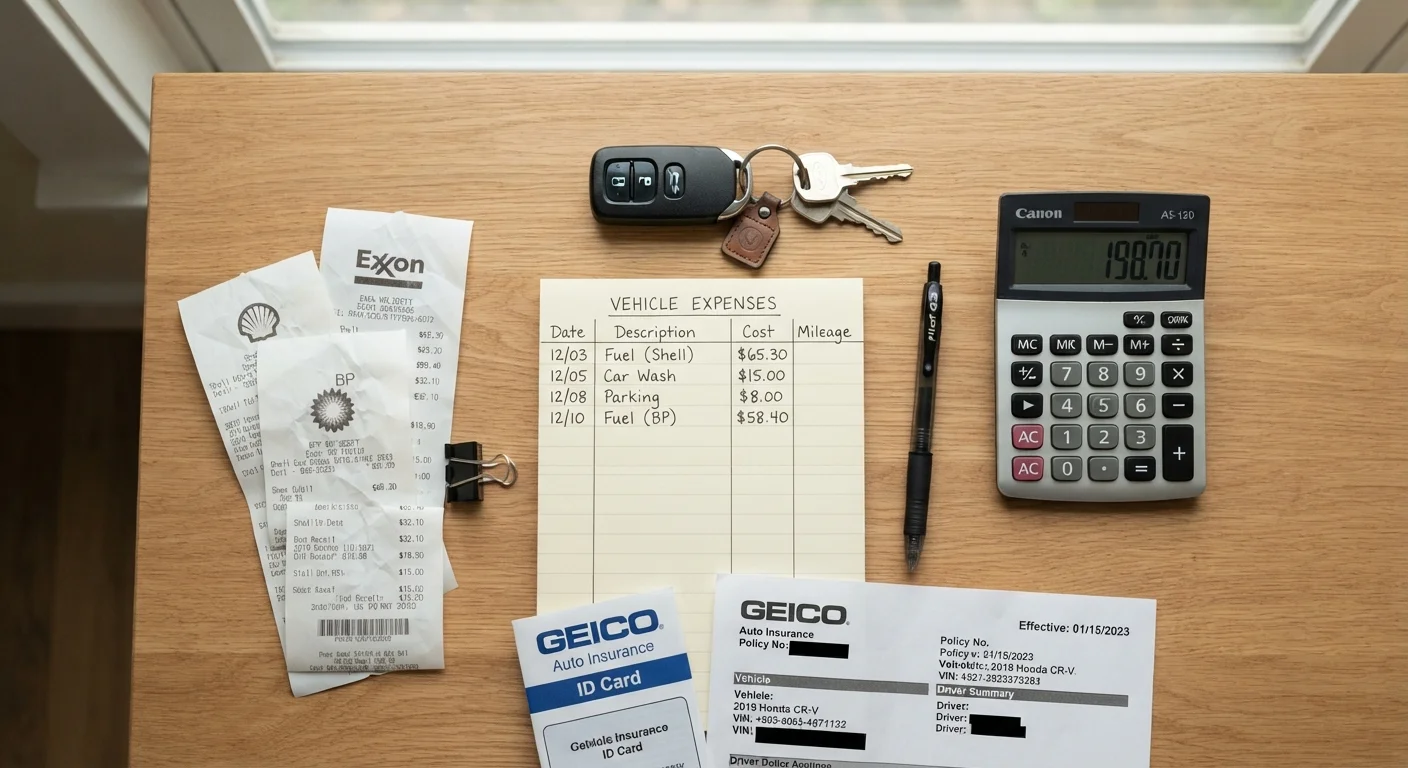
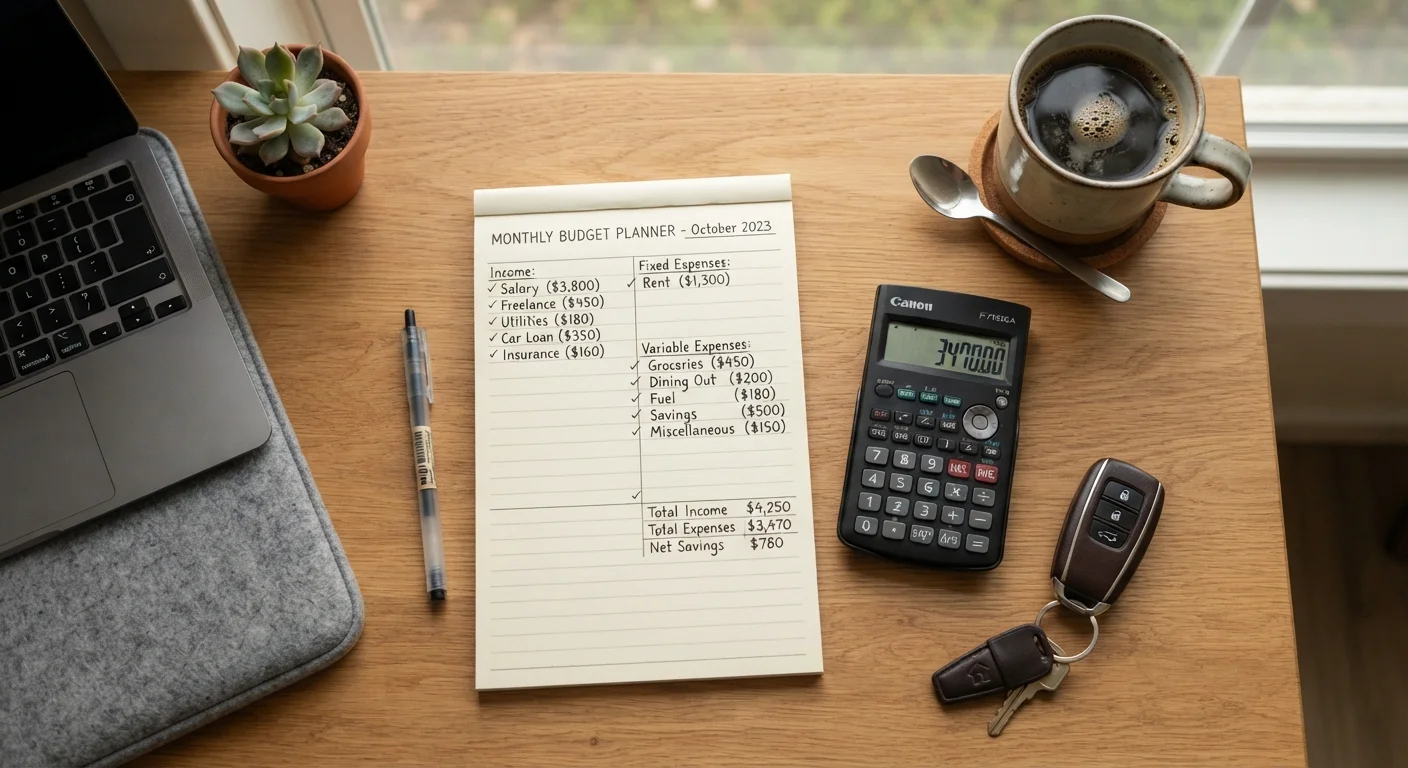
Why Most Car Budgets Are Incomplete
Most drivers know their monthly payment. Far fewer know what their vehicle actually costs each month once you factor in fuel, insurance, maintenance, fees, and the inevitable unexpected repair. The gap between those two numbers is where budgets quietly fall apart.
A car payment might be $400 a month, but the full cost of operating that vehicle could easily be $700 or more depending on usage, location, and vehicle age. Understanding your true annual cost of car ownership is the first step toward building a budget that actually holds. For a broader view of how costs stack up from purchase through resale, see car ownership costs from purchase to resale.
The good news: building an accurate monthly car budget doesn't require an accounting degree. It requires gathering the right numbers and spreading irregular costs evenly across the year.
What you will need
What You'll Need Before You Start
Before working through the steps below, pull together the tools and documents that will make your estimates accurate rather than guesswork.
Spreadsheet application (e.g., Google Sheets or Excel)
Track and total all monthly vehicle expense categories in one place.
Bank or credit card statements
Pull real spending data on fuel, maintenance, and car-related purchases.
Vehicle owner's manual
Identify manufacturer-recommended service intervals to forecast maintenance costs.
Don't Forget Irregular Annual Expenses
Costs like registration fees, annual inspections, and tire replacements don't show up every month - but failing to plan for them can derail your budget when they arrive. Divide each annual or semi-annual cost by 12 and treat that amount as a monthly line item. This is one of the most common places car budgets fall apart.
If you've made common assumptions about car affordability in the past - like believing a low payment means low cost - this process will help you see the full picture clearly.
Step-by-Step: Build Your Monthly Car Budget
Work through each step in order. The goal is to arrive at a single, accurate monthly number that includes everything your vehicle costs you - not just the payment that shows up on your bank statement.
List your fixed monthly costs
Start with the expenses that don't change month to month. These form the floor of your car budget:
- Loan or lease payment: The exact amount due each month.
- Auto insurance premium: Divide your semi-annual or annual premium by the number of months it covers.
- Parking or garage fees: Include any regular monthly parking costs tied to work or home.
Add these together. This is your fixed baseline - the minimum you're committing to every month regardless of how much you drive.
Calculate your average monthly fuel cost
Fuel is your biggest variable cost. To estimate it accurately:
- Find your average monthly mileage (check your odometer over 2-3 months or use your car's trip computer).
- Divide that by your vehicle's real-world MPG - not the EPA estimate, but what you typically see at the pump.
- Multiply that gallon figure by your local average fuel price.
For example: 1,200 miles ÷ 28 MPG = ~43 gallons × $3.50 = roughly $150/month. Understand how fuel efficiency shapes annual spending before locking in your estimate.
Estimate and spread out irregular expenses
These are the costs that ambush drivers who only track monthly payments:
- Registration and taxes: Divide your state's annual registration fee by 12.
- Safety inspection fees: Spread the annual cost across 12 months.
- Tires: A set of four tires typically lasts 40,000-60,000 miles. Estimate when you'll need them and divide the expected cost by the months remaining.
Add each of these to a dedicated savings line - not your general checking account.
Set a monthly maintenance reserve
Routine maintenance - oil changes, filters, brake pads, belts - doesn't hit every month, but it hits. Rather than paying out of pocket when it arrives, build a monthly reserve:
- Review your owner's manual for the next 12 months of scheduled services.
- Get rough cost estimates for each service at a local shop.
- Total those costs and divide by 12.
Set that amount aside each month into a separate savings account earmarked for vehicle maintenance. This approach prevents a $600 brake job from wrecking your budget.
Add a contingency buffer for unexpected repairs
Mechanical surprises happen. A contingency buffer is separate from your maintenance reserve - it's for the unexpected: a failing alternator, a cracked radiator hose, or an unplanned tire replacement after a blowout.
A practical starting point: set aside $50-$100 per month into a vehicle emergency fund until you have $500-$1,000 built up. Once you hit that threshold, you can pause contributions and resume only after a withdrawal. For broader emergency saving strategies, see building a savings safety net on a tight budget.
Total all categories and compare to your income
Add every line item together:
| Category | Monthly Amount |
|---|---|
| Loan/lease payment | $ ___ |
| Insurance | $ ___ |
| Fuel | $ ___ |
| Irregular costs (spread) | $ ___ |
| Maintenance reserve | $ ___ |
| Repair contingency | $ ___ |
| Total | $ ___ |
Compare this total to your net monthly income. A widely cited general guideline suggests keeping total transportation costs under 15-20% of take-home pay - but this is a reference point, not a rule that fits every situation. If your number is significantly higher, that's useful data for decisions about driving less, refinancing, or adjusting your vehicle choice.
Use a Spreadsheet to Stay Honest
A simple spreadsheet with one row per expense category makes it easy to spot gaps and adjust each month. Even a basic setup - expense name, estimated monthly cost, actual cost - will surface patterns you'd otherwise miss. Review it alongside your annual vehicle cost audit to catch drift.
Avoid Underestimating Maintenance Costs
Many drivers budget only for oil changes and forget that brakes, belts, batteries, and tires add up over time. A general guideline used by many financial planners is to set aside 1-2 cents per mile driven for routine maintenance - but actual costs vary by vehicle age, mileage, and condition. If your car is older or high-mileage, budget toward the higher end.
Once your budget is built, plan to revisit it annually. A vehicle cost audit checklist can help you spot where costs have drifted and identify potential savings. If your income varies month to month, review budgeting strategies for irregular income to adapt this framework accordingly.
This article provides general financial information for educational purposes and does not constitute personalized financial advice. Consult a qualified financial professional for guidance tailored to your individual situation.